A classic olive tapenade recipe brings the vibrant, salty flavors of the Mediterranean directly to your kitchen. This versatile spread, rooted in the culinary traditions of Provence, France, serves as a sophisticated appetizer or a bold condiment for various dishes. While it appears simple, achieving the perfect balance of brine, acid, and earthiness requires a careful selection of ingredients and a precise technique. This guide provides everything you need to master the olive tapenade recipe for any occasion.
Table of Contents
The Heritage and Tradition of the Olive Tapenade Recipe
The Roots of a Mediterranean Staple
Understanding the history of an olive tapenade recipe helps appreciate its bold character. The word “tapenade” comes from the Provençal word for capers, “tapenas.” Historically, capers were the star ingredient, though over time, olives became the primary base. This spread has been a fixture in southern France for centuries, often served with crusty bread or used to season meats and vegetables. You can learn more about the cultural significance and origins of tapenade to see how it evolved from a simple caper relish into the olive-centric delight we enjoy today.
Modern Adaptations and Global Influence
Today, a modern olive tapenade recipe often features a variety of olives, from the deep purple Kalamata to the bright green Castelvetrano. While the traditional version is quite specific, home cooks and chefs around the world have adapted it to suit local palates. Despite these changes, the core identity of the olive tapenade recipe remains its ability to provide a concentrated burst of umami. It bridges the gap between a simple dip and a complex seasoning agent, making it a must-have in a contemporary culinary repertoire.
Print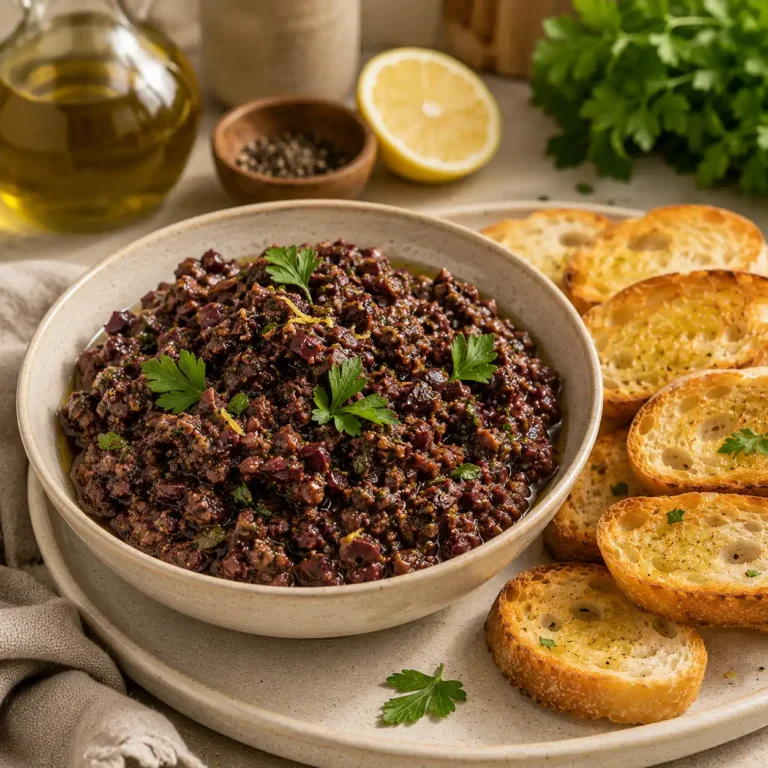
Classic Provençal Olive Tapenade Recipe: An Expert Guide
A sophisticated Mediterranean spread from Provence, France, balancing salty olives, tangy capers, and aromatic herbs for a perfect appetizer or condiment.
- Total Time: 16 minutes
- Yield: 12 servings 1x
Ingredients
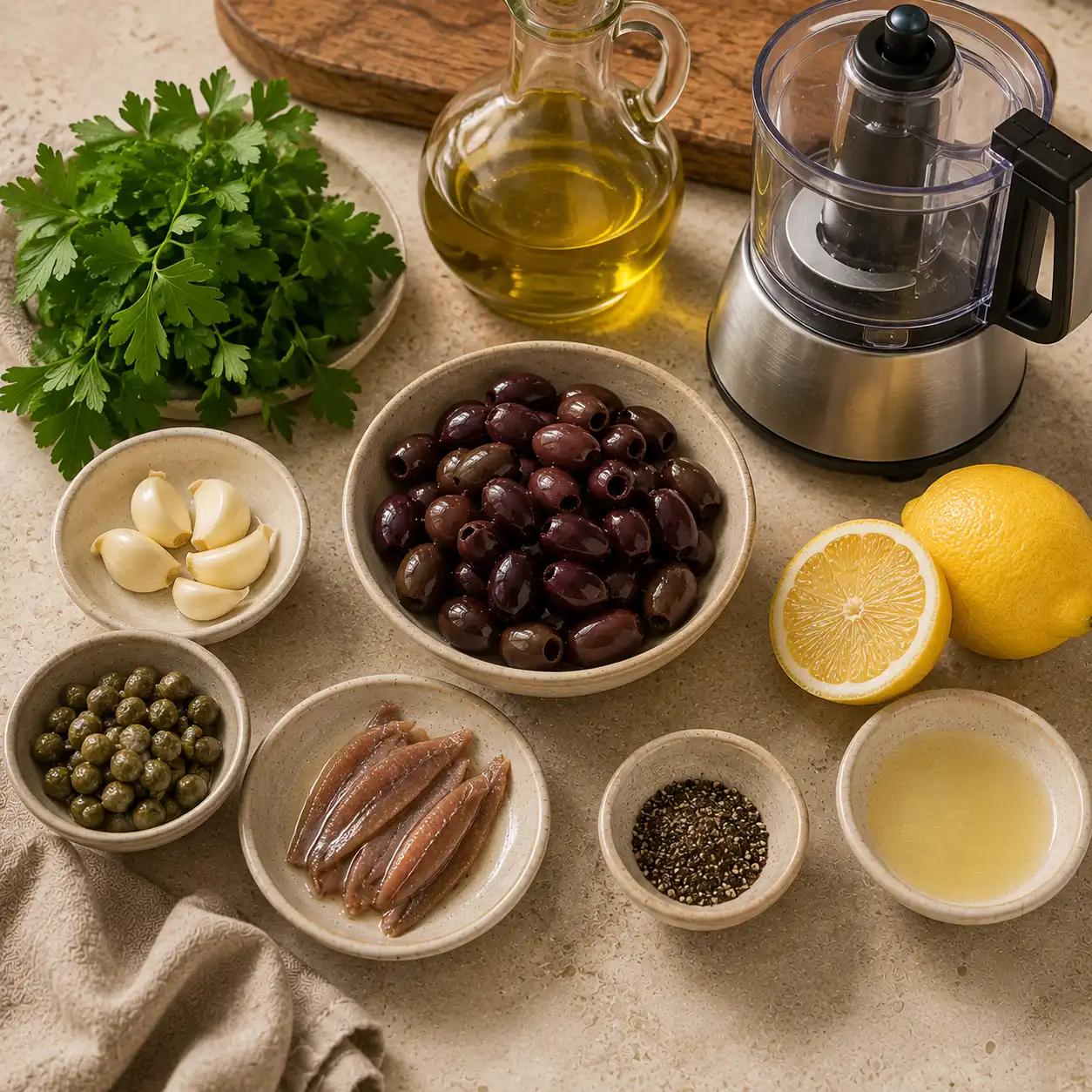
- 1.5 cups pitted Kalamata or Niçoise olives
- 1/2 cup pitted green olives, such as Castelvetrano
- 3 tablespoons capers, drained and rinsed
- 2 cloves garlic, minced
- 2 anchovy fillets (optional for umami depth)
- 1/4 cup extra-virgin olive oil
- 1 tablespoon fresh lemon juice
- 1 teaspoon fresh thyme or parsley leaves
- 1/4 teaspoon freshly cracked black pepper
Instructions
- Step 1: Prepare Ingredients – Drain olives and capers, ensuring all pits are removed from olives.
- Step 2: Combine Solids – Place both types of olives, capers, garlic, and anchovies into a food processor.
- Step 3: Pulse Base – Pulse the mixture 5 to 10 times until ingredients are coarsely chopped but not pureed.
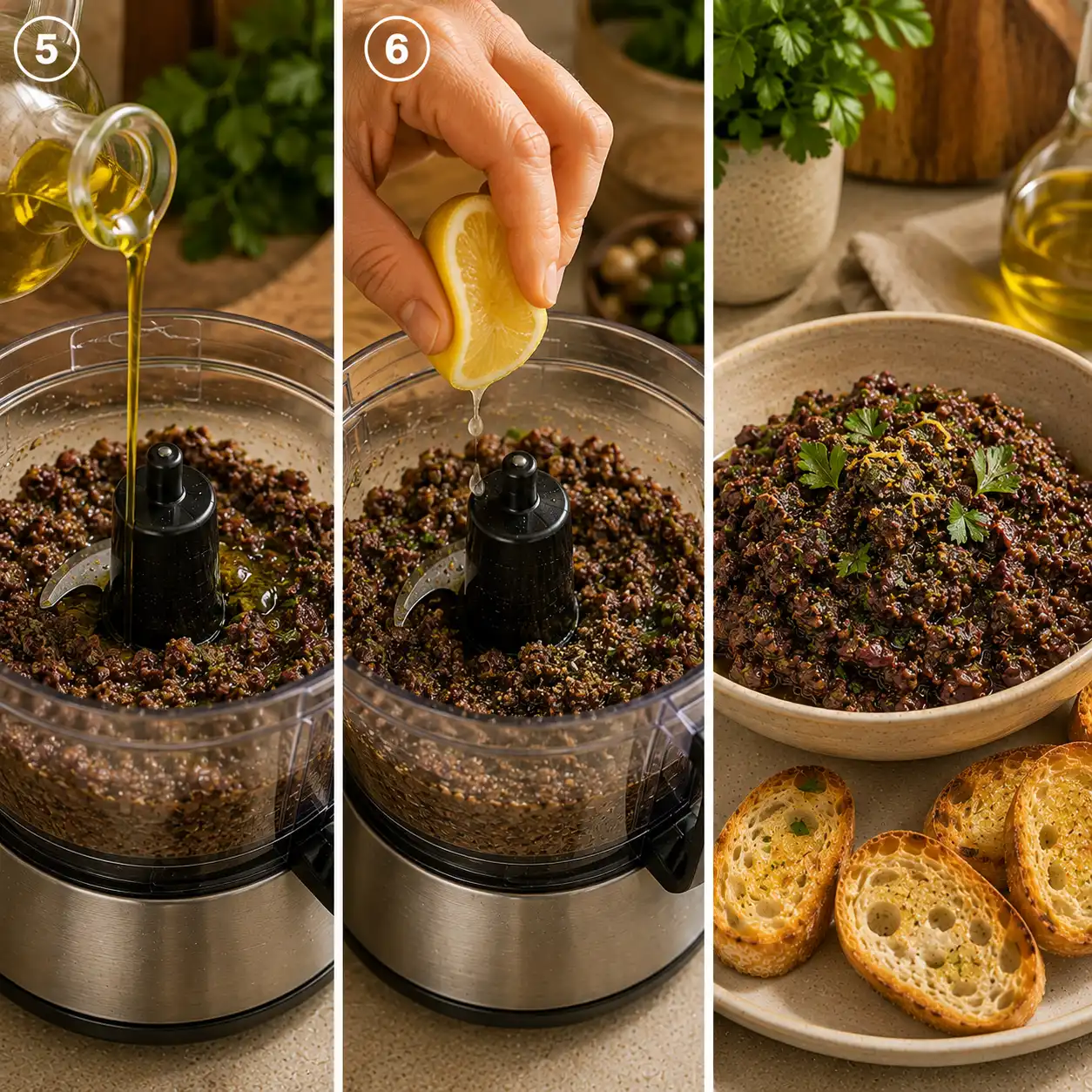
- Step 4: Add Liquids – Slowly drizzle in the extra-virgin olive oil and lemon juice while pulsing briefly to emulsify.
- Step 5: Season Mixture – Add fresh thyme and black pepper, pulsing once more to incorporate the aromatics.
- Step 6: Final Rest – Transfer to a bowl and let sit at room temperature for 30 minutes to allow flavors to meld.
Notes
For a traditional texture, avoid over-processing into a smooth paste; it should be chunky and rustic.
- Prep Time: 15 minutes
- Cook Time: 1 minute
- Category: Appetizer
- Method: No-cook / Food Processor
- Cuisine: French (Provençal)
- Diet: Mediterranean
Nutrition
- Serving Size: 2 tablespoons
- Calories: 85 kcal
- Sugar: 0.2 g
- Sodium: 340 mg
- Fat: 9.2 g
- Saturated Fat: 1.2 g
- Unsaturated Fat: 8.0 g
- Trans Fat: 0.01 g
- Carbohydrates: 1.8 g
- Fiber: 0.8 g
- Protein: 0.6 g
- Cholesterol: 1 mg
Keywords: Tapenade, Olive Spread, Provençal, Mediterranean, Caper, Dip
Choosing the Best Ingredients for Your Olive Tapenade Recipe
The Importance of Olive Selection
The success of your olive tapenade recipe depends almost entirely on the quality of your olives. Do not use canned, pre-sliced olives, as they lack the depth of flavor required. Instead, look for salt-cured or oil-cured varieties. Kalamata olives are a popular choice for their fruity and smoky notes. For a milder, more buttery finish, Castelvetrano olives are excellent. Many experts suggest a blend of different olives to create a more complex flavor profile. Always buy whole olives and pit them yourself if possible, as pre-pitted olives can sometimes become waterlogged and lose their characteristic bite.
The Role of High-Quality Fat
An olive tapenade recipe requires a fat source to bind the ingredients and soften the harshness of the salt. Extra virgin olive oil is the standard choice. Because the oil is not cooked, its flavor remains prominent, so using a premium, cold-pressed variety is vital. If you are focused on the health benefits of your fats, you might consider how certain choices affect your wellness, much like the principles found in dr gundry olive oil recommendations. A high-polyphenol oil will add a pleasant peppery finish to your spread.
Aromatic Additions and Seasoning
Garlic, capers, and anchovies are the holy trinity of a traditional olive tapenade recipe. Garlic provides a sharp pungency, while capers add a floral, vinegary tang. Anchovies, though optional for some, provide a deep savory layer that salt alone cannot replicate. If you are making a vegan version, you can replace anchovies with a small amount of miso paste or sun-dried tomatoes. Fresh herbs, specifically flat-leaf parsley and occasionally thyme, bring a necessary brightness that cuts through the heavy, oily textures of the other ingredients.
| Ingredient Type | Best Variety | Flavor Contribution |
|---|---|---|
| Olives | Kalamata or Niçoise | Briny, fruity, and salty base |
| Acid | Fresh Lemon Juice | Brightens and balances the fats |
| Aromatics | Fresh Garlic Cloves | Sharpness and depth |
| Herbs | Flat-leaf Parsley | Freshness and color |
| Binding Agent | Extra Virgin Olive Oil | Smooth texture and richness |
Step-by-Step Instructions for the Perfect Olive Tapenade Recipe
Preparation and Pitting
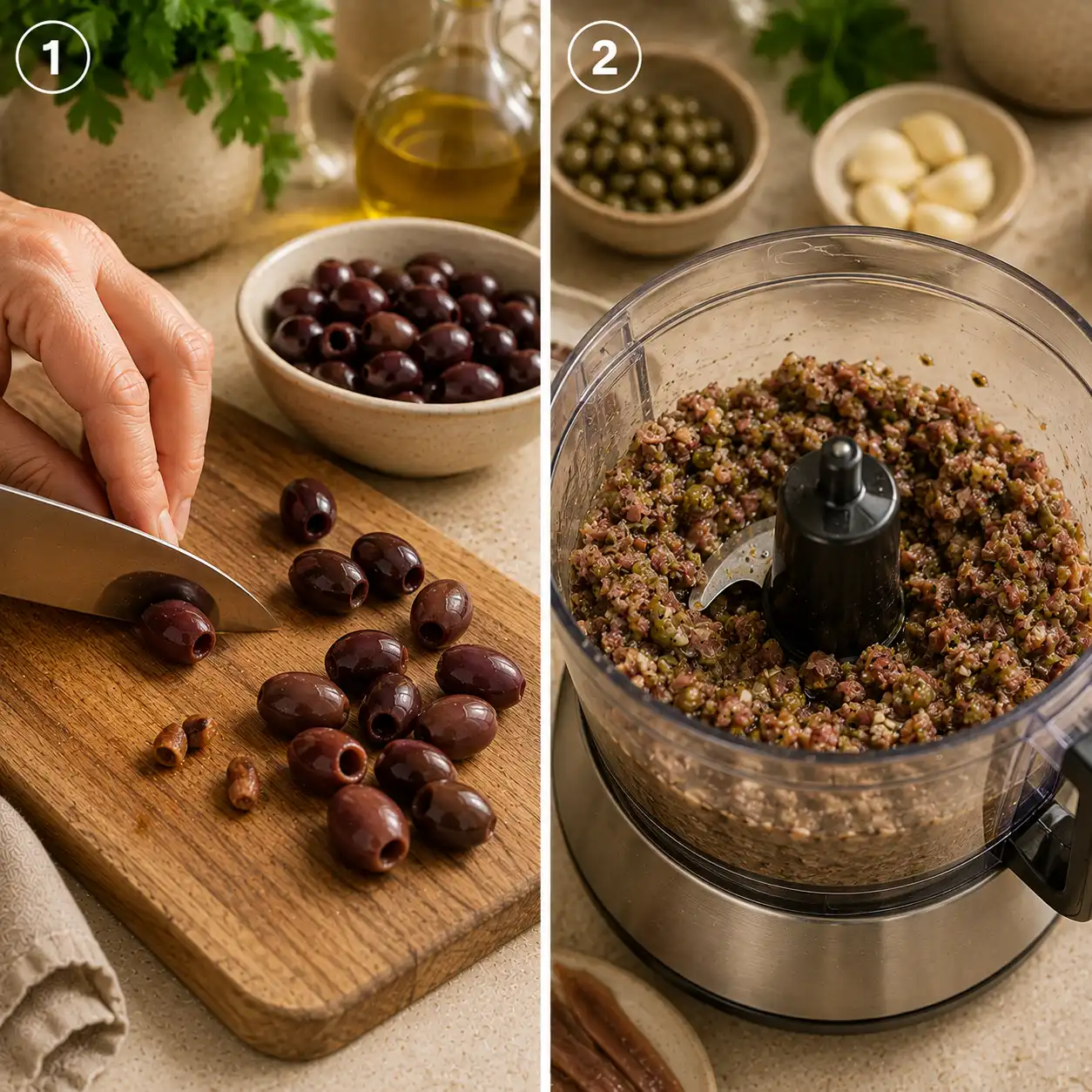
Step 1: Prepare the Olives – Begin your olive tapenade recipe by ensuring all olives are pitted. If you have whole olives, place them on a flat surface and gently press down with the side of a wide knife to crack the flesh, making it easy to pop the stone out. Measure approximately two cups of pitted olives. If your olives are exceptionally salty, you may want to rinse them under cold water and pat them dry with a paper towel before proceeding to avoid an oversalted final product.
Processing for Texture
Step 2: Combine the Aromatics – Place two cloves of garlic, two tablespoons of drained capers, and three to four anchovy fillets into the bowl of a food processor. Pulse these ingredients several times until they are finely minced. Doing this before adding the olives makes certain that the stronger flavors are distributed evenly throughout the olive tapenade recipe. You want a consistent base so that no single bite is overwhelmed by a large chunk of raw garlic.
Achieving the Right Consistency
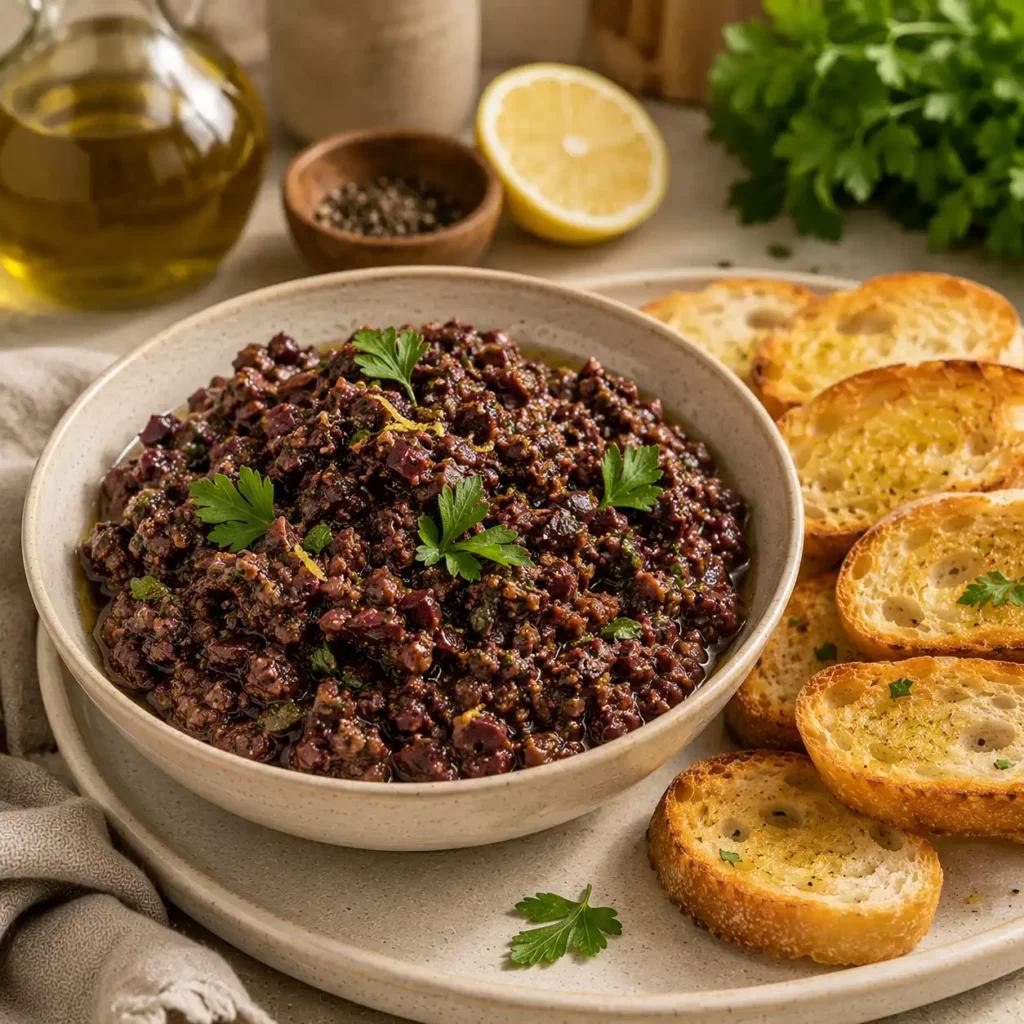
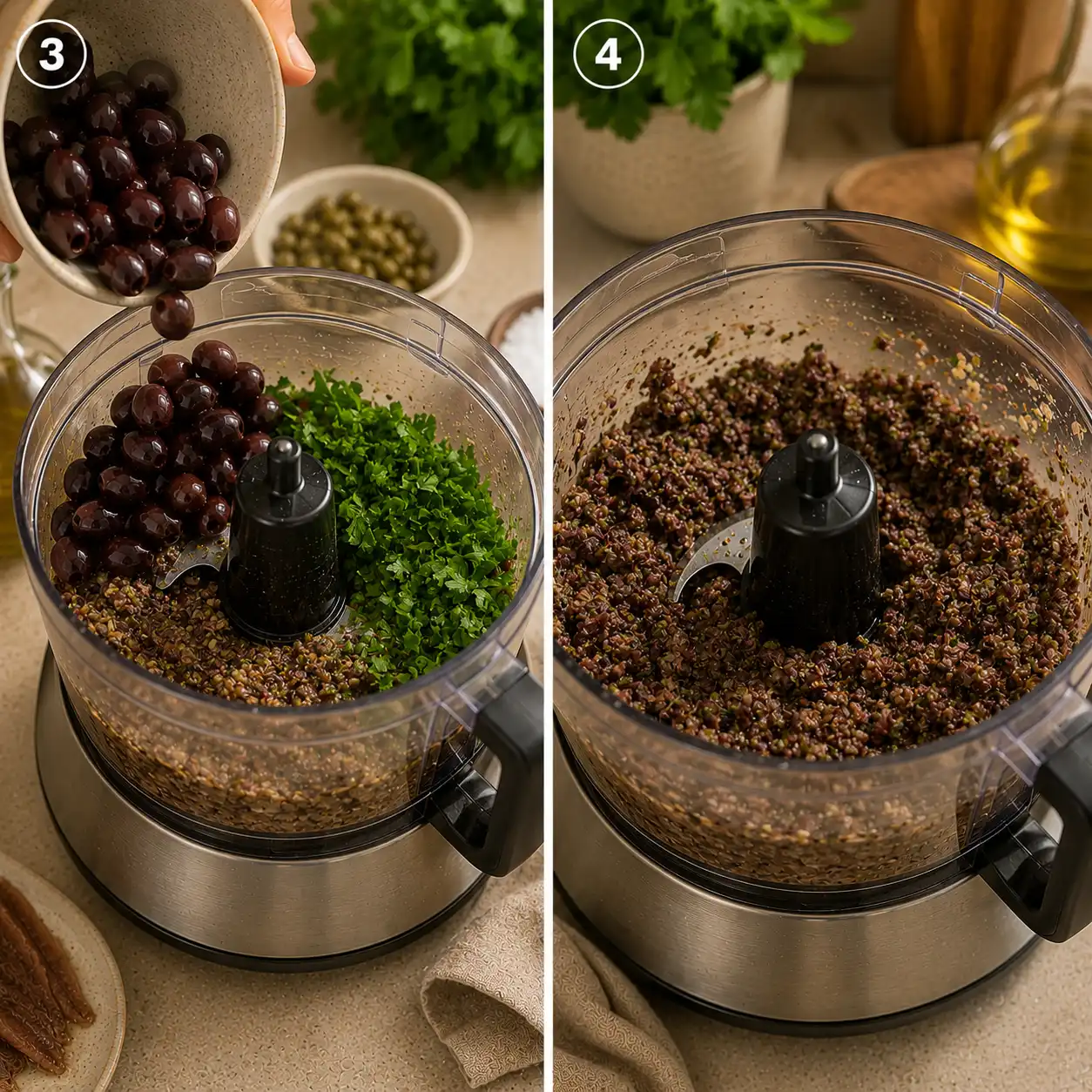
Step 3: Add Olives and Herbs – Add the pitted olives and a handful of fresh parsley to the processor. Pulse in short bursts. The goal for a traditional olive tapenade recipe is a coarse, pebbly texture, not a smooth puree. If you over-process the mixture, it will turn into a paste that lacks the rustic charm of a true Provençal spread. Stop when the pieces are roughly the size of a grain of rice.
Emulsifying with Oil and Acid
Step 4: Final Seasoning – While the processor is running on a low setting, slowly drizzle in three tablespoons of high-quality extra virgin olive oil. Add one tablespoon of fresh lemon juice and a pinch of black pepper. Taste the mixture before adding any extra salt, as the olives and capers usually provide enough. Give the olive tapenade recipe one final pulse to combine everything. Transfer it to a bowl and let it sit for at least thirty minutes to allow the flavors to meld.
Customizing Your Olive Tapenade Recipe
Spicy and Herbal Variations
If you prefer a bit of heat, you can easily modify your olive tapenade recipe. Adding a half-teaspoon of crushed red pepper flakes or a small diced Fresno chili can provide a pleasant warmth. For a more herbal note, try incorporating fresh basil or oregano. If you enjoy experimenting with different Mediterranean condiments, you might find that comparing this to a lemon pesto provides inspiration for using citrus and nuts to vary the texture and acidity of your spreads.
Texture and Nutty Additions
Some regional versions of an olive tapenade recipe include toasted pine nuts or walnuts. These add a delightful crunch and a fatty sweetness that balances the salt. If you choose to add nuts, fold them in at the very end to keep them from becoming too soft. You can also experiment with the ratio of green to black olives. A green olive tapenade often tastes brighter and more “grassy,” while a black olive version is deeper and more savory. Mixing the two creates a visually appealing and flavor-balanced result.
Expert Serving Suggestions for Olive Tapenade
Classic Bread and Cracker Pairings
The most common way to enjoy an olive tapenade recipe is on toasted baguette slices or crostini. The crunch of the bread provides the perfect backdrop for the soft, oily spread. For those following specific dietary paths, you can serve this rich spread alongside a keto naan bread recipe to keep the meal low-carb while still enjoying a hearty, chewy texture. This combination works exceptionally well as a starter for a dinner party or a simple afternoon snack.
Main Course Applications
An olive tapenade recipe is not limited to being a dip. It works beautifully as a crust for baked fish, such as cod or sea bass. Simply spread a thin layer over the fish before it goes into the oven. It can also be tossed with warm pasta and a splash of pasta water for a quick, flavorful meal. For a more complete Mediterranean experience, consider using the tapenade as a condiment inside a mediterranean chicken pita. The salty olives complement the grilled poultry and fresh vegetables perfectly.
Storage and Preservation Tips
Short-Term Refrigeration
Once you have completed your olive tapenade recipe, it is best to store it in a glass jar. Make sure to press the mixture down to remove air pockets and pour a thin layer of olive oil over the top. This oil seal helps prevent oxidation and keeps the flavors fresh. When stored this way in the refrigerator, the tapenade will stay delicious for up to two weeks. Before serving leftovers, let the jar sit at room temperature for about fifteen minutes, as the olive oil will likely solidify in the cold.
Long-Term Freezing Options
If you have made a large batch of your olive tapenade recipe, you can freeze it. Use an airtight container or even an ice cube tray for smaller portions. Freezing allows you to preserve the spread for up to three months. When you are ready to use it, thaw it in the refrigerator overnight. You may need to stir in a fresh squeeze of lemon juice or a teaspoon of fresh parsley to revive the bright notes that can dull slightly during the freezing process.
Troubleshooting Common Issues
Balancing Excessive Saltiness
Sometimes, despite your best efforts, an olive tapenade recipe can turn out too salty. This usually happens if the olives were heavily brined. To fix this, do not add more salt! Instead, increase the amount of bulk in the recipe. You can add more unsalted olives, a bit more parsley, or even some finely chopped unsalted roasted red peppers. A little extra lemon juice can also help mask the salt by providing a sharp counterpoint to the sodium.
Correcting Texture and Oiliness
If your tapenade feels too greasy, you likely added too much oil or processed it for too long. To balance a greasy olive tapenade recipe, add more solid ingredients like chopped olives or even a bit of breadcrumbs to soak up the excess fat. If it is too dry and won’t hold together, slowly add oil one teaspoon at a time until the mixture reaches a glistening, cohesive state. Remember that the texture should be chunky enough to see the individual pieces of olive and caper.
Conclusion
Mastering a high-quality olive tapenade recipe is a gateway to the bold, rustic flavors of French coastal cooking. By selecting the right olives, using premium oil, and maintaining a coarse texture, you create a condiment that is far superior to any store-bought alternative. Whether you spread it on bread, use it to season a main dish, or offer it as part of a grazing board, this tapenade is sure to impress. With a few simple ingredients and a bit of care, you can bring this timeless Mediterranean tradition into your own home.
FAQs
Can I make an olive tapenade recipe without a food processor?
Yes, you can use a mortar and pestle for a very traditional, rustic texture. This method takes more effort but allows for total control over the consistency. Alternatively, you can finely mince all the ingredients with a sharp chef’s knife and mix them in a bowl.
Which olives are the most traditional for this recipe?
Niçoise olives are the traditional choice for a Provençal olive tapenade recipe. They are small, dark, and have a distinct nutty flavor. However, because they can be difficult to find, Kalamata olives are the most common substitute used by modern cooks.
Is olive tapenade healthy?
An olive tapenade recipe is rich in healthy monounsaturated fats from the olives and olive oil. It also contains fiber and antioxidants. However, it is high in sodium due to the brine and capers, so it should be enjoyed in moderation, especially by those watching their salt intake.
How can I make this recipe vegan?
To make a vegan olive tapenade recipe, simply omit the anchovies. You can replace the savory depth they provide by adding a teaspoon of nutritional yeast, a bit of seaweed flakes, or some finely chopped sun-dried tomatoes.
What is the difference between tapenade and muffaletta spread?
While both are olive-based, an olive tapenade recipe is focused on olives, capers, and anchovies. Muffaletta spread, famous in New Orleans, typically includes a wider variety of pickled vegetables, such as cauliflower, carrots, and celery (giardiniera), making it more of a chunky salad than a concentrated spread.