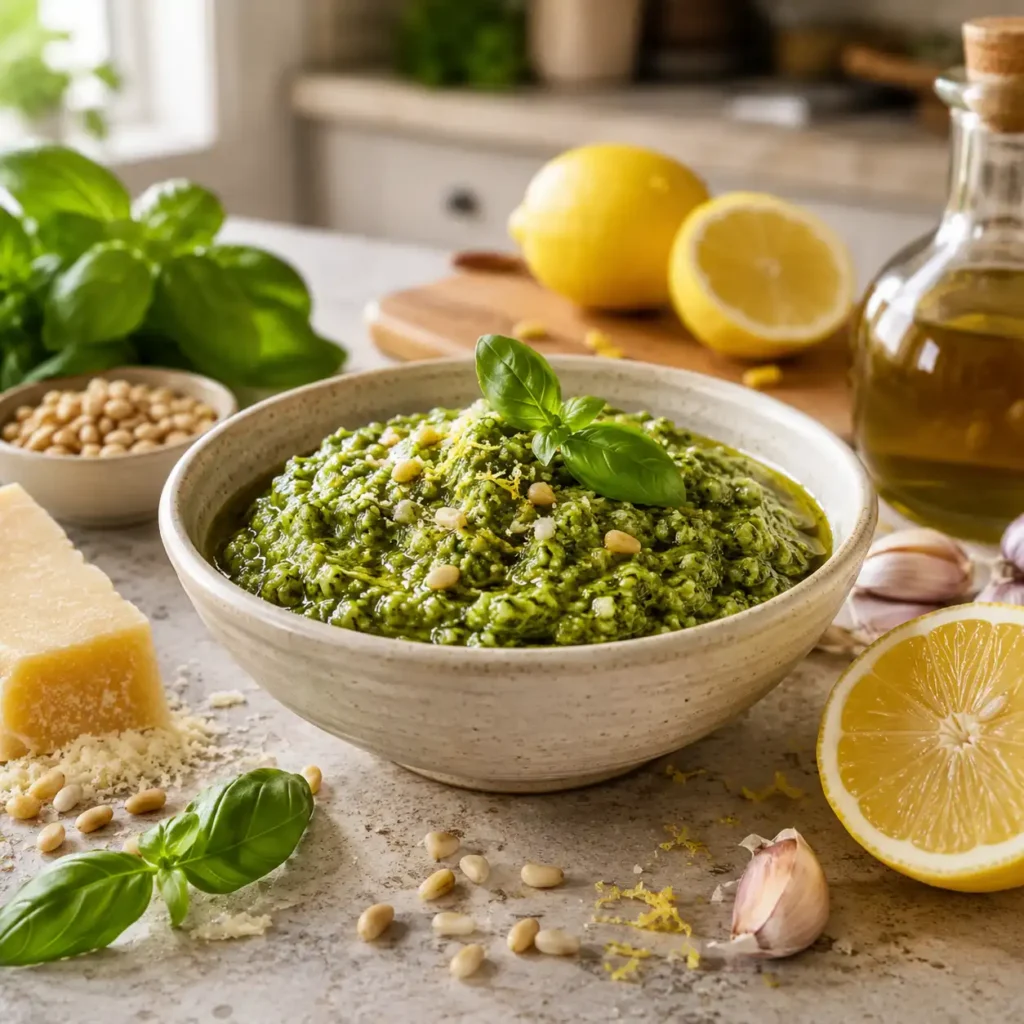
Lemon pesto is a refreshing variation of the traditional green sauce we all know and love. By adding a generous amount of citrus, you create a condiment that is both earthy and bright. It is the perfect way to bring a sunny vibe to your kitchen any time of year. Whether you are a beginner cook or a kitchen pro, this simple sauce will become a staple in your recipe rotation. Let us look at how this vibrant lemon pesto can transform your daily meals.
What Exactly is Lemon Pesto?
At its core, lemon pesto is a sauce made from fresh herbs, nuts, cheese, and oil, but with a significant citrus component. While the classic version focuses on the heavy aroma of basil and the richness of pine nuts, lemon pesto adds a layer of acidity that cuts through the fat. This results in a sauce that feels lighter and more energetic. It is incredibly versatile, moving beyond simple pasta dishes to act as a marinade, a dip, or even a sandwich spread. The brightness of the fruit makes it an excellent choice for spring and summer dining.
The History of the Sauce
To understand the origins of this citrus twist, we must look at the roots of Pesto, which traditionally comes from the Liguria region of Italy. The word itself comes from the Italian verb “pestare,” which means to pound or crush. Historically, this was done using a marble mortar and a wooden pestle. While the traditional recipe is world-famous, modern cooks began adding lemon to help preserve the bright green color of the basil and to add a fresh dimension to the flavor profile. This evolution led to the popular lemon pesto we enjoy today.
Why the Citrus Matters
The addition of lemon is not just about flavor; it is about chemistry. The acid in the lemon juice helps balance the salty parmesan cheese and the bitter notes often found in extra virgin olive oil. Furthermore, the oils found in the lemon zest provide a deep, aromatic scent that basil alone cannot provide. When you make lemon pesto, you are creating a complex balance of flavors: salty, fatty, herbal, and acidic. This balance is what makes it so addictive and useful in such a wide variety of recipes across different cuisines.
Print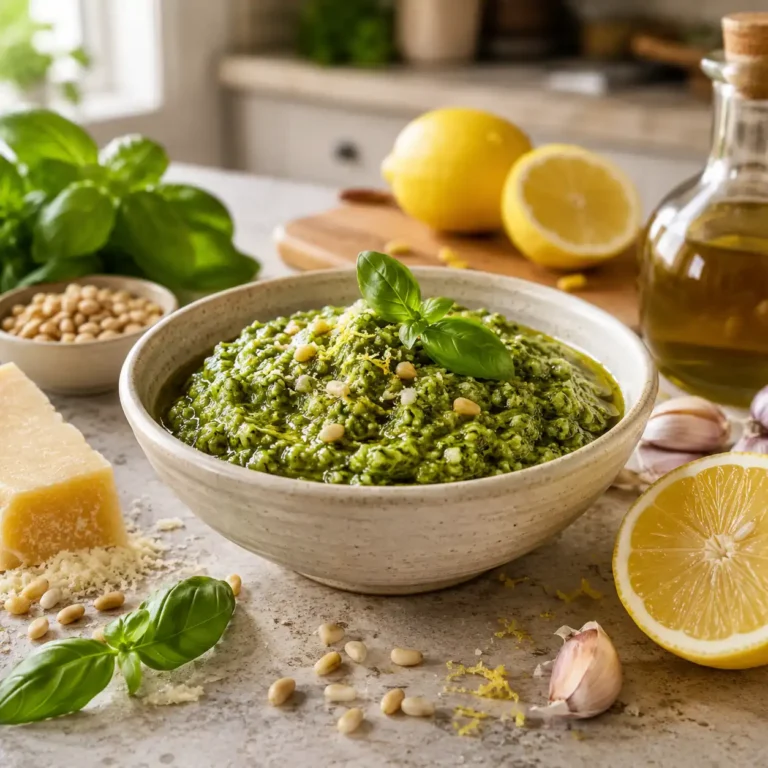
Vibrant Lemon Pesto
Lemon pesto is a refreshing variation of traditional green sauce, combining fresh herbs, nuts, cheese, and oil with a significant citrus component. The added acidity from lemon brightens the flavor, making it feel lighter and more energetic. It’s incredibly versatile, perfect for pasta, marinades, dips, or sandwich spreads, bringing a sunny vibe to any meal.
- Total Time: 10 minutes
- Yield: 1 cup (approx. 4 servings) 1x
Ingredients
- 2 cups fresh basil leaves, packed
- 1/2 cup grated Parmesan cheese
- 1/4 cup pine nuts
- 2 cloves garlic, peeled
- 1 whole lemon, zested and juiced
- 1/2 cup extra virgin olive oil
- 1/2 teaspoon salt
- 1/4 teaspoon black pepper
Instructions
- Step 1: Prepare Ingredients – Gather all ingredients. Finely grate the Parmesan cheese and prepare the lemon zest and juice.
- Step 2: Combine Solids – In a food processor, combine the fresh basil, pine nuts, peeled garlic cloves, and lemon zest.
- Step 3: Pulse to Chop – Pulse the mixture several times until the ingredients are finely chopped but still retain some texture.
- Step 4: Add Cheese – Add the grated Parmesan cheese to the food processor and pulse a few more times to incorporate.
- Step 5: Drizzle Oil – With the food processor running on low, slowly drizzle in the extra virgin olive oil until the pesto is smooth and well combined.
- Step 6: Add Lemon Juice – Pour in the fresh lemon juice and pulse briefly to mix it into the pesto.
- Step 7: Season Pesto – Taste the pesto and season with salt and black pepper as needed to achieve your desired flavor.
- Step 8: Adjust Consistency – If the pesto is too thick, add a tablespoon or two of extra olive oil or a splash more lemon juice until it reaches your preferred consistency.
- Step 9: Serve or Store – Serve the vibrant lemon pesto immediately, or transfer it to an airtight container and store it in the refrigerator.
Notes
This versatile sauce can be used beyond pasta as a marinade for chicken or fish, a flavorful dip for vegetables, or a bright spread for sandwiches. The lemon not only adds a zesty flavor but also helps preserve the basil’s vibrant green color, balancing the rich, savory notes of the cheese and oil.
- Prep Time: 10 minutes
- Cook Time: 0 minutes
- Category: Sauce
- Method: Blending
- Cuisine: Italian
- Diet: Vegetarian
Nutrition
- Serving Size: 1/4 cup (50g)
- Calories: 250 kcal
- Sugar: 1g
- Sodium: 250mg
- Fat: 25g
- Saturated Fat: 4g
- Unsaturated Fat: 20g
- Trans Fat: 0.1 g
- Carbohydrates: 3g
- Fiber: 1g
- Protein: 5g
- Cholesterol: 10mg
Keywords: Lemon Pesto, Pesto, Sauce, Zesty, Bright, Italian, Basil, Citrus, Summer, Spring, Condiment
Essential Ingredients for the Best Lemon Pesto
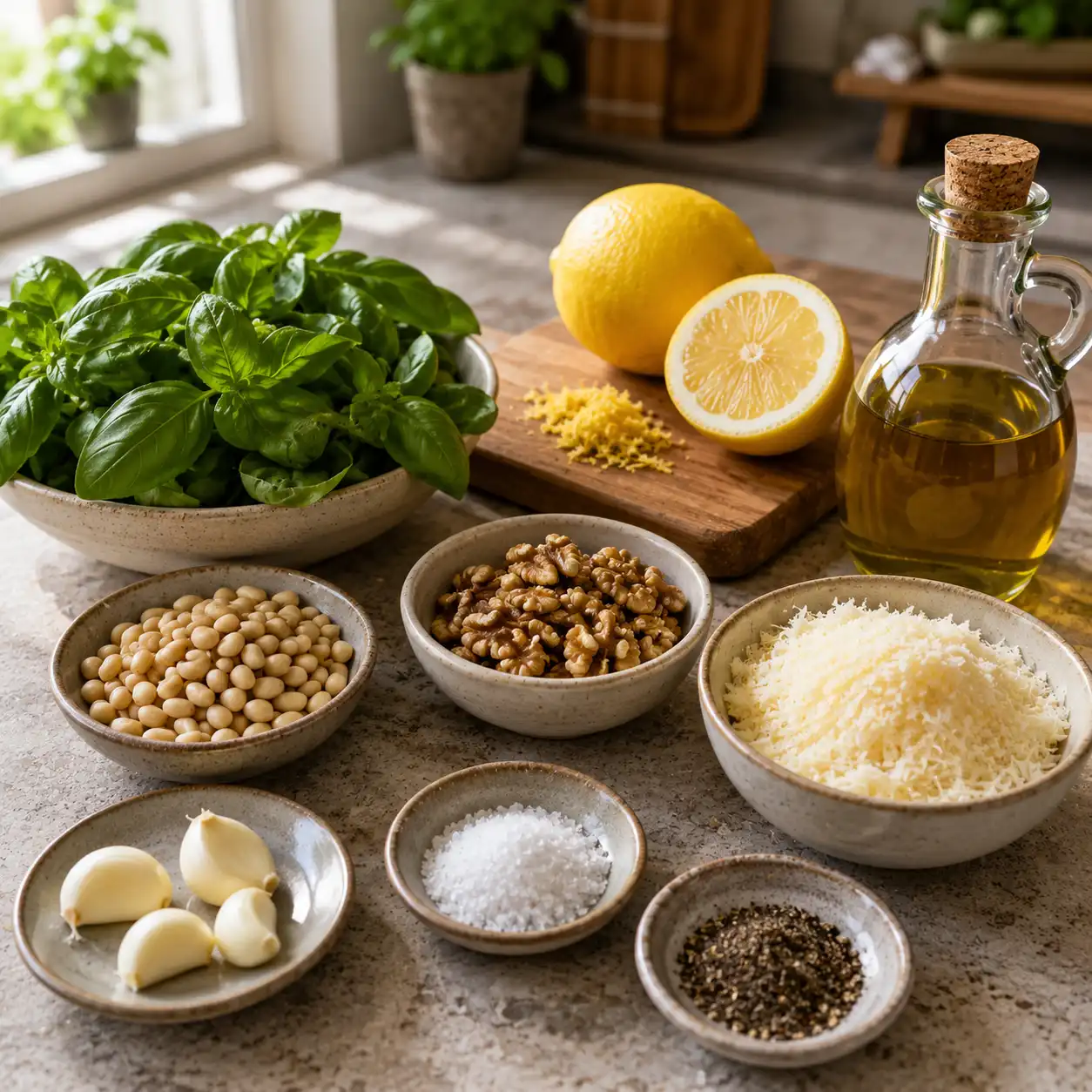
To make a high-quality lemon pesto, you must start with the freshest ingredients possible. Since this is a raw sauce, every single component will stand out. You want basil that is vibrant and free of dark spots. The lemons should be heavy for their size, indicating they are full of juice, and their skin should be bright and blemish-free for zesting. High-quality extra virgin olive oil is also a must, as it provides the base texture and a fruity undertone that complements the citrus perfectly.
Choosing Your Greens and Nuts
While sweet basil is the standard for lemon pesto, some people like to mix in a bit of baby spinach or even parsley to add depth. For the nuts, pine nuts are the classic choice, providing a buttery texture. However, they can be expensive and sometimes hard to find. Many home cooks find that walnuts, almonds, or even pistachio nuts work beautifully. If you choose walnuts, their slight bitterness is easily countered by the extra citrus in your lemon pesto. Just make sure to toast the nuts lightly to bring out their natural oils and nutty aroma.
The Role of Cheese and Garlic
Parmigiano-Reggiano or Pecorino Romano are the two heavy hitters when it comes to the cheesy element of lemon pesto. These hard cheeses add a necessary saltiness and a “umami” kick. Garlic is the final aromatic piece of the puzzle. You only need a clove or two; too much garlic can overpower the delicate lemon and basil. By using fresh garlic and grating your cheese from a block, you make sure the lemon pesto has a professional-grade taste that store-bought versions simply cannot match.
How to Make Homemade Lemon Pesto
Making lemon pesto at home is a quick process that takes less than ten minutes. While a mortar and pestle will give you a more traditional texture, a food processor or blender is much more convenient for modern life. The key is to pulse the ingredients rather than running the machine continuously. This prevents the basil from heating up, which can cause it to turn brown and lose its fresh flavor. Follow these steps to achieve a perfect, emerald-green lemon pesto every time.
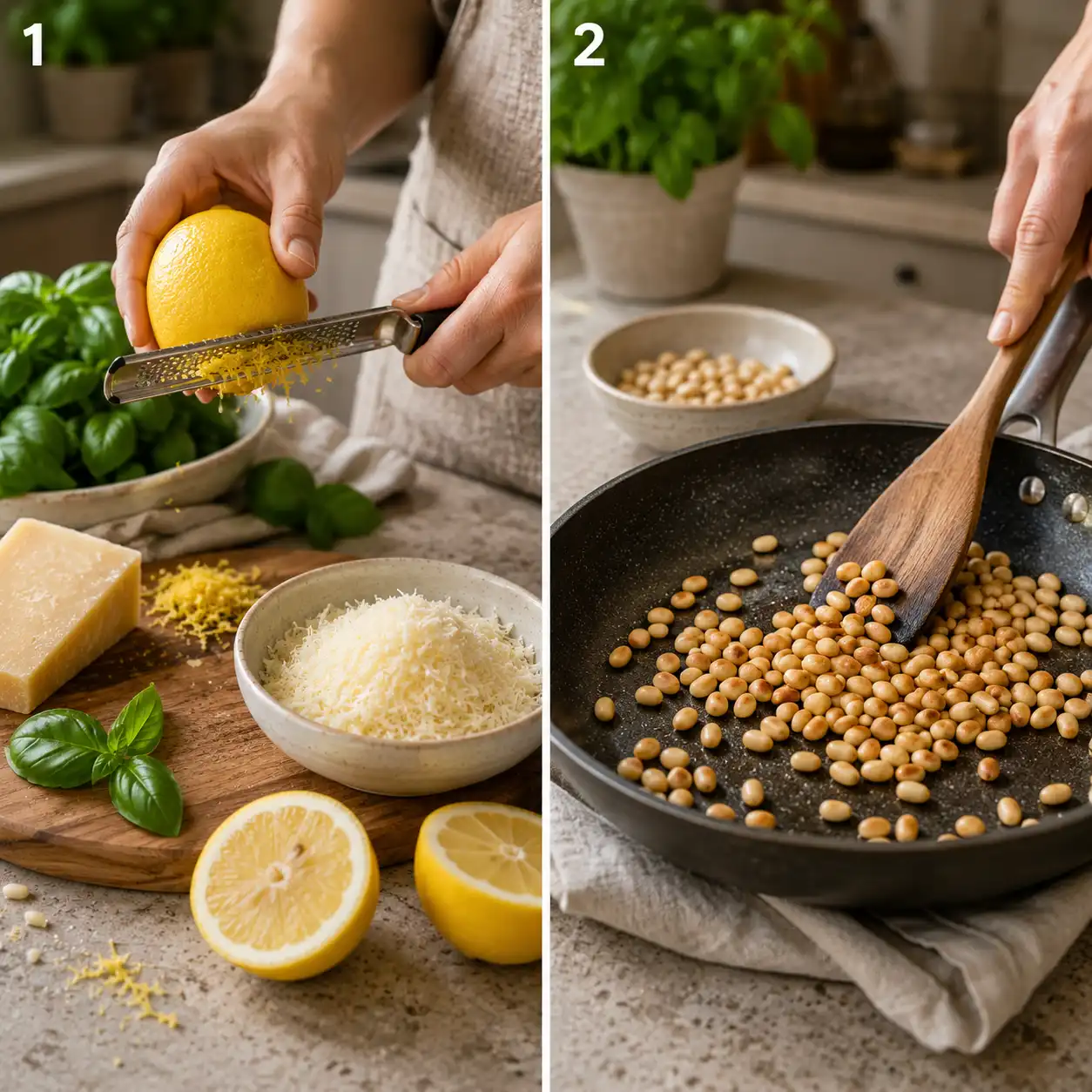
- Step 1: Prep the Ingredients – Wash and thoroughly dry two cups of fresh basil leaves, zest one large lemon, and grate half a cup of parmesan cheese.
- Step 2: Toast the Nuts – Place a quarter cup of pine nuts or walnuts in a dry pan over medium heat for 2-3 minutes until they become golden and fragrant.
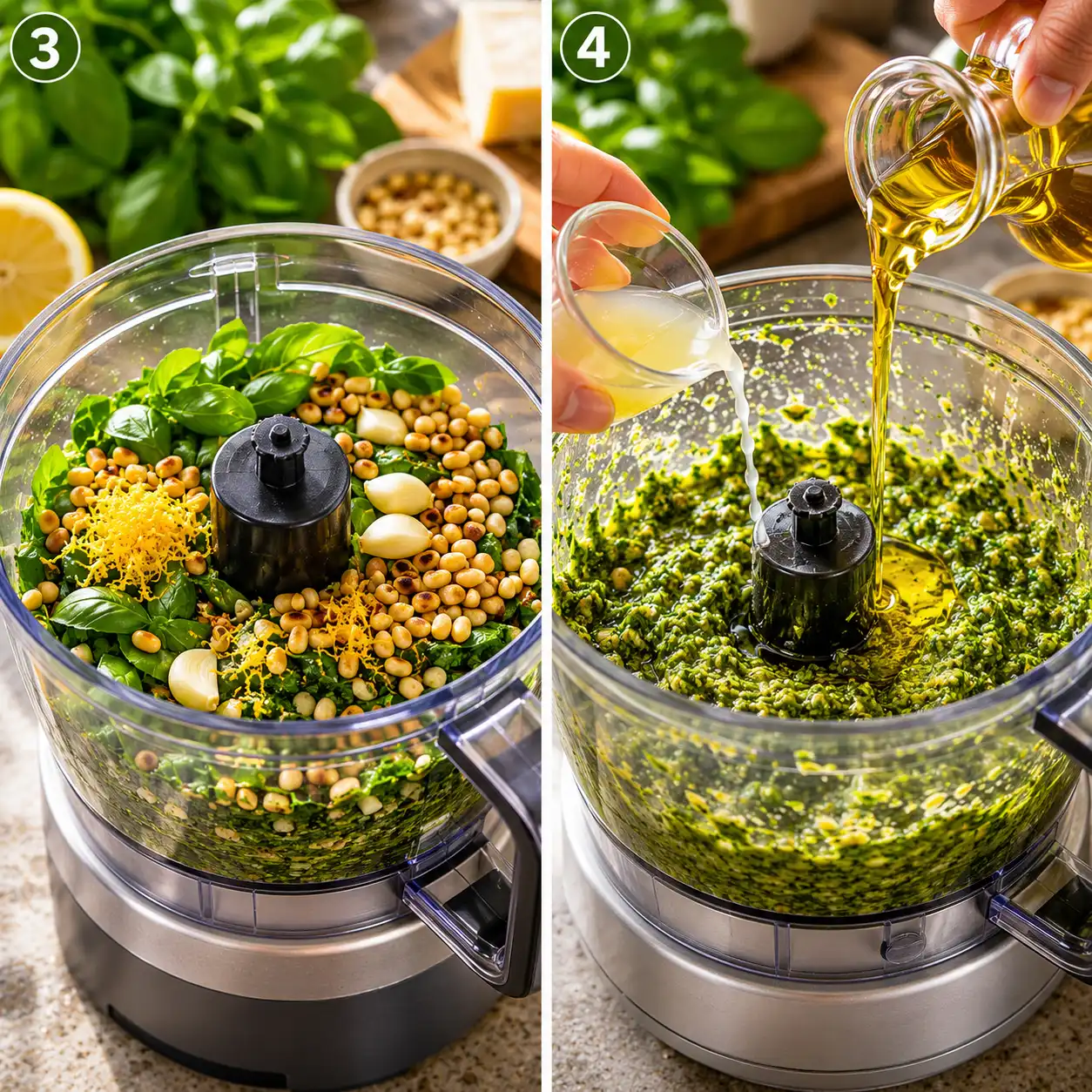
- Step 3: Pulse the Base – Put the basil, toasted nuts, garlic, and lemon zest into a food processor and pulse until everything is coarsely chopped.
- Step 4: Add the Liquids – While the processor is running on low, slowly pour in half a cup of extra virgin olive oil and two tablespoons of fresh lemon juice.
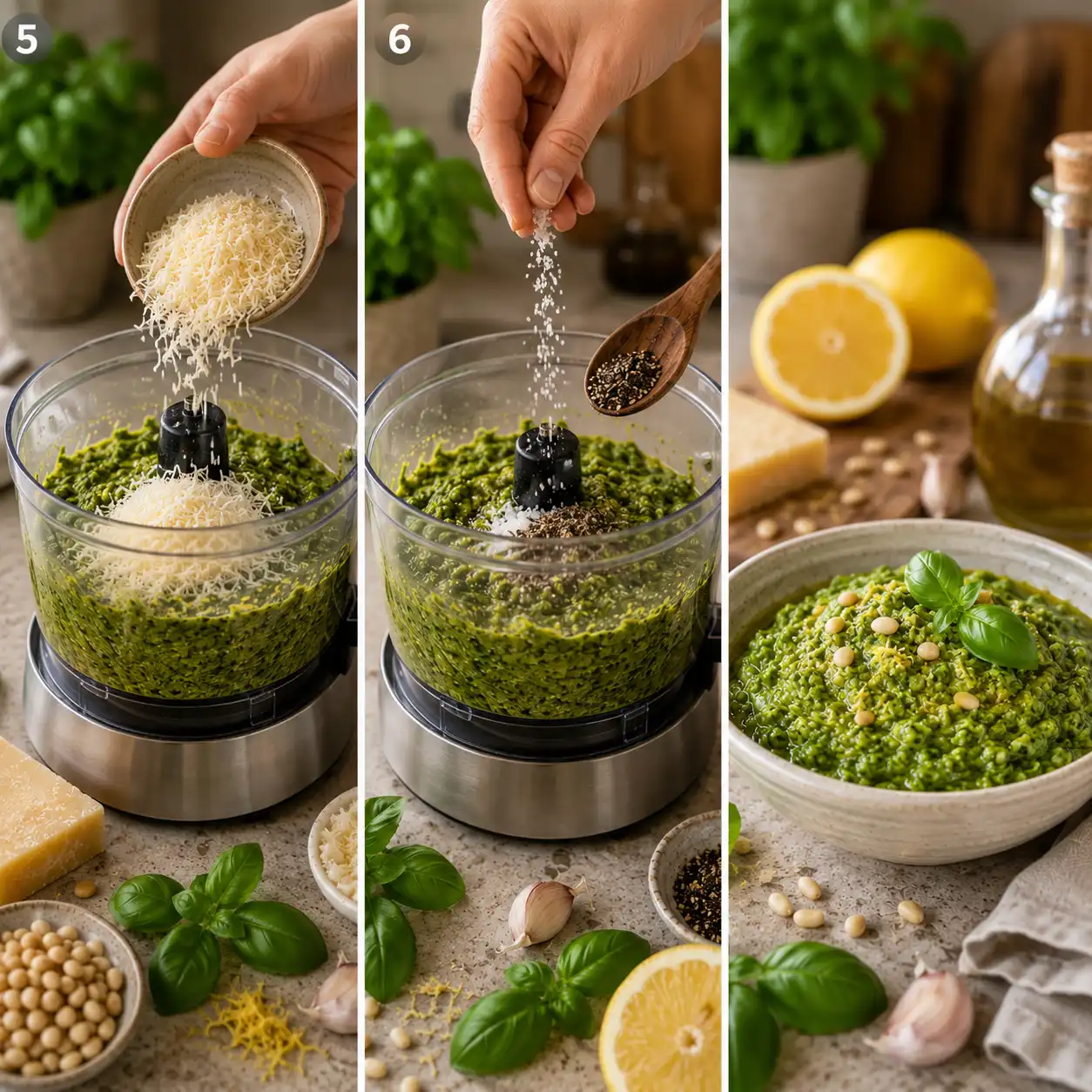
- Step 5: Mix in the Cheese – Add the grated parmesan cheese and pulse once or twice just to combine, keeping some of the texture intact.
- Step 6: Season and Taste – Add a pinch of sea salt and freshly cracked black pepper, taste, and adjust the lemon or salt as needed for your lemon pesto.
Ways to Use Lemon Pesto in Your Cooking
Once you have a jar of fresh lemon pesto in your fridge, the possibilities are endless. It is much more than just a pasta sauce. You can use it as a vibrant spread for sandwiches, a topping for roasted vegetables, or a flavorful base for a pizza. Because it has such a strong personality, a little goes a long way. Let us examine some of the most popular ways to incorporate this zesty sauce into your weekly meal planning and how it can brighten up even the simplest dishes.
Pasta and Grains
The most obvious pairing for lemon pesto is pasta. It works especially well with long strands like linguine or spaghetti, but also with shapes like fusilli that catch the bits of nut and cheese. For a truly green and healthy meal, you can toss it with spinach green pasta to double down on the herbal notes. It is also fantastic when stirred into warm quinoa, couscous, or a bowl of farro. The lemon helps lift the earthy flavors of the grains, making them feel like a light summer salad rather than a heavy side dish.
Seafood and Poultry
Lemon and seafood are a match made in heaven, and lemon pesto takes that relationship to the next level. It serves as an incredible topping for grilled white fish or baked salmon. If you are looking for a quick weeknight dinner, you can learn how to cook frozen cooked shrimp and then toss them in a spoonful of this pesto for an instant flavor boost. For poultry, try brushing it onto chicken breasts before roasting or using it as a condiment in a mediterranean chicken pita. The citrus notes complement the grilled meat and fresh vegetables perfectly.
| Feature | Traditional Pesto | Lemon Pesto |
|---|---|---|
| Primary Flavor | Herbal and Nutty | Zesty and Bright |
| Best Pairing | Red Meats and Gnocchi | Fish, Poultry, and Veggies |
| Acidity Level | Low | Medium-High |
| Visual Color | Deep Forest Green | Bright Emerald Green |
| Texture | Thick and Oily | Light and Emulsified |
Nutritional Benefits of Lemon Pesto
Adding lemon pesto to your diet provides more than just great taste; it also offers several nutritional benefits. Basil is rich in antioxidants and has anti-inflammatory properties. Olive oil is a source of healthy monounsaturated fats, which are good for heart health. When you include the citrus component, you are adding a boost of Vitamin C, which is essential for immune function and skin health. This sauce is a great way to add flavor without relying on heavy creams or sugar-laden bottled dressings.
Health Properties of Citrus
Lemons are famous for their high concentration of Vitamin C and flavonoids. These compounds help fight oxidative stress in the body. Using lemon in your cooking is a great habit to start, much like the practice of drinking cucumber and lemon water to stay hydrated and refreshed. The acid in the lemon also helps with digestion and can make the nutrients in the leafy greens more bioavailable. By making your own lemon pesto, you avoid the preservatives and high sodium levels found in many commercial condiments, keeping your meals clean and nutritious.
Healthy Fats and Proteins
The nuts and olive oil in lemon pesto provide the body with essential fatty acids. These fats are necessary for brain health and help you feel full and satisfied after a meal. If you use walnuts, you are also getting a dose of omega-3 fatty acids. While the cheese adds a bit of saturated fat, it also contributes protein and calcium. When used in moderation, lemon pesto is a powerhouse of nutrition that supports a balanced lifestyle. It is a much better choice than many other creamy sauces that are often high in calories and low in actual nutrients.
Variations of Lemon Pesto to Try
While the classic recipe is wonderful, you do not have to stop there. Lemon pesto is a very forgiving recipe that allows for plenty of experimentation. If you have a nut allergy, you can use toasted sunflower seeds or pumpkin seeds (pepitas) to get that crunchy texture without the risk. For those following a dairy-free or vegan diet, you can swap the parmesan cheese for nutritional yeast. The nutritional yeast provides a similar cheesy, nutty flavor while keeping the sauce entirely plant-based. You can also experiment with different citrus fruits, like lime or even grapefruit, for a different twist.
Herb Substitutions
If your basil plant is struggling or you want a different flavor, try substituting some of the greens. A lemon pesto made with half cilantro and half basil has a wonderful Southwestern or Thai flair. Using mint and parsley can create a very Mediterranean feel that is perfect for lamb or roasted root vegetables. Some people even use carrot tops or kale for a more robust, earthy lemon pesto. The important part is to keep the ratio of greens to oil and citrus consistent so the sauce maintains its signature emulsified texture and bright finish.
Spicing It Up
For those who like a little heat, adding a pinch of red pepper flakes to your lemon pesto can create a beautiful contrast between the cooling lemon and the spicy peppers. You could also add a teaspoon of capers for a salty, briny punch that mimics the flavors of a piccata sauce. Another fun idea is to blend in a sun-dried tomato for a “red” version of lemon pesto that has a deeper, sweeter flavor. The versatility of this sauce is one of its best features, allowing you to adapt it to whatever ingredients you have on hand in your pantry or garden.
Common Mistakes and How to Fix Them
Even though lemon pesto is easy to make, a few common errors can ruin the batch. One major mistake is over-processing the sauce. If you blend it for too long, the friction from the blades can heat the basil, making it turn a dull brown color. Another issue is using bottled lemon juice instead of fresh. The bottled variety often has a metallic or overly preserved taste that can cloy the palate. Always use fresh lemons for the best result. If your pesto is too thick, simply whisk in a tablespoon of warm water or more oil until it reaches your desired consistency.
Managing Salt and Bitterness
Sometimes, extra virgin olive oil can turn bitter when it is blended at high speeds. To avoid this, you can pulse the greens, nuts, and garlic first, and then stir in the olive oil by hand at the very end. If your lemon pesto tastes too salty, it is likely because of the cheese. You can balance this out by adding a bit more lemon juice or a small pinch of sugar. If it feels too acidic, add a little more oil or a few more nuts to mellow out the sharpness. Tasting as you go is the best way to make sure your final product is perfectly balanced.
Keeping the Color Bright
To keep your lemon pesto looking vibrant and green, some chefs recommend blanching the basil leaves in boiling water for five seconds and then immediately shocking them in ice water. This sets the chlorophyll and keeps the sauce green for days. However, for most home cooks, simply adding the lemon juice and storing the pesto with a thin layer of olive oil on top is enough to prevent oxidation. Make sure your basil is completely dry after washing it; excess water can lead to a watery sauce that doesn’t cling to pasta or meat properly.
Storing and Freezing Lemon Pesto
Fresh lemon pesto will last in the refrigerator for about five to seven days. To store it properly, put it in a clean glass jar and press the sauce down with a spoon to remove any air pockets. Pour a thin layer of olive oil over the top to create a seal, which prevents the air from reaching the basil. When you are ready to use it, just stir the oil back into the sauce. If you find yourself with an abundance of basil and lemons, freezing is a fantastic option that allows you to enjoy the taste of summer in the middle of winter.
The Ice Cube Tray Trick
One of the best ways to freeze lemon pesto is by using an ice cube tray. Spoon the pesto into the individual compartments and freeze until solid. Once frozen, pop the cubes out and store them in a freezer-safe bag. This allows you to grab exactly as much as you need for a single serving of pasta or to drop a cube into a hot soup for an instant flavor boost. A single cube of lemon pesto can transform a plain bowl of vegetable soup into a gourmet meal in seconds. These cubes will stay fresh in the freezer for up to six months.
Thawing and Using Frozen Pesto
When you are ready to use your frozen lemon pesto, you can let it thaw in the fridge overnight. If you are in a hurry, you can place the frozen cube directly into a pan with warm pasta; the heat from the noodles will melt the sauce quickly. Avoid microwaving the pesto, as this can cook the basil and change the flavor of the cheese. If the sauce looks a little separated after thawing, give it a vigorous stir or a quick pulse in the blender to bring the emulsion back together. It will still have all the bright citrus flavor you love.
FAQs
Can I make lemon pesto without a food processor?
Yes, you can! You can use a traditional mortar and pestle to grind the ingredients into a paste. If you do not have those, you can finely mince the basil, garlic, and nuts with a sharp knife and then whisk in the cheese, oil, and lemon juice in a small bowl. This “hand-chopped” version has a lovely rustic texture that many people prefer for topping toasted bread or grilled meats.
Is lemon pesto gluten-free?
Naturally, the ingredients in lemon pesto (basil, nuts, cheese, oil, lemon, garlic) are all gluten-free. However, if you are purchasing a pre-made version or using certain additives, always check the labels for hidden gluten. When made at home from scratch, it is a safe and delicious option for anyone following a gluten-free diet.
Which nuts are best for lemon pesto?
While pine nuts are traditional, walnuts are a very popular and more affordable alternative for lemon pesto. Almonds provide a slightly sweeter taste, while pistachios offer a beautiful color and a unique, buttery flavor. You can even use cashews for a creamier texture. Just remember to toast whatever nut you choose to maximize the flavor profile of the sauce.
Conclusion
Lemon pesto is a simple yet powerful addition to any cook’s repertoire. Its ability to balance rich, fatty ingredients with a bright, citrusy punch makes it a favorite for many different types of dishes. By using fresh ingredients and following a few basic steps, you can create a sauce that is far superior to anything you would find in a grocery store. From your morning eggs to your evening pasta, this zesty sauce is ready to bring a little bit of sunshine to every meal you prepare.



1 thought on “Vibrant Lemon Pesto: The Ultimate Bright and Zesty Sauce Recipe”