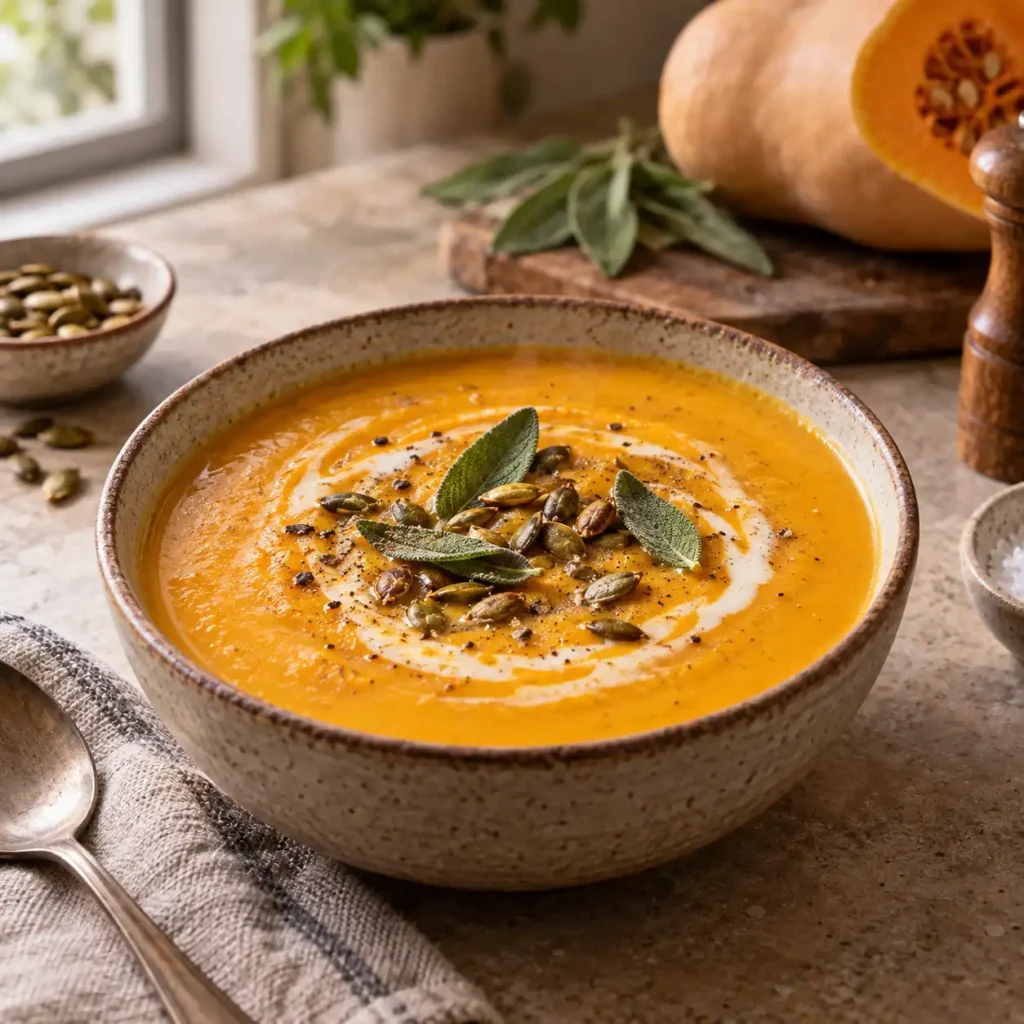
When the air turns crisp and the leaves start to fall, nothing feels more welcoming than a steaming bowl of homemade butternut squash soup. This vibrant, golden dish is a staple of autumn kitchens, offering a perfect balance of sweetness and savory depth. Whether you are a beginner in the kitchen or a seasoned home cook, creating a velvety butternut squash soup is a rewarding experience that brings warmth and nourishment to your table during the colder months of the year.
Table of Contents
Why Butternut Squash Soup is the Perfect Winter Meal
A Wealth of Nutritional Benefits
One of the best reasons to whip up a batch of butternut squash soup is the incredible health profile it offers. This winter vegetable is packed with vitamins A and C, which are vital for supporting your immune system during flu season. It also provides a good amount of potassium and magnesium. If you are looking for ways to eat better, you might find that including this soup in your routine is a great choice. If you enjoy eating foods that support your immune system and reduce swelling, check out these anti-inflammatory recipes to pair with your soup and keep your body feeling its best throughout the year.
Low Calorie and High Satisfaction
Despite its rich and creamy texture, butternut squash soup can be surprisingly low in calories, especially if you use vegetable broth instead of heavy cream. It is naturally high in fiber, which helps you feel full for longer periods. For those watching their waistline or looking for light yet filling dinner options, this dish is a fantastic alternative to heavier stews. It fits well into various dietary lifestyles, much like the concepts found in the cabbage soup weight loss approach, providing plenty of volume and flavor without the extra guilt of processed ingredients.
Print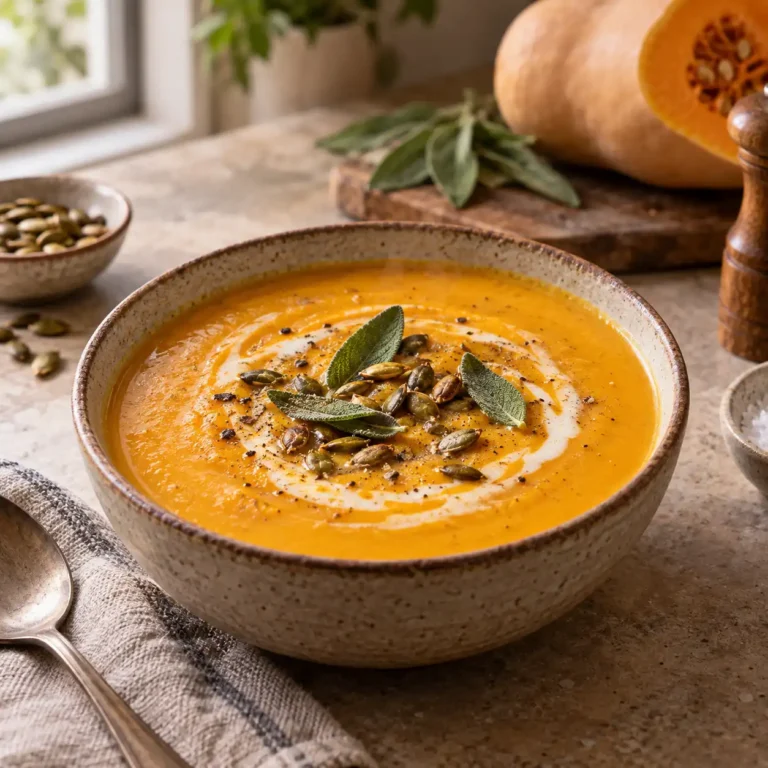
The Ultimate Guide to Making Creamy Butternut Squash Soup at Home
A vibrant, golden autumn soup that balances natural sweetness with savory depth for a velvety, nourishing winter meal.
- Total Time: 50 minutes
- Yield: 4 servings 1x
Ingredients
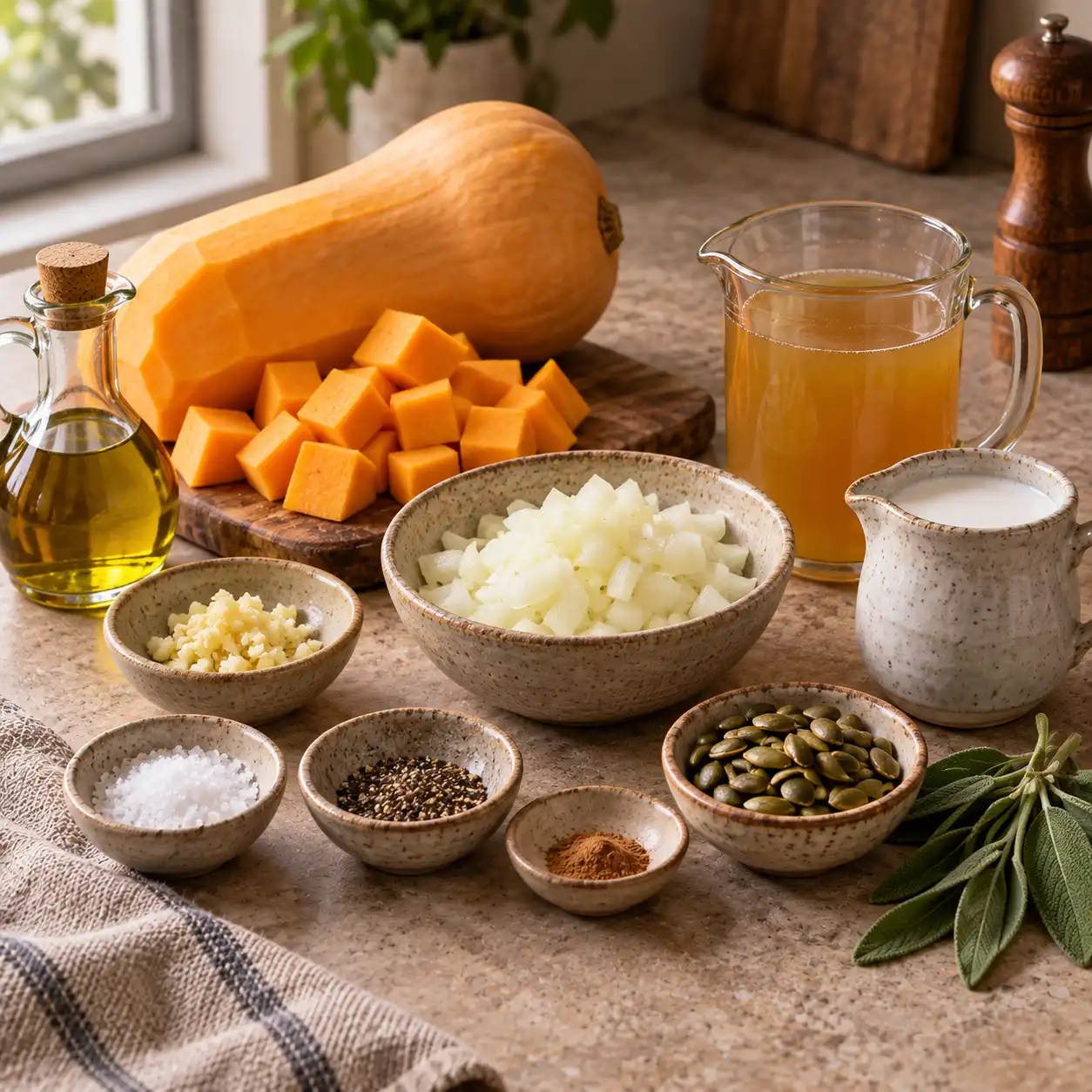
- 1 large butternut squash (approx. 3 lbs), peeled and cubed
- 1 medium yellow onion, diced
- 3 cloves garlic, minced
- 4 cups low-sodium vegetable broth
- 1/2 cup heavy cream
- 2 tablespoons extra virgin olive oil
- 1 teaspoon sea salt
- 1/2 teaspoon ground black pepper
- 1/2 teaspoon ground nutmeg
- 1 tablespoon fresh sage, finely chopped
Instructions
- Step 1: Prep Vegetables – Peel the butternut squash, remove the seeds, and cut the flesh into 1-inch cubes.
- Step 2: Sauté Aromatics – Heat olive oil in a large stockpot over medium heat and sauté the onion until translucent.
- Step 3: Add Garlic – Stir in the minced garlic and cook for 1 minute until it becomes fragrant.
- Step 4: Incorporate Squash – Add the cubed butternut squash to the pot and cook for 5 minutes, stirring occasionally.
- Step 5: Simmer Soup – Pour in the vegetable broth and bring to a boil, then reduce heat to low and simmer for 20 minutes.
- Step 6: Season Base – Stir in the salt, black pepper, nutmeg, and fresh sage once the squash is fork-tender.
- Step 7: Blend Mixture – Use an immersion blender to puree the soup directly in the pot until perfectly smooth.
- Step 8: Final Finish – Stir in the heavy cream and simmer for an additional 2 minutes before serving warm.
Notes
For a dairy-free version, substitute the heavy cream with full-fat canned coconut milk.
- Prep Time: 20 minutes
- Cook Time: 30 minutes
- Category: Soup
- Method: Stovetop
- Cuisine: American
- Diet: Vegetarian
Nutrition
- Serving Size: 1.5 cups
- Calories: 275 kcal
- Sugar: 9g
- Sodium: 680mg
- Fat: 15g
- Saturated Fat: 7g
- Unsaturated Fat: 7g
- Trans Fat: 0.1g
- Carbohydrates: 35g
- Fiber: 6g
- Protein: 4g
- Cholesterol: 35mg
Keywords: Butternut Squash, Creamy Soup, Autumn Recipe, Healthy Dinner, Winter Comfort Food
How to Select and Prepare Your Squash
Finding the Best Squash at the Market
The success of your butternut squash soup starts at the grocery store or farmer’s market. You want to look for a squash that feels heavy for its size, as this indicates a high moisture content and plenty of flesh. The skin should be a uniform, matte tan color. Avoid any squashes that have soft spots, green streaks, or deep cuts.
A matte finish is actually better than a shiny one; a shiny skin often means the squash was picked too early and won’t be as sweet or flavorful as a fully matured one. The Butternut squash, also known in some regions as a butternut pumpkin, is a type of winter squash that grows on a vine and develops a sweeter, nuttier taste as it ripens.
Safe and Easy Peeling Techniques
Many people find the thick skin of the squash intimidating, but preparing it for butternut squash soup does not have to be a struggle. To make peeling easier, you can poke a few holes in the skin with a fork and microwave the whole squash for about two minutes. This softens the rind just enough for a standard vegetable peeler to glide through. Once peeled, slice off the top and bottom, cut the squash in half lengthwise, and scoop out the seeds with a large spoon. From there, you can easily cube the flesh into bite-sized pieces for roasting or boiling.
The Secret to a Rich and Flavorful Base
The Power of Aromatics
To give your butternut squash soup a professional level of flavor, you must start with a solid foundation of aromatics. Onions, garlic, and celery are the classic trio that provides a savory backbone to the sweetness of the squash. Sautéing these vegetables in a little olive oil or butter until they are soft and translucent creates a depth of flavor that carries through the entire dish. Some cooks like to add a bit of freshly grated ginger or a pinch of curry powder at this stage to give the soup a subtle warmth that tickles the back of the throat.
Roasting vs. Boiling the Squash
While you can certainly boil your squash directly in the broth, roasting the cubes first is a game-changer for butternut squash soup. When you roast the squash in a hot oven, the natural sugars caramelize, creating a toasted, nutty flavor that boiling simply cannot match. Simply toss your cubes with oil and salt, spread them on a baking sheet, and roast at 400 degrees Fahrenheit until the edges are golden brown. This extra step adds a layer of complexity that makes the final result taste much more sophisticated.
Choosing the Right Liquids and Seasonings
Broth Options for Every Diet
The liquid you choose will define the character of your butternut squash soup. Chicken broth offers a traditional, savory richness, while vegetable broth keeps the recipe suitable for vegetarians and vegans. Make sure to choose a low-sodium version so you can control the salt level yourself. If you want a soup that is incredibly creamy without using dairy, coconut milk is an excellent substitute. It pairs beautifully with the natural sweetness of the squash and adds a tropical flair that is both comforting and unique.
The Best Herbs and Spices
Sage and thyme are the most common herbs used in butternut squash soup, as their earthy notes balance the squash perfectly. You can also experiment with nutmeg or cinnamon to lean into the autumnal vibes. A splash of apple cider vinegar or a squeeze of fresh lemon juice right before serving can brighten the flavors and cut through the richness. These small additions make a big difference in how the soup tastes on the palate, turning a simple bowl of pureed vegetables into a gourmet experience.
Step-by-Step Instructions for the Perfect Soup
Preparation and Cooking Steps
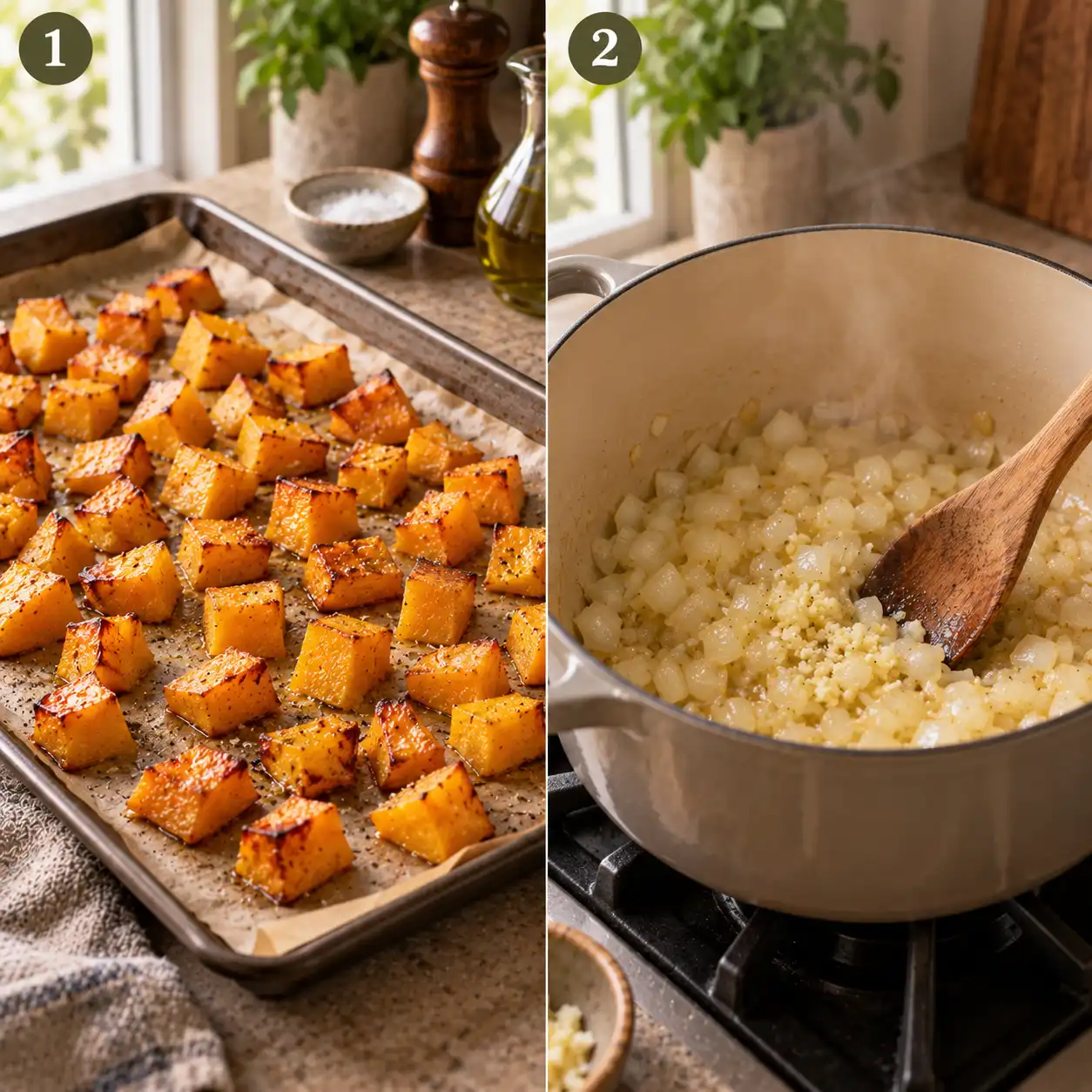
- Step 1: Roast the Squash – Peel, seed, and cube one large butternut squash. Toss the cubes with two tablespoons of olive oil and a pinch of salt. Spread them on a parchment-lined baking sheet and bake at 400°F (200°C) for 25-30 minutes or until soft and caramelized.
- Step 2: Sauté the Aromatics – In a large pot or Dutch oven, heat one tablespoon of oil over medium heat. Add one chopped yellow onion and three cloves of minced garlic. Cook until the onion is soft and smells sweet, which usually takes about five to seven minutes.
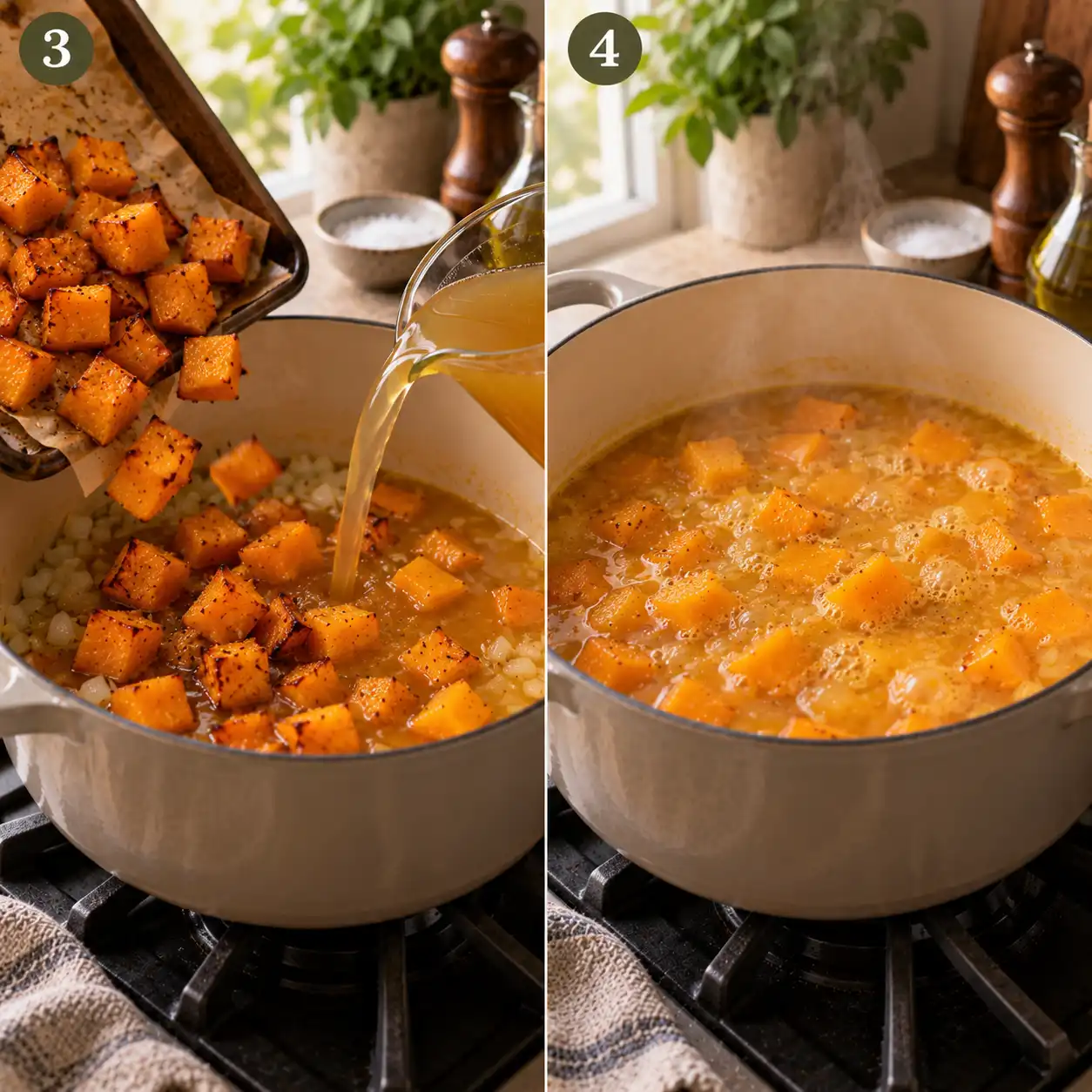
- Step 3: Combine and Simmer – Add the roasted squash cubes into the pot with the onions and garlic. Pour in four to five cups of vegetable or chicken broth. Bring the mixture to a boil, then turn the heat down and let it simmer for about ten minutes to let the flavors mingle.
- Step 4: Blend Until Smooth – Use an immersion blender directly in the pot to puree the soup until it is completely smooth. If you do not have an immersion blender, carefully transfer the soup in batches to a regular stand blender, making sure to leave the lid slightly cracked to let steam escape.
- Step 5: Finish and Season – Stir in half a cup of coconut milk or heavy cream if you want extra richness. Taste the soup and add salt, black pepper, and a pinch of nutmeg. Serve warm with your favorite toppings.

How to Lift the Flavor with Toppings
Crunchy and Savory Additions
Toppings are where you can get creative with your butternut squash soup. Toasted pumpkin seeds (pepitas) add a wonderful crunch that contrasts with the smooth liquid. You could also use toasted pecans or walnuts for an even nuttier profile. If you want to add a bit of protein to your bowl, consider using crispy tofu cubes. If you prefer a meat-free protein source, croutons made of crispy curd are a great idea; find more inspiration with these best recipes with tofu to see how versatile this ingredient can be as a topping.
Fresh and Tangy Garnishes
A dollop of Greek yogurt or sour cream on top of each bowl adds a cool, tangy element that cuts through the heat. Fresh herbs like chives, parsley, or even a few fried sage leaves make the dish look beautiful and add a burst of freshness. For a touch of heat, a drizzle of chili oil or a sprinkle of red pepper flakes can provide a nice contrast to the sweet squash. These garnishes turn a simple weekday dinner into something that looks like it came from a high-end bistro.
What to Serve with Butternut Squash Soup
Hearty Side Dishes
While a bowl of butternut squash soup can be a meal on its own, it often feels even better when paired with a side dish. A thick slice of crusty sourdough bread is perfect for dipping into the soup and soaking up every last drop. A fresh green salad with a tart vinaigrette also balances the creamy texture of the soup quite well. If you are looking for a more substantial pairing to serve to your family, adding a lean protein on the side can make this a full meal. You might try serving a juicy baked chicken breast alongside your warm bowl for a balanced and healthy dinner.
Bread and Grains
Beyond standard bread, you could serve the soup with a side of quinoa or wild rice to add texture. Some people enjoy serving the soup inside a hollowed-out bread bowl for a fun and festive presentation. Cornbread is another fantastic option, as its slightly crumbly texture and corn flavor go hand-in-hand with the sweetness of the squash. No matter what you choose, having something to chew on alongside the smooth soup makes the eating experience more varied and interesting.
Storage and Reheating Tips
Keeping Your Soup Fresh
Butternut squash soup is one of those rare dishes that actually tastes better the next day. As it sits in the refrigerator, the spices and aromatics have more time to blend together, resulting in a deeper flavor. You can store your soup in an airtight container in the fridge for up to four or five days. It is an ideal candidate for meal prepping on a Sunday so that you have easy, healthy lunches ready to go for the rest of the week.
Freezing for Later
If you have made a giant batch, you will be happy to know that butternut squash soup freezes beautifully. To freeze it, let the soup cool completely first. Pour it into freezer-safe bags or containers, leaving about an inch of space at the top for expansion. It can stay in the freezer for up to three months. When you are ready to eat it, simply thaw it in the fridge overnight and reheat it slowly on the stove. You may need to add a splash of broth or water if the soup has thickened too much during the freezing process.
Nutritional Breakdown of Butternut Squash Soup
Understanding what goes into your body is important for maintaining a healthy lifestyle. Below is a general overview of the nutritional content you can expect from a standard serving of this soup made with vegetable broth and a small amount of coconut milk.
| Nutrient | Amount per Serving (approx. 1.5 cups) |
|---|---|
| Calories | 180 kcal |
| Total Fat | 7g |
| Fiber | 6g |
| Protein | 3g |
| Vitamin A | 280% DV |
| Vitamin C | 50% DV |
Common Mistakes to Avoid
Not Seasoning Enough
Because butternut squash is naturally quite sweet, it needs a good amount of salt and acid to keep the flavor from becoming one-dimensional. Many home cooks are afraid of salt, but in a large pot of butternut squash soup, you need a decent amount to bring out the earthy notes. Always taste your soup before serving and add a little more salt or a splash of vinegar if the flavor feels flat or “muted.”
Using Too Much Liquid
It is much easier to thin out a thick soup than it is to thicken a watery one. When you are blending your butternut squash soup, start by adding only three cups of broth. Once it is pureed, you can see the consistency and decide if you want to add the remaining cup of broth. This way, you can achieve that perfect, velvet-like texture that makes this soup so famous. If it ends up too thin, you can simmer it uncovered for a while to reduce the liquid, but starting with less is always the safer bet.
FAQs
Can I make butternut squash soup in a slow cooker?
Yes! You can put all your cubed squash, aromatics, and broth into a slow cooker and cook on low for 6 to 8 hours. Once the squash is very tender, use your immersion blender to puree it. While you miss out on the roasted flavor, it is an incredibly convenient way to make a delicious meal.
Is butternut squash soup gluten-free?
Naturally, yes. As long as you use a gluten-free broth and avoid adding flour as a thickener, the soup is safe for those with gluten sensitivities. The squash itself provides all the thickness you need once it is blended.
What if my soup is too sweet?
If the squash was particularly ripe, the soup might turn out sweeter than you like. You can balance this by adding more salt, a pinch of cayenne pepper for heat, or an extra tablespoon of lemon juice or apple cider vinegar. These acidic and salty elements will neutralize the excess sweetness.
Can I use frozen butternut squash?
Absolutely. Using frozen, pre-cubed squash is a huge time-saver. You can still roast the frozen cubes by putting them directly on a baking sheet with oil, though they may take a few extra minutes to brown properly compared to fresh squash.
Conclusion
Making a pot of butternut squash soup is a wonderful way to celebrate the flavors of the season while providing your family with a healthy and comforting meal. By roasting your vegetables and using the right blend of spices, you can create a dish that is far superior to anything found in a can. It is a flexible, forgiving recipe that allows for plenty of personal touches. Grab a squash from your local market today and bring the warmth of this golden soup into your home.