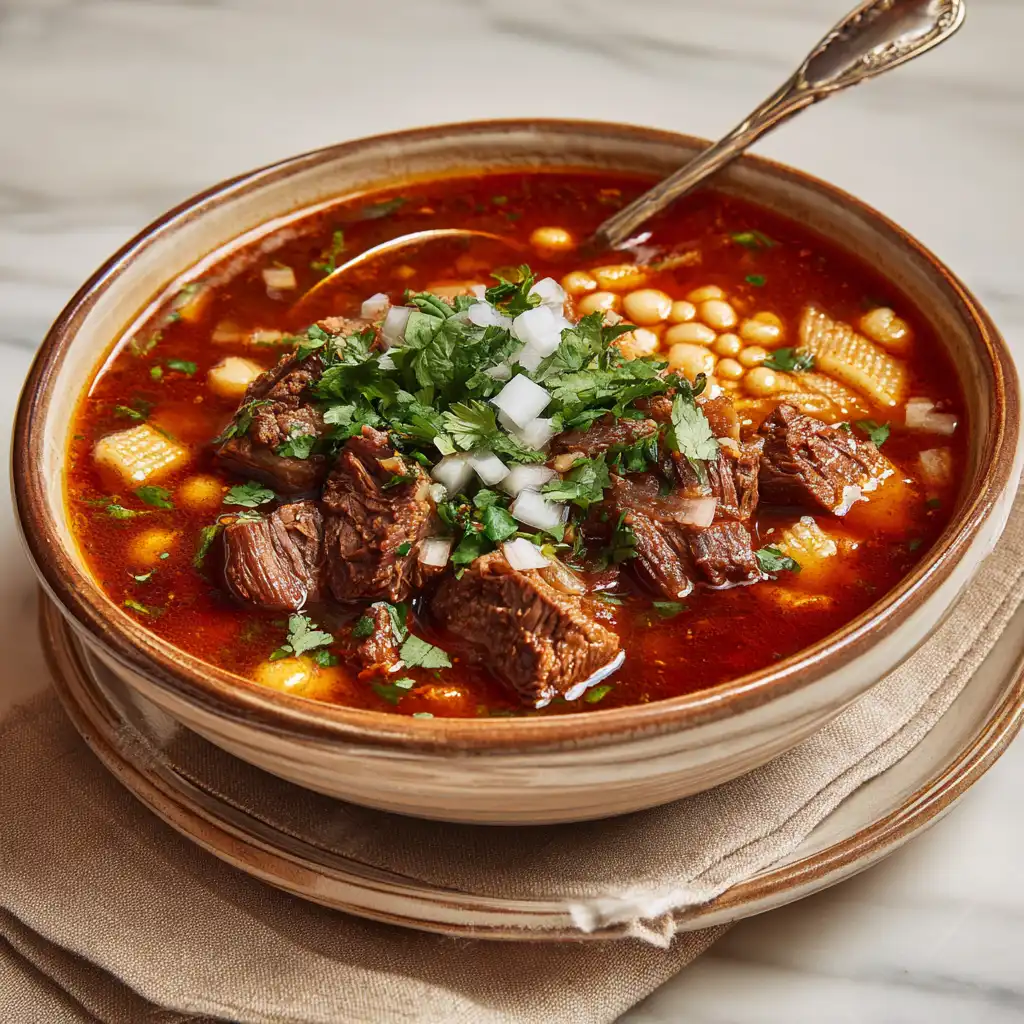
There is nothing quite like a steaming bowl of soup to warm your soul on a chilly morning or a quiet weekend. If you are looking for a meal that carries deep cultural roots and a rich, complex flavor, this beef menudo recipe is exactly what you need. It is a hearty, traditional Mexican stew that focuses on slow-cooked textures and a vibrant red chile broth. Whether you are cooking for a big family gathering or simply want a comforting meal to last through the week, this guide will help you master the process from start to finish.
Table of Contents
What is This Beef Menudo Recipe?
When you talk about Mexican comfort food, this beef menudo recipe always comes up in the conversation. Traditionally, menudo is a soup made with tripe the lining of a cow’s stomach simmered in a broth flavored with dried chiles, garlic, and oregano. While some versions include other meats, our beef menudo recipe keeps things focused on beef products to keep it friendly for those who do not eat certain other meats. It is often served at weddings, baptisms, and most notably, on Sunday mornings as a way to gather the family together after a long week.
The Cultural Heritage of the Dish
The history of this stew is as rich as the broth itself. To understand why tripe is so popular in Mexico, it helps to read about the history of Mexican culinary traditions and how they value using every part of the animal. This “nose-to-tail” philosophy means nothing goes to waste, and tough cuts of meat are transformed into delicacies through hours of gentle simmering. This beef menudo recipe represents a time when families had to be creative with what they had, turning simple ingredients into a feast that is now celebrated across the globe. It is a testament to the resourcefulness and artistry of home cooks throughout history.
Texture and Flavor Profile
The first thing people notice about a beef menudo recipe is the unique texture of the tripe. When cooked correctly, it becomes tender and slightly chewy, soaking up the spicy and earthy flavors of the red chile sauce. The broth is deep red, slightly thickened by the natural gelatin in the beef bones and feet, and carries a mild to moderate heat depending on the chiles you use. It is savory, aromatic, and incredibly satisfying. While many enjoy this beef menudo recipe for brunch, others prefer starting their morning with a savory shakshuka with feta for a different kind of spice profile, but nothing beats the depth of a long-simmered tripe soup.
Print
How to Make an Authentic Beef Menudo Recipe at Home
A hearty, traditional Mexican stew featuring slow-cooked beef tripe and beef bones in a vibrant, aromatic red chile broth.
- Total Time: 4 hours 45 minutes
- Yield: 8 servings 1x
Ingredients
- 3 lbs beef tripe, thoroughly cleaned and cut into 1-inch pieces
- 2 lbs beef feet or marrow bones for broth richness
- 6 dried guajillo chiles, stemmed and seeded
- 3 dried ancho chiles, stemmed and seeded
- 1 large white onion, halved
- 6 cloves garlic, peeled and smashed
- 2 tablespoons dried Mexican oregano
- 1 tablespoon salt, or to taste
- 1 teaspoon ground cumin
- 15 oz can hominy, drained and rinsed
- Fresh cilantro, chopped for garnish
- Lime wedges for serving
- 1 gallon water
Instructions
- Clean the tripe: Wash the tripe thoroughly in cold water and vinegar, then cut into bite-sized squares.
- Initial boil: Place tripe, beef feet, onion, and garlic in a large stockpot and cover with water.
- Simmer the meat: Bring to a boil, skim off any foam, then reduce heat and simmer for 3 hours.
- Rehydrate the chiles: Soak the dried guajillo and ancho chiles in hot water for 20 minutes until soft.
- Blend the sauce: Place soaked chiles in a blender with a cup of soaking liquid and blend until smooth.
- Strain the sauce: Pass the chile puree through a fine-mesh strainer into the pot to ensure a smooth broth.
- Season the stew: Add the Mexican oregano, cumin, and salt to the pot, stirring well to combine flavors.
- Incorporate the hominy: Add the rinsed hominy to the stew during the final 45 minutes of cooking.
- Cook until tender: Continue simmering until the tripe is perfectly tender and the broth is deep red.
- Garnish and serve: Ladle the hot soup into bowls and serve with fresh cilantro, onions, and lime.
Notes
Cleaning the tripe is the most important step for a clean flavor. You can add more chiles if you prefer a spicier broth.
- Prep Time: 45 minutes
- Cook Time: 4 hours
- Category: Soup
- Method: Slow Simmering
- Cuisine: Mexican
- Diet: Gluten-Free
Nutrition
- Serving Size: 1.5 cups
- Calories: 380 kcal
- Sugar: 4g
- Sodium: 1150mg
- Fat: 18g
- Saturated Fat: 7g
- Unsaturated Fat: 11g
- Trans Fat: 0.5g
- Carbohydrates: 22g
- Fiber: 5g
- Protein: 32g
- Cholesterol: 175mg
Keywords: Menudo, Beef Tripe, Mexican Stew, Authentic Menudo, Traditional Mexican Food
Cleaning and Preparing the Beef Tripe
Preparation is the most important part of any beef menudo recipe. Since tripe is an organ meat, it requires thorough cleaning to make sure the final soup has a clean, pleasant taste. You want to look for “honeycomb” tripe, which has a beautiful pattern and a better texture than “flat” or “book” tripe. Most grocery stores sell tripe that has already been bleached and cleaned, but you still need to do some work at home. Before you start, make sure you know how to properly handle offal by following a detailed guide on preparing tripe safely to get the best results.
The Vinegar and Salt Soak
To start your beef menudo recipe, wash the tripe under cold running water. Many home cooks swear by soaking the meat in a mixture of water, plenty of salt, and a splash of lime juice or vinegar for about thirty minutes. This helps remove any lingering odors and brightens the flavor of the meat. After soaking, scrub the tripe gently and rinse it again. This extra effort makes a huge difference in the quality of your soup, making sure the beef menudo recipe tastes fresh and savory rather than overly gamey. Once cleaned, you can cut the tripe into bite-sized squares or strips, depending on your preference.
Parboiling for Clarity
Another trick for a clear, delicious beef menudo recipe is parboiling. Place your cleaned tripe pieces in a large pot of water with some onion and garlic, bring it to a boil, and let it cook for about fifteen to twenty minutes. After that, drain the water and rinse the meat one last time. This process gets rid of impurities that could make the final broth cloudy or greasy. Working with beef requires patience and the right seasoning, much like when you prepare a beef kofta kebab with rice, where spices are the star and prep work is key to a great outcome.
Essential Ingredients for Your Beef Menudo Recipe
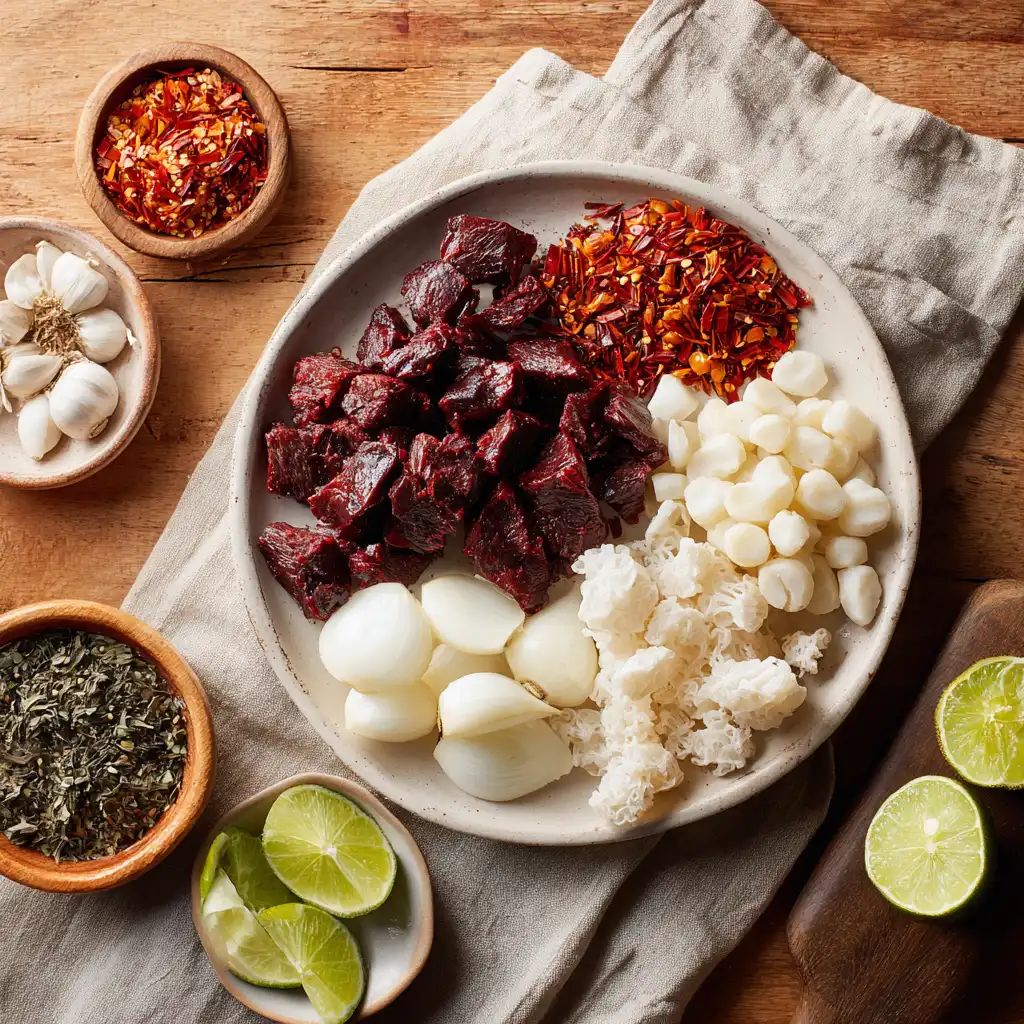
The beauty of this beef menudo recipe lies in the balance of its ingredients. You do not need a lot of fancy tools, but you do need quality spices and the right cuts of meat. Since we are avoiding all pig products in this version, we use beef feet or beef tendons to add body and richness to the soup. These parts release natural collagen during the long cooking process, giving the broth a silky mouthfeel that is characteristic of a great beef menudo recipe. Without these, the soup might feel a bit thin, so do not skip the beef bones!
The Red Chile Sauce
The soul of the beef menudo recipe is the chile sauce. Usually, a mix of dried Guajillo and Ancho chiles is used. Guajillo chiles provide a bright, tangy flavor and a beautiful red color without too much heat. Ancho chiles add a smoky, sweet depth that rounds out the broth. You will need to remove the seeds and stems, toast them lightly in a pan, and then soak them in hot water until they are soft. Once they are tender, blend them with garlic, cumin, and a little bit of the soaking liquid to create a smooth, vibrant paste that will serve as the base for your stew.
Vegetables and Aromatics
While the meat is the focus, aromatics like white onion and fresh garlic are non-negotiable. They create the aromatic foundation for the entire beef menudo recipe. Some people like to add vegetables to their stew to make it even more nutritious. If you love trying unique produce, you might want to look at a chayote recipes guide for more ideas on Mexican-inspired vegetable sides that could go alongside or even inside the pot. Adding a bit of green to the meal helps balance the richness of the beef and the intensity of the chiles.
| Ingredient Component | Primary Function | Best Type to Use |
|---|---|---|
| Beef Tripe | Main texture and protein | Honeycomb tripe |
| Beef Feet/Bones | Adds body and gelatin to broth | Cleaned beef joints |
| Dried Chiles | Color, heat, and base flavor | Guajillo and Ancho |
| Hominy | Adds starch and bite | Canned or soaked white hominy |
| Aromatics | Builds depth and aroma | Garlic, onion, and oregano |
Step-by-Step Instructions for the Best Beef Menudo Recipe

- Step 1: Clean the Tripe – Wash the honeycomb tripe thoroughly with salt and lime juice, then rinse under cold water to remove any impurities before cutting into small pieces.
- Step 2: Parboil the Meat – Place the tripe and beef feet in a large pot of water with half an onion, bring to a boil for 20 minutes, then drain and discard the liquid.
- Step 3: Prepare the Chile Paste – Remove stems and seeds from the dried chiles, toast them for 2 minutes, soak in hot water until soft, and blend with garlic and cumin until smooth.
- Step 4: Start the Long Simmer – Return the rinsed meat to the pot with fresh water, the prepared chile paste, salt, and dried oregano, then simmer on low heat for 3 to 4 hours.
- Step 5: Add the Hominy – Once the tripe is tender, stir in the drained hominy and continue to cook for another 30 to 45 minutes to let the flavors meld together.
- Step 6: Season to Taste – Taste the broth and add more salt or oregano if needed, making sure the spice level is balanced and the meat is buttery soft.
Cooking this beef menudo recipe takes time, but the reward is worth every minute. The slow simmering transforms the tough connective tissues into something incredibly tender. You will know it is ready when the tripe feels like it could almost melt in your mouth and the broth has turned a deep, opaque crimson. If you are looking for lighter meals between these heavy stews, consider a quick lemon herb tilapia sheet pan for a balanced weekly menu that doesn’t require hours at the stove.
Serving Suggestions and Toppings
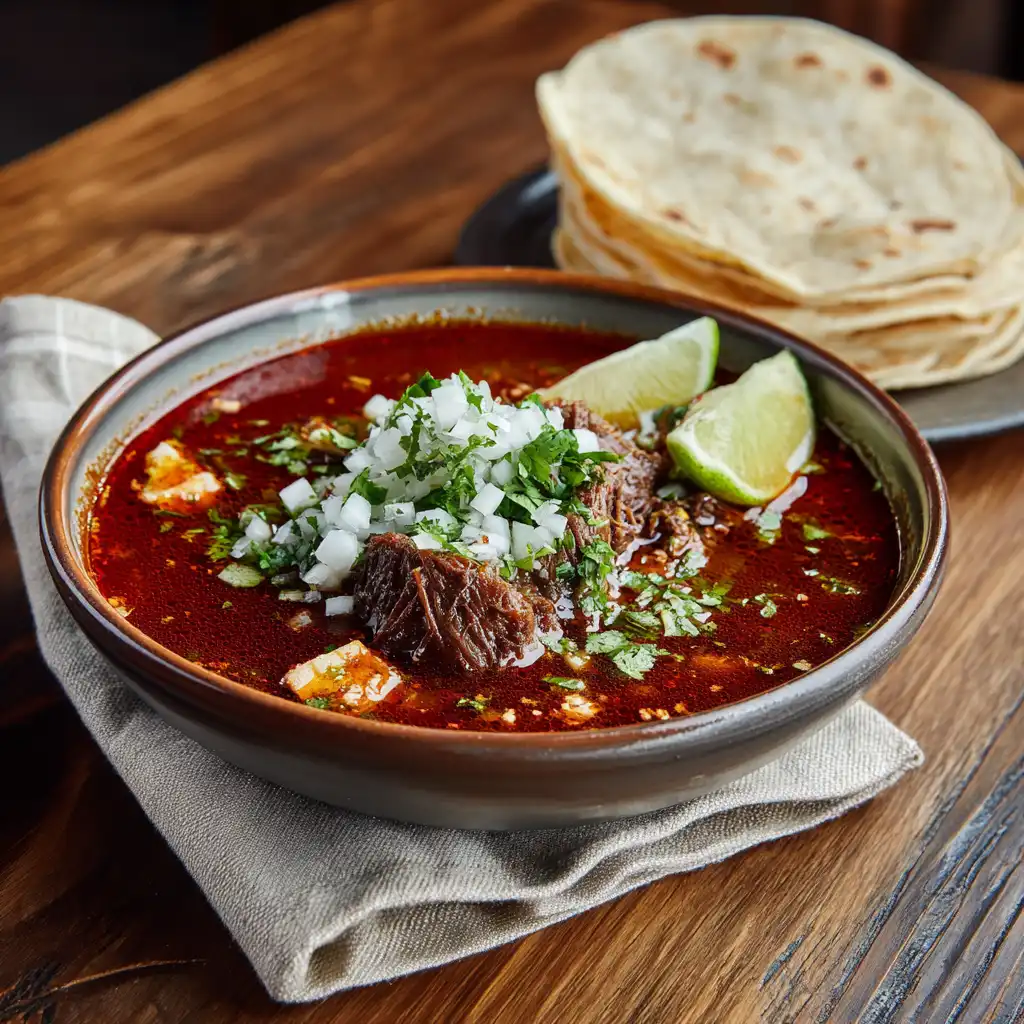
A beef menudo recipe is never truly complete without the “fixings.” In Mexican culture, the soup is served in large bowls, and a platter of fresh toppings is placed in the center of the table. Every person can customize their bowl to their liking. Common toppings include finely chopped raw onion, fresh cilantro, dried Mexican oregano, and crushed red pepper flakes for those who want an extra kick. The acidity from fresh lime wedges is perhaps the most important addition, as it cuts through the richness of the beef and makes the flavors pop.
To accompany the soup, you should have plenty of warm corn tortillas or crusty bread. Some regions prefer “bolillo” rolls, which are perfect for dipping into the spicy broth. The contrast between the soft tripe, the chewy hominy, and the crunch of the raw onions creates a wonderful eating experience. This beef menudo recipe is a full sensory journey, from the bright colors to the aromatic steam rising from the bowl. It is a meal that encourages slow eating and good conversation with friends and family.
Variations of the Beef Menudo Recipe
While this specific beef menudo recipe focuses on the red version (Menudo Rojo), there is also a “Menudo Blanco” or white menudo. This version skip the dried chiles entirely, resulting in a clear, garlic-forward broth. It is particularly popular in certain northern regions of Mexico. Some families also choose to add different vegetables like carrots or potatoes, though purists often stick to just meat and hominy. Because we have omitted all pig products, you might find that adding a bit more beef tendon helps reach that desired level of thickness in the broth.
Another common variation involves the use of hominy. In some parts of Mexico, “menudo” specifically refers to the version without hominy, while the version with hominy is called “pozole de monda.” However, in many Mexican-American households, a beef menudo recipe almost always includes those big, puffy kernels of corn. They provide a nice starchy balance to the protein-heavy soup. No matter which version you choose, the key is the quality of the beef and the patience you put into the simmer.
Tips for Success with Your Beef Menudo Recipe
If you want to make the absolute best beef menudo recipe, keep these tips in mind. First, do not rush the cooking time. Tripe is naturally very tough, and if you try to boil it quickly, it will stay rubbery. Low and slow is the secret to success. Second, make sure your dried chiles are fresh. They should be pliable, like a raisin, not brittle or crumbly. If they are too old, they can make the broth taste bitter rather than fruity and smoky. If you find the broth is too thin, you can crush a few of the hominy kernels against the side of the pot to release their starch and thicken the liquid naturally.
Another tip is to make this beef menudo recipe a day in advance. Like many stews and soups, the flavor actually improves after sitting in the refrigerator overnight. The spices have more time to penetrate the meat, and the broth becomes even more cohesive. When you reheat it the next day, you might need to add a splash of water or beef broth, as the gelatin will cause the soup to thicken into a jelly-like consistency when cold. This is a sign of a high-quality, protein-rich soup!
Storage and Reheating Instructions
Leftovers of this beef menudo recipe are a treasure. You can store the soup in an airtight container in the refrigerator for up to four days. As mentioned before, the broth will solidify, but it will return to a liquid state once heated. For longer storage, you can freeze the menudo for up to three months. To reheat, simply place the soup in a pot over medium heat and stir occasionally until it reaches a simmer. Avoid using a microwave if possible, as it can sometimes make the tripe take on a slightly different texture than stove-top heating.
When reheating your beef menudo recipe, you may find that the hominy has soaked up a lot of the liquid. If the soup looks more like a thick mash than a stew, just add a cup of water and a pinch of salt to bring it back to the right consistency. Always wait to add your fresh toppings until the soup is hot and ready to serve in the bowl. Fresh cilantro and onions do not hold up well to being reheated, so keep those fresh for each serving to maintain that bright, crisp contrast.
FAQs
Is beef menudo healthy?
This beef menudo recipe is packed with protein and is a great source of collagen from the beef feet and bones. Tripe is also relatively low in fat compared to other cuts of beef. However, it can be high in cholesterol, so it is best enjoyed as part of a balanced diet. The addition of fresh lime, cilantro, and onions adds a boost of vitamins to the meal.
Can I make this beef menudo recipe in a slow cooker?
Yes! You can definitely use a slow cooker. After cleaning and parboiling the tripe, place all the ingredients in the slow cooker and cook on low for 8 to 10 hours. This is a great way to let the beef menudo recipe develop its flavor while you go about your day. Just make sure you have enough liquid to cover the meat entirely.
What can I use instead of hominy?
If you cannot find hominy or prefer not to use it, you can leave it out for a meat-only version. Some people substitute chickpeas or even diced potatoes, though this moves away from the traditional flavor. The soup will still be delicious thanks to the rich chile broth and tender beef tripe.
How do I make the broth less spicy?
To keep the spice level low in your beef menudo recipe, make sure to remove every single seed from the dried chiles before blending them. Most of the heat lives in the seeds. You can also use more Guajillo chiles and fewer Ancho or New Mexico chiles, as Guajillos are generally very mild and focus more on color and sweetness.
Conclusion
Mastering a traditional beef menudo recipe is a badge of honor for any home cook. It requires time, patience, and a respect for the ingredients, but the result is a world-class comfort food that brings people together. By following these steps and focusing on the cleaning and slow-simmering process, you can create a bowl of soup that rivals the best Mexican restaurants. Serve it hot with plenty of lime and tortillas, and enjoy the rich heritage and deep flavors of this classic dish. It is a hearty, nourishing meal that truly celebrates the art of home cooking.