There is nothing quite like a warm dish of potatoes straight from the oven to make a house feel like a home. This classic recipe for scalloped potatoes brings together simple ingredients to create a side dish that is rich, creamy, and deeply satisfying. Whether you are preparing a Sunday dinner for your family or looking for the perfect addition to a holiday feast, this recipe for scalloped potatoes will quickly become a favorite in your kitchen. Let us look at how to make this comfort food staple perfect every single time.
Table of Contents
What Makes a Great Recipe for Scalloped Potatoes?
The History of the Dish
Understanding where this dish comes from helps us appreciate its simplicity and lasting popularity. The term “scalloped” originally referred to the way the potatoes were sliced or the shape of the baking dish, which often resembled a scallop shell. While many people confuse this dish with others, a traditional scalloped potatoes preparation focuses on a cream or milk-based sauce without the heavy use of cheese that defines a gratin. This history shows that the recipe for scalloped potatoes has always been about highlighting the natural flavor of the vegetable through a smooth, velvety sauce and slow baking.
Scalloped vs. Au Gratin
Many home cooks use these terms interchangeably, but they are actually different. A recipe for scalloped potatoes usually involves potatoes sliced into rounds and baked in a basic white sauce made of flour, butter, and milk. On the other hand, au gratin potatoes almost always include layers of cheese and a crispy breadcrumb topping. When you follow a true recipe for scalloped potatoes, you are looking for that pure, creamy texture where the starch from the potatoes helps thicken the milk into a luscious gravy. It is a more subtle dish that relies on seasoning and the quality of the dairy.
Print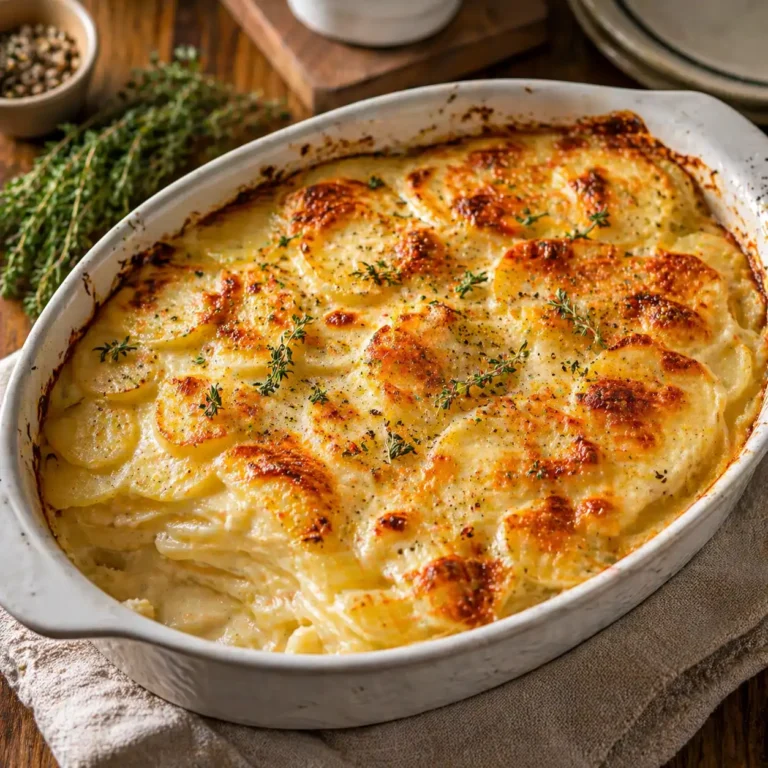
Classic Creamy Recipe for Scalloped Potatoes
A rich and comforting side dish featuring thinly sliced potatoes baked in a velvety, garlic-infused cream sauce until golden brown.
- Total Time: 95 minutes
- Yield: 8 servings 1x
Ingredients
- 3 lbs Russet potatoes, peeled and sliced 1/8-inch thick
- 1/4 cup unsalted butter
- 1/4 cup all-purpose flour
- 3 cups whole milk
- 2 cloves garlic, minced
- 1 teaspoon salt
- 1/2 teaspoon black pepper
- 1 teaspoon fresh thyme leaves
- 1/2 cup yellow onion, finely diced
- 1/2 cup shredded Parmesan cheese
Instructions
- Step 1: Prep Oven – Preheat your oven to 350°F (175°C) and lightly grease a 9×13 inch baking dish.
- Step 2: Prepare Potatoes – Peel and slice the potatoes into uniform rounds using a mandoline or sharp knife.
- Step 3: Sauté Aromatics – Melt butter in a medium saucepan over medium heat and sauté onions until translucent.
- Step 4: Create Roux – Whisk in the flour and cook for 1 minute to remove the raw flour taste.
- Step 5: Simmer Sauce – Slowly whisk in milk and garlic; simmer until the sauce thickens and coats a spoon.
- Step 6: Season Sauce – Remove from heat and stir in the salt, black pepper, and fresh thyme.
- Step 7: Layer Dish – Arrange half of the potatoes in the dish, pour over half the sauce, and repeat layers.
- Step 8: Bake Dish – Cover with foil and bake for 45 minutes; remove foil and bake 30 minutes more.
- Step 9: Final Browning – Sprinkle with Parmesan cheese during the last 10 minutes until the top is golden.
Notes
For best results, use a mandoline to ensure even potato thickness, which guarantees uniform cooking throughout the dish.
- Prep Time: 20 minutes
- Cook Time: 75 minutes
- Category: Side Dish
- Method: Baking
- Cuisine: American
- Diet: Vegetarian
Nutrition
- Serving Size: 1 cup
- Calories: 285 kcal
- Sugar: 6g
- Sodium: 420mg
- Fat: 12g
- Saturated Fat: 7g
- Unsaturated Fat: 4g
- Trans Fat: 0.2g
- Carbohydrates: 38g
- Fiber: 4g
- Protein: 8g
- Cholesterol: 35mg
Keywords: potatoes, scalloped, creamy, comfort food, casserole, holiday side
Selecting the Best Potatoes for Your Side Dish
Why Russets Win
When you are picking out your ingredients for this recipe for scalloped potatoes, the type of potato you choose matters more than you might think. Russet potatoes are often considered the top choice because they have a high starch content. This starch is vital because it releases into the sauce as the dish bakes, helping to create a thick and stable consistency. If you use a potato that is too waxy, the sauce might stay thin or even separate. Russets also absorb the flavor of the cream and garlic beautifully, making every bite of your recipe for scalloped potatoes taste uniform and delicious.
The Yukon Gold Alternative
If you prefer a potato that holds its shape a bit better, Yukon Golds are a fantastic alternative for your recipe for scalloped potatoes. They have a naturally buttery flavor and a creamy yellow color that looks beautiful on the dinner table. Yukon Golds are considered a medium-starch potato, so they offer a middle ground between the fluffiness of a Russet and the firmness of a red potato. Many people find that using Yukon Golds in a recipe for scalloped potatoes results in a dish that feels a bit more “refined” while still providing that necessary creaminess we all love in a casserole.
| Potato Type | Starch Level | Best For | Texture in Sauce |
|---|---|---|---|
| Russet | High | Thickening the sauce naturally | Soft and absorbent |
| Yukon Gold | Medium | Holding shape with buttery flavor | Creamy and smooth |
| Red Potato | Low | Salads or roasting | Firm and waxy |
Key Ingredients for This Recipe for Scalloped Potatoes

The Role of Dairy and Fat
The heart of any successful recipe for scalloped potatoes is the liquid used to cook the vegetables. Most traditional versions use a combination of whole milk and heavy cream to get the best balance of flavor and richness. Using only skim milk can lead to a watery result, while using only heavy cream might make the dish too heavy. Butter is also used to create a roux with flour, which acts as the foundation for the sauce. When these elements come together in your recipe for scalloped potatoes, they create a silky environment that prevents the potatoes from drying out during the long baking process.
Herbs and Spices for Flavor
While potatoes and cream are the stars, the seasonings are what make your recipe for scalloped potatoes stand out. Freshly minced garlic is almost a requirement, as it infuses the milk with an aroma that fills the whole house. Salt and black pepper should be used generously between every layer to make sure the dish is not bland. Some cooks like to add a pinch of nutmeg, which provides a warm, earthy undertone that complements dairy perfectly. Fresh thyme or rosemary can also be sprinkled on top of your recipe for scalloped potatoes to add a pop of color and a fresh, herbal finish.
How to Make the Perfect Scalloped Potatoes
Preparation Steps
- Step 1: Preheat the Oven – Set your oven to 350 degrees Fahrenheit (175 degrees Celsius) and grease a deep baking dish with butter to keep the potatoes from sticking to the sides.
- Step 2: Slice the Potatoes – Use a sharp knife or a mandoline to cut the potatoes into even rounds about one-eighth of an inch thick so they cook at the same rate.
- Step 3: Make the Roux – Melt butter in a medium saucepan over medium heat, then whisk in flour and cook for about one minute to get rid of the raw flour taste.
- Step 4: Create the Sauce – Slowly pour in the milk and cream while whisking constantly to avoid lumps, then add garlic, salt, pepper, and nutmeg until the sauce thickens slightly.
- Step 5: Layer the Dish – Arrange one-third of the potato slices in the bottom of the dish, pour over one-third of the sauce, and repeat these layers until all ingredients are used.
- Step 6: Bake the Casserole – Cover the dish tightly with foil and bake for 45 minutes, then remove the foil and bake for another 30 minutes until the top is golden and the potatoes are tender.
- Step 7: Let it Rest – Allow the dish to sit for at least 10 to 15 minutes before serving to help the sauce set and stay on the potatoes rather than running off.


Pro Tips for a Golden Crust
Preventing the Sauce from Curdling
One of the biggest challenges when making a recipe for scalloped potatoes is keeping the sauce smooth. Curdling usually happens when the heat is too high or the acid in the potatoes reacts poorly with the milk. To make sure this does not happen, avoid using low-fat or non-fat dairy. The fat in whole milk and cream acts as a stabilizer. Also, adding the salt to the sauce rather than directly onto the raw potatoes can help keep the proteins in the milk from breaking down. Following these small details will make your recipe for scalloped potatoes look professional and appetizing every time.
Achieving Even Cooking
Nobody likes biting into a hard potato in the middle of a creamy casserole. To guarantee that every slice is soft, keep your potato rounds consistent in size. If you have some thick slices and some thin slices, the thin ones will turn to mush while the thick ones stay crunchy. Covering the dish with foil for the first part of the baking process is another secret for a great recipe for scalloped potatoes. This traps the steam inside, which helps soften the potatoes quickly. Once they are soft, removing the foil allows the moisture to evaporate and the top to brown beautifully.
Holiday Planning and Pairing Ideas
This side dish is a staple for big celebrations because it can be prepared in large batches. If you are planning a big family meal for the holidays, you might find some great inspiration in this Thanksgiving 2025 guide. A classic recipe for scalloped potatoes fits right in next to a roasted turkey or a big beef roast. Since the oven is often busy during holidays, you can even slice the potatoes ahead of time and keep them in cold water in the fridge so they don’t turn brown before you are ready to assemble the dish.
For those who enjoy variety on the table, it is often fun to serve different types of potato dishes side by side. While white potatoes are the traditional choice for this casserole, many people also love the sweetness of yams. You can look at this sweet potato casserole ideas guide to see how to balance the savory flavors of your recipe for scalloped potatoes with something a bit more sugary. Having both options ensures that every guest finds something they love, and it makes your holiday spread look much more colorful and inviting for everyone at the table.
Healthier Versions and Substitutions
While a traditional recipe for scalloped potatoes is known for being indulgent, there are ways to make it fit into different lifestyle choices. You can replace some of the heavy cream with a broth made from vegetables to lower the fat content while still keeping the savory flavor. Using more garlic and fresh herbs like parsley or chives can also make up for using less salt. If you are trying to stay on a specific wellness path, you might want to look into an anti-inflammatory diet recipe to see how ingredients can be swapped to help you feel your best without sacrificing the joy of a good meal.
Another way to change up the recipe for scalloped potatoes is to add more vegetables into the layers. Thinly sliced onions are a common addition, but you could also add leeks or even thin slices of parsnips. These additions change the flavor profile slightly but keep the creamy texture intact. Some people even use cauliflower slices instead of half the potatoes to reduce the total carbohydrate count. No matter how you choose to modify it, the core idea of a creamy, baked vegetable dish remains the same, making the recipe for scalloped potatoes a versatile tool in any home cook’s collection.
Perfect Pairings for Your Meal
Since this side dish is quite rich and creamy, it pairs best with main courses that have a bold flavor or a bit of acidity. It goes wonderfully with roasted chicken, grilled steaks, or even a nice piece of baked fish. If you are looking for a specific main dish that complements the garlic and cream in your recipe for scalloped potatoes, consider making a creamy Tuscan chicken without wine. The sun-dried tomatoes and spinach in that dish provide a lovely contrast to the simple, earthy flavors of the potatoes, creating a complete and balanced dinner for your family.
When serving your recipe for scalloped potatoes, think about the textures on the plate. Since the potatoes are soft and creamy, adding a crisp green salad or some roasted broccoli can provide a much-needed crunch. A simple vinaigrette on a salad can also help cut through the richness of the cream sauce. This balance is what makes a meal feel satisfying rather than just heavy. By choosing your pairings carefully, you make the recipe for scalloped potatoes the star of the show while making sure the entire plate works together in harmony for a great dining experience.
Common Pitfalls to Avoid
Even though this is a simple dish, a few common mistakes can ruin a recipe for scalloped potatoes. One of the most frequent errors is not seasoning the layers. If you only season the top, the middle of the dish will be bland. Another issue is using the wrong baking dish. A dish that is too shallow might cause the sauce to bubble over and burn on the bottom of your oven. Always place a baking sheet underneath your casserole dish just in case. This small step makes sure that a little bit of bubbling sauce doesn’t result in a smoky kitchen or a big cleanup task later.
Another pitfall to watch out for is undercooking the dish. Because potatoes are dense, they take a long time to soften completely in a liquid environment. If you try to rush your recipe for scalloped potatoes by turning up the heat, the outside might look done while the inside is still hard. It is always better to bake at a moderate temperature for a longer time. If you find the top is browning too fast but the potatoes aren’t soft yet, simply put the foil back on and keep baking. Patience is the secret ingredient that makes a recipe for scalloped potatoes truly exceptional and tender.
Storing and Reheating Leftovers
One of the best things about a recipe for scalloped potatoes is that it often tastes even better the next day. As the dish sits in the refrigerator, the potatoes continue to soak up the sauce, and the flavors have more time to meld together. To store your leftovers, let the dish cool to room temperature first. Then, cover it tightly or move the potatoes to an airtight container. They will stay fresh in the fridge for about three to four days. This makes the recipe for scalloped potatoes a great option for meal prep or for having a quick side dish ready for a busy weeknight.
When it comes time to reheat your recipe for scalloped potatoes, the oven is the best choice to maintain the texture. Reheating in the microwave can sometimes make the sauce oily or cause the potatoes to become mushy. Instead, put the leftovers in an oven-safe dish, add a tiny splash of milk to loosen the sauce, and cover with foil. Heat at 325 degrees Fahrenheit until warmed through. This method keeps the creaminess intact and makes the dish taste almost as good as it did when it first came out of the oven. Your recipe for scalloped potatoes deserves to be enjoyed to the last bite.
Conclusion
Creating a beautiful recipe for scalloped potatoes is an art that anyone can master with a little bit of time and the right ingredients. By choosing the best potatoes, making a smooth sauce, and baking everything slowly, you create a dish that brings comfort and joy to the table. This recipe for scalloped potatoes is more than just a side dish; it is a tradition that connects generations through the simple love of good food. We hope this guide helps you make a casserole that your family will ask for again and again. Happy cooking!
FAQs
Can I make this recipe for scalloped potatoes ahead of time?
Yes, you can assemble the entire dish and keep it in the refrigerator for up to 24 hours before baking. Just make sure the potatoes are completely covered by the sauce so they do not turn brown. When you are ready to eat, you might need to add an extra 10 to 15 minutes to the baking time since the dish will be cold when it goes into the oven.
What is the best way to slice potatoes for this dish?
A mandoline is the most effective tool for getting the thin, even slices needed for a recipe for scalloped potatoes. If you do not have one, a very sharp chef’s knife will work. The goal is to keep the thickness around one-eighth of an inch. If the slices are too thick, they will take a very long time to cook and might stay firm in the center.
Why did my sauce turn out watery?
Watery sauce in a recipe for scalloped potatoes is usually caused by using low-fat milk or potatoes that do not have enough starch. It can also happen if the potatoes were very wet when you put them in the dish. Always pat your sliced potatoes dry with a paper towel before layering them to make sure you aren’t adding extra moisture to the casserole.
Can I add cheese to a recipe for scalloped potatoes?
While traditional scalloped potatoes do not use cheese, many people enjoy adding a sprinkle of cheddar or parmesan between the layers. If you add a lot of cheese, the dish technically becomes “au gratin,” but it will still be delicious. Just be aware that cheese adds more oil to the dish, so you might want to reduce the amount of butter in your sauce slightly.
Can I freeze scalloped potatoes?
Freezing a recipe for scalloped potatoes can be tricky because dairy-based sauces often break or become grainy when thawed. If you must freeze it, it is best to do so after the dish is fully baked and cooled. Wrap it very tightly to prevent freezer burn. When you are ready to eat it, thaw it in the fridge overnight and reheat it slowly in the oven to help the sauce come back together.