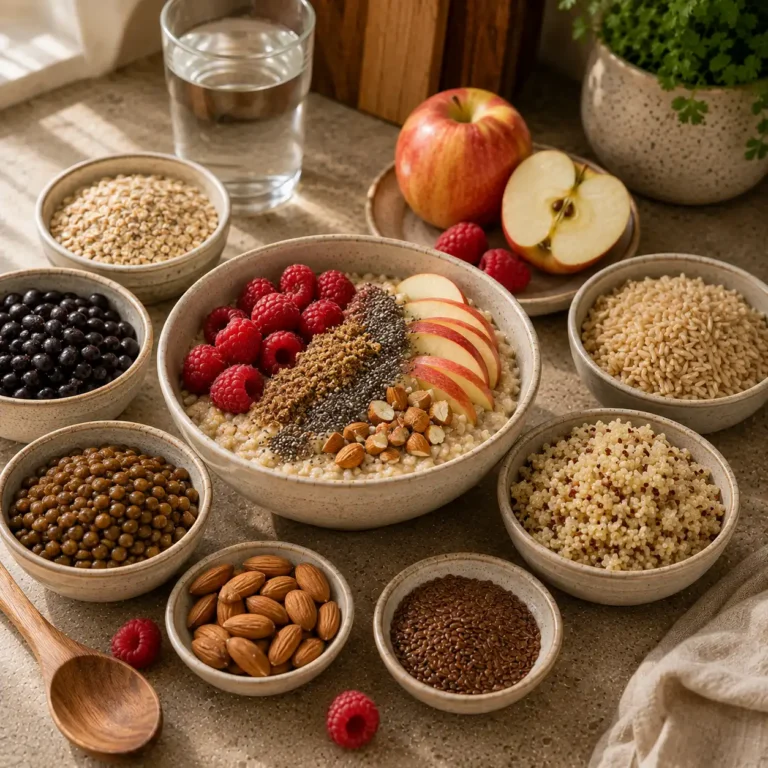
Ingredients
- Whole Grains (e.g., oats, quinoa, brown rice, whole wheat bread)
- Legumes (e.g., lentils, black beans, chickpeas)
- Fruits (e.g., berries, apples, pears, bananas)
- Vegetables (e.g., leafy greens, broccoli, carrots, sweet potatoes)
- Nuts and Seeds (e.g., almonds, chia seeds, flax seeds)
- Water (for optimal hydration)
- Herbs and Spices (for flavor)
Instructions
- Step 1: Start Gradually – Incrementally increase fiber intake to allow your digestive system to adjust comfortably and prevent discomfort.
- Step 2: Prioritize Whole Grains – Replace refined grain products with whole grain options in your breakfast, lunch, and dinner.
- Step 3: Integrate Legumes Daily – Add a serving of beans, lentils, or chickpeas to your soups, salads, stews, or main dishes each day.
- Step 4: Boost Fruit & Vegetable Intake – Aim for a diverse range of colorful fruits and vegetables with every meal and as healthy snacks.
- Step 5: Include Nuts & Seeds – Sprinkle nuts and seeds over yogurt, oatmeal, salads, or blend them into your daily smoothies.
- Step 6: Stay Hydrated – Drink plenty of water throughout the day to help fiber move smoothly through your digestive system.
- Step 7: Plan Meals – Prepare high-fiber meals and snacks in advance to ensure consistent intake and healthier choices.
- Step 8: Listen to Your Body – Adjust fiber amounts based on your body’s individual response and comfort levels.
Notes
This ‘recipe’ is a dietary guide for integrating high-fiber foods into your daily routine, rather than a single dish. Individual nutritional needs and tolerances may vary. Consult a healthcare professional or registered dietitian for personalized dietary advice.
- Prep Time: 30 minutes
- Cook Time: 60 minutes
- Category: Dietary Guide
- Method: Lifestyle Integration, Meal Planning
- Cuisine: Health-focused
- Diet: High Fiber, Plant-Based, Vegan, Vegetarian
Nutrition
- Serving Size: 1 day of meals
- Calories: 2200 Calories
- Sugar: 50 grams
- Sodium: 1800 mg
- Fat: 70 grams
- Saturated Fat: 12 grams
- Unsaturated Fat: 45 grams
- Trans Fat: 0.2 grams
- Carbohydrates: 300 grams
- Fiber: 35 grams
- Protein: 80 grams
- Cholesterol: 20 mg
Keywords: high fiber, gut health, heart health, metabolic health, plant-based, longevity, digestion, whole grains, legumes, fruits, vegetables, nutrition, healthy eating