Ingredients
Scale
- 1 ripe passion fruit
- Water, optional, for rinsing
Instructions
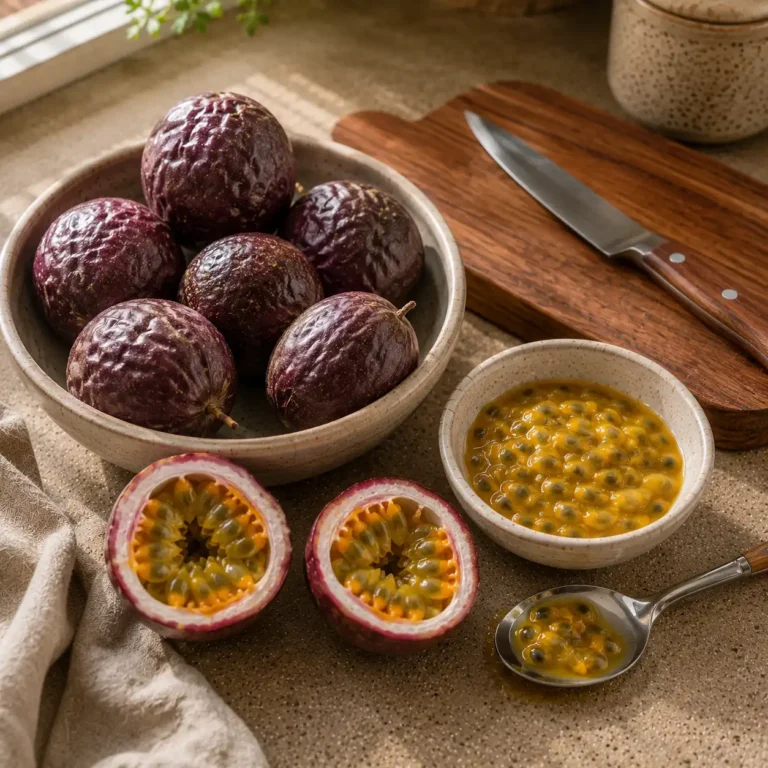
- Step 1: Select Ripe Fruit – Choose passion fruit by observing its skin; purple varieties should be wrinkled and dimpled, indicating peak ripeness. Yellow varieties often remain smooth but should feel heavy for their size. Avoid completely smooth purple fruits, which are typically underripe.
- Step 2: Clean Fruit – Gently wash the outer rind of the selected passion fruit under cool running water to remove any surface impurities.
- Step 3: Halve Fruit – Carefully place the passion fruit on a cutting board and cut it in half using a sharp knife.
- Step 4: Scoop Pulp – Using a small spoon, scoop out the vibrant, gelatinous pulp, along with the edible seeds, into a clean bowl. Ensure all the fragrant pulp is removed from the rind.
- Step 5: Prepare for Use – The extracted pulp is now ready for use. It can be directly incorporated into smoothies, desserts, or sauces. For juice, you may lightly blend the pulp with a small amount of water and then strain to remove some of the seeds.
- Step 6: Store Pulp – If not using immediately, transfer the passion fruit pulp to an airtight container and refrigerate. It can be stored for up to 3–5 days, retaining its freshness and flavor for future culinary applications.
Notes
Passion fruit is best enjoyed fresh, either on its own or incorporated into culinary creations. Its tartness makes it an excellent addition to desserts, beverages, and savory dishes.
- Prep Time: 5 minutes
- Cook Time: 0 minutes
- Category: Fruit
- Method: Raw
- Cuisine: Tropical
- Diet: General
Nutrition
- Serving Size: 100g
- Calories: 97
- Sugar: 11.2 g
- Sodium: 25 mg
- Fat: 0.7 g
- Saturated Fat: 0.1 g
- Unsaturated Fat: 0.6 g
- Trans Fat: 0 g
- Carbohydrates: 23.4 g
- Fiber: 10.4 g
- Protein: 2.2 g
- Cholesterol: 0 mg
Keywords: passion fruit, tropical fruit, Passiflora edulis, nutritional value, healthy eating