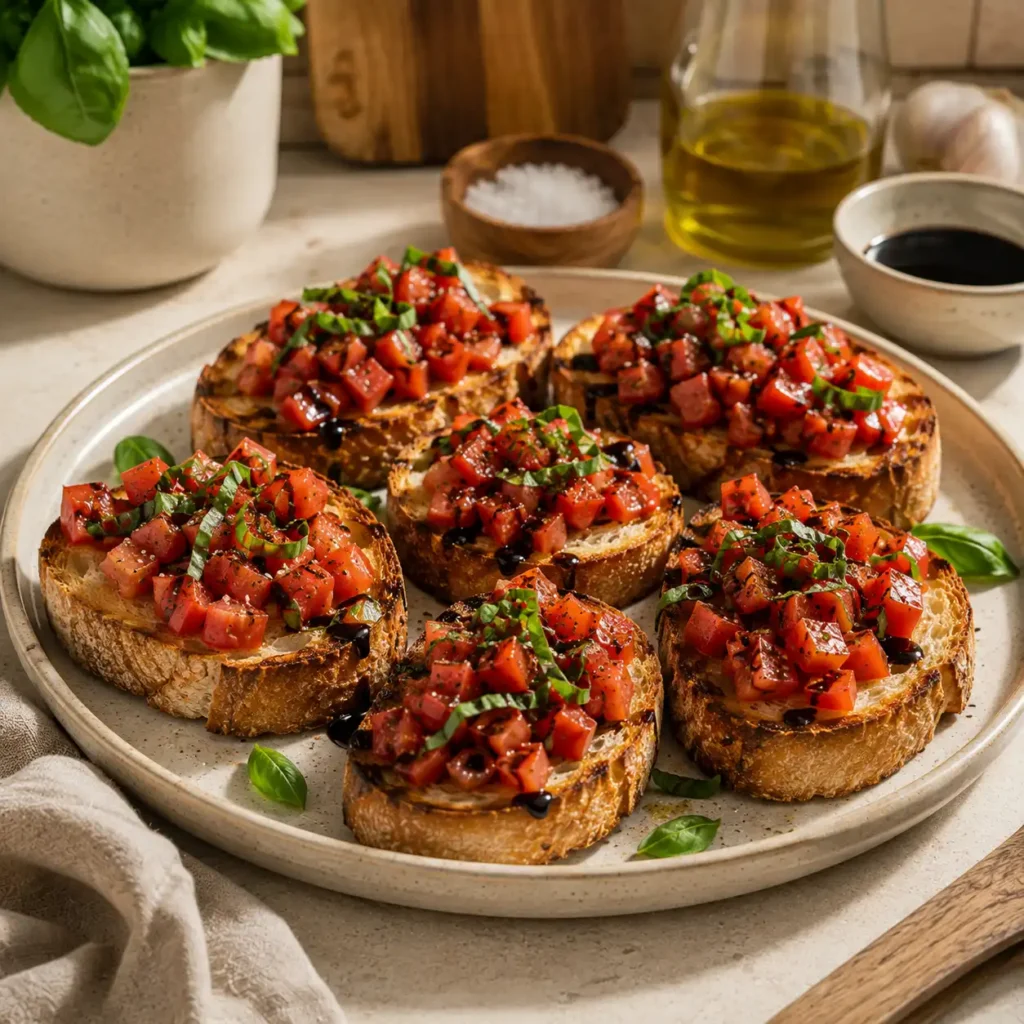
Finding a perfect bruschetta recipe is like discovering a secret to simple, high-quality cooking. This classic Italian starter relies on the harmony of crunchy bread, ripe tomatoes, and fragrant herbs. While it looks fancy on a serving platter, the preparation is straightforward and requires no complex culinary skills. By focusing on the quality of every component, you can create a dish that tastes like it came straight from a Tuscan villa. This guide provides everything you need to master this timeless favorite at home.
Table of Contents
The Rich Heritage of Bruschetta
A Humble Beginning
The origins of the bruschetta date back centuries to central Italy, where farmers used the dish to test the quality of their freshly pressed oil. The name comes from the Roman dialect word “bruscare,” which means to roast over coals. Traditionally, this was a way to make use of day-old bread, transforming it into a delicious meal with a few pantry staples. Understanding this history helps you appreciate why a bruschetta recipe focuses so heavily on the quality of the bread and the oil rather than complex cooking techniques.
Evolution of the Recipe
While the most common bruschetta recipe today features a tomato and basil topping, the original version was often just toasted bread rubbed with garlic and drizzled with oil. Over time, different regions of Italy added their own local ingredients. In some areas, vegetables like kale or beans are used, while others prefer various cheeses. This flexibility is part of what makes the bruschetta recipe so popular worldwide. It serves as a blank canvas for seasonal produce while maintaining its crunchy, savory identity that diners everywhere have come to love.
Print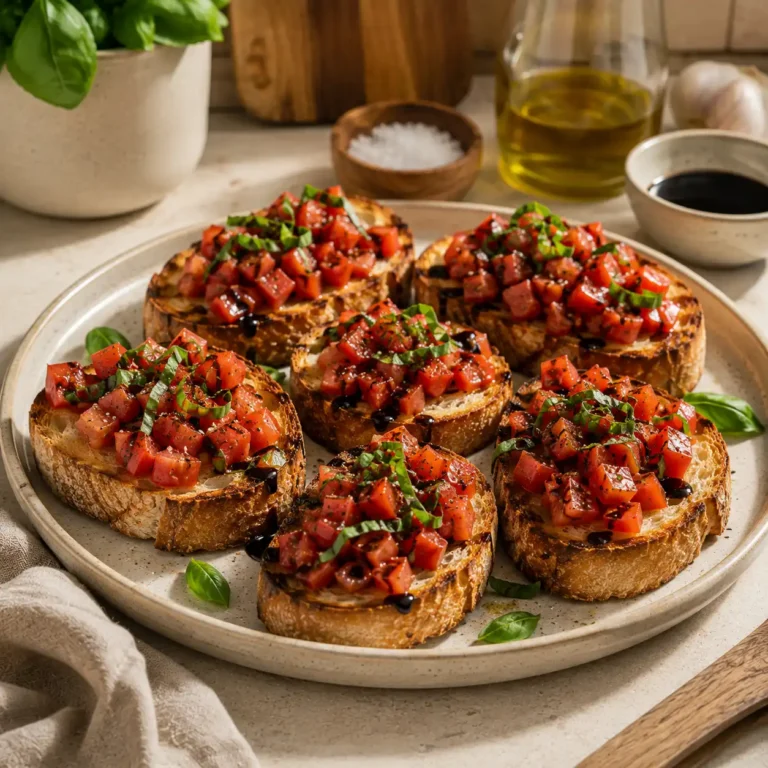
The Best Authentic Bruschetta Recipe
A classic Italian starter that emphasizes the harmony of crunchy bread, ripe tomatoes, and fragrant herbs, perfect for any gathering.
- Total Time: 20 minutes
- Yield: 6 servings 1x
Ingredients
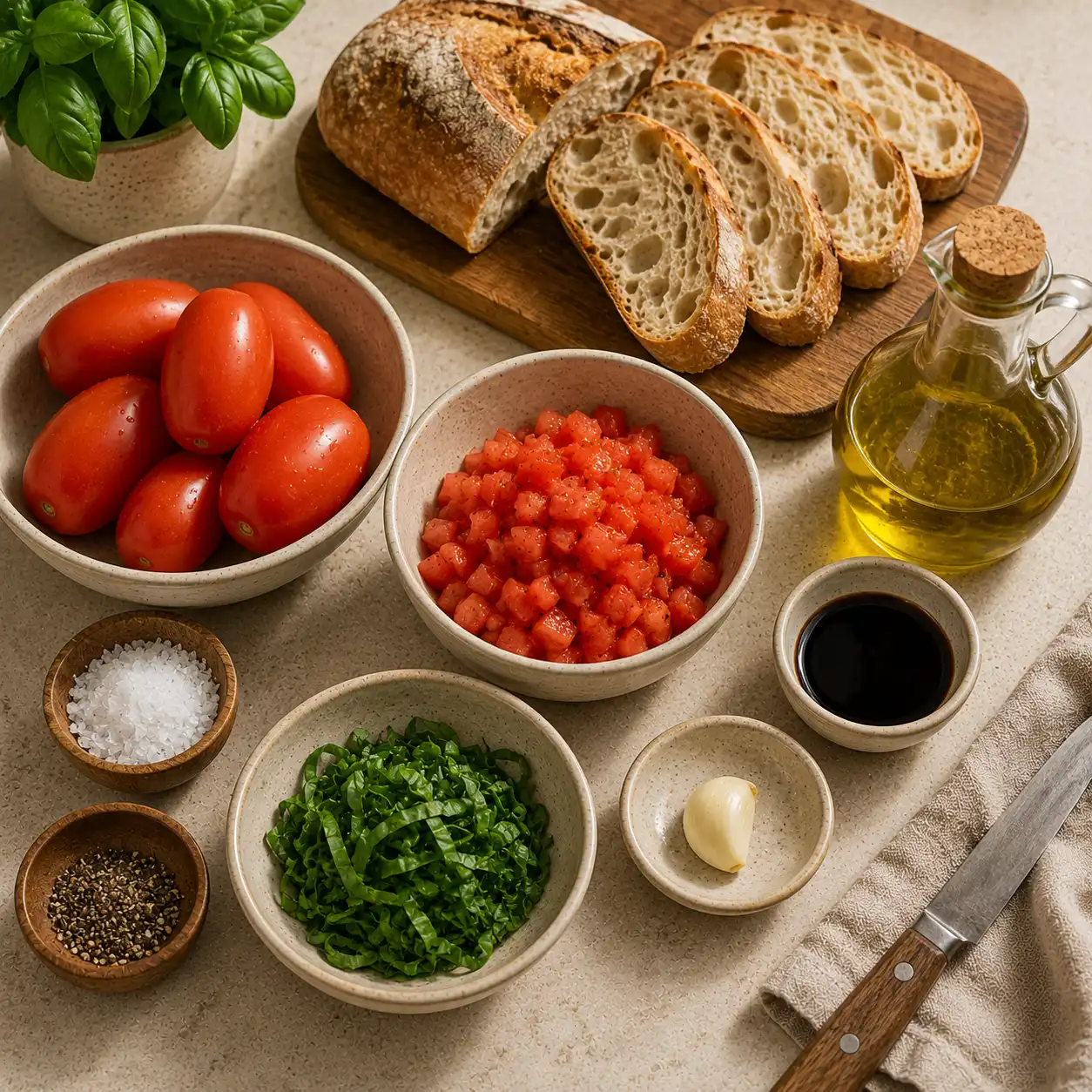
- 1 loaf crusty Italian baguette or ciabatta
- 6 ripe Roma tomatoes, finely diced
- 2 cloves fresh garlic, peeled
- 1/4 cup extra virgin olive oil
- 1/2 cup fresh basil leaves, julienned
- 1 teaspoon sea salt
- 1/2 teaspoon cracked black pepper
- 2 tablespoons balsamic glaze (optional)
Instructions
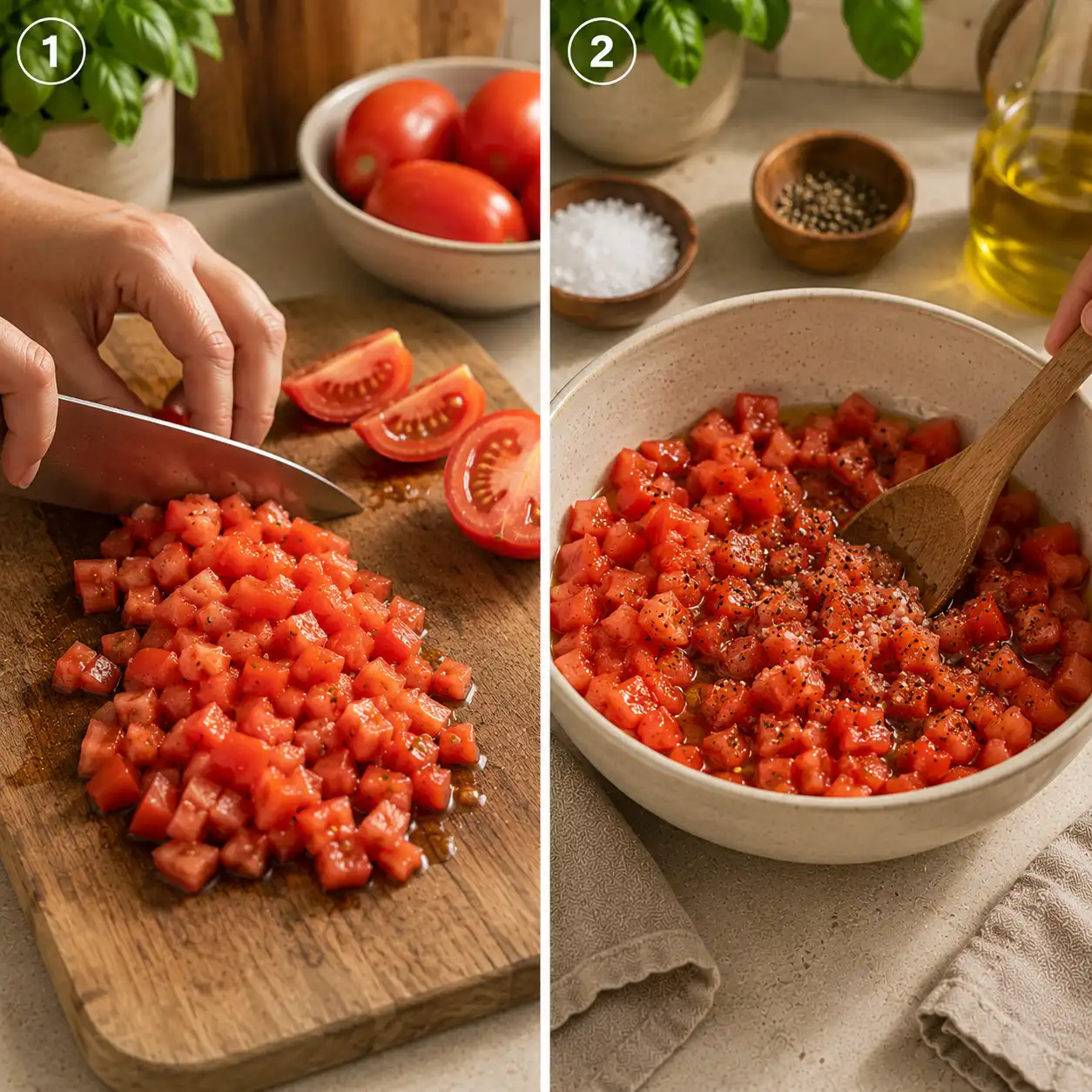
- Step 1: Prepare Tomatoes – Dice the tomatoes and place them in a colander to drain excess moisture for 5 minutes.
- Step 2: Mix Topping – In a medium bowl, combine the tomatoes, olive oil, basil, salt, and pepper.
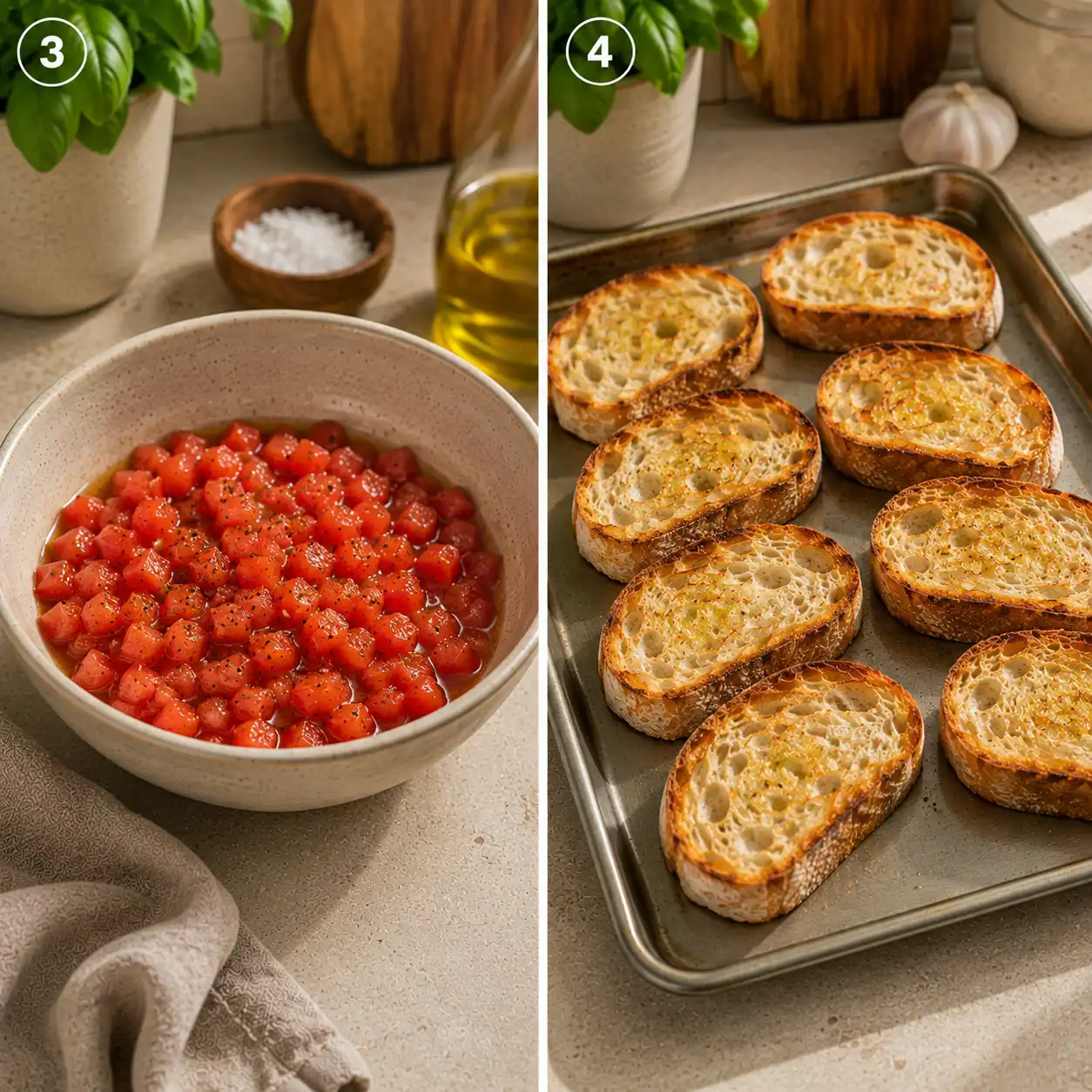
- Step 3: Marinate Flavors – Let the tomato mixture sit at room temperature for 10-15 minutes to allow flavors to meld.
- Step 4: Slice Bread – Cut the bread into 1/2-inch thick slices on a diagonal.
- Step 5: Toast Bread – Place slices on a baking sheet and toast at 400°F (200°C) until golden brown and crispy.
- Step 6: Apply Garlic – Rub one side of each warm, toasted bread slice with the raw garlic cloves.
- Step 7: Assemble Bruschetta – Spoon the tomato mixture generously onto the garlic-rubbed side of the bread.
- Step 8: Final Garnish – Drizzle with balsamic glaze if desired and serve immediately while the bread is warm.
Notes
Using day-old bread is traditional and helps the bread stand up better to the juicy tomato topping.
- Prep Time: 15 minutes
- Cook Time: 5 minutes
- Category: Appetizer
- Method: Toasting
- Cuisine: Italian
- Diet: Vegetarian
Nutrition
- Serving Size: 2 slices
- Calories: 185 kcal
- Sugar: 3.2 g
- Sodium: 310 mg
- Fat: 8.5 g
- Saturated Fat: 1.2 g
- Unsaturated Fat: 7.1 g
- Trans Fat: 0.1 g
- Carbohydrates: 22 g
- Fiber: 2.1 g
- Protein: 4.5 g
- Cholesterol: 1 mg
Keywords: Bruschetta, Italian, Appetizer, Tomato, Basil, Vegetarian
Essential Ingredients for Your Bruschetta Recipe
Choosing the Right Tomatoes
The success of your bruschetta recipe depends almost entirely on your tomatoes. You want fruit that is firm yet ripe, providing a sweet and slightly acidic flavor. Roma tomatoes are often the preferred choice because they have a lower water content and meaty walls, which prevents the topping from becoming too runny. Some chefs like using cherry tomatoes for their intense sweetness and bright colors. Regardless of the variety, make sure you remove the seeds and the watery pulp before dicing to keep your bread crispy for a longer period.
The Importance of Premium Olive Oil
Since the oil is one of the primary flavoring agents, you should never settle for a low-grade version. High-quality fats provide a peppery finish and a fruity aroma that cheap oils lack. Choosing Dr. Gundry olive oil or a similar high-phenolic extra virgin oil can make a massive difference in the final taste of your bruschetta recipe. Good oil coats the toasted bread and binds the tomato juices and basil together, creating a luxurious mouthfeel that defines the authentic Italian experience. Always look for “cold-pressed” and “extra virgin” on the label.
Picking the Perfect Bread
Texture Matters
The bread is the foundation of every bruschetta recipe. You need a loaf with a sturdy crust and a porous interior that can soak up the oil and tomato juices without falling apart. A traditional Italian ciabatta or a crusty French baguette works exceptionally well. If you enjoy making your own breads, you might find that the skills used for homemade garlic knots specifically achieving that perfect golden-brown exterior apply well here too. Avoid soft sandwich breads, as they will turn soggy the moment the tomatoes touch them.
Slicing and Preparing
Consistency is key when slicing your bread for a bruschetta recipe. Aim for slices that are about half an inch thick. This thickness provides enough structural integrity to hold the toppings while remaining easy to bite through. You can cut the bread on a diagonal to create more surface area for the tomatoes. Grilling the bread over a flame or toasting it in a hot oven until it is golden brown and “toasty” is vital. This process creates the characteristic crunch that contrasts so beautifully with the soft, juicy tomato topping.
The Role of Fresh Herbs and Aromatics
Why Fresh Basil is Key
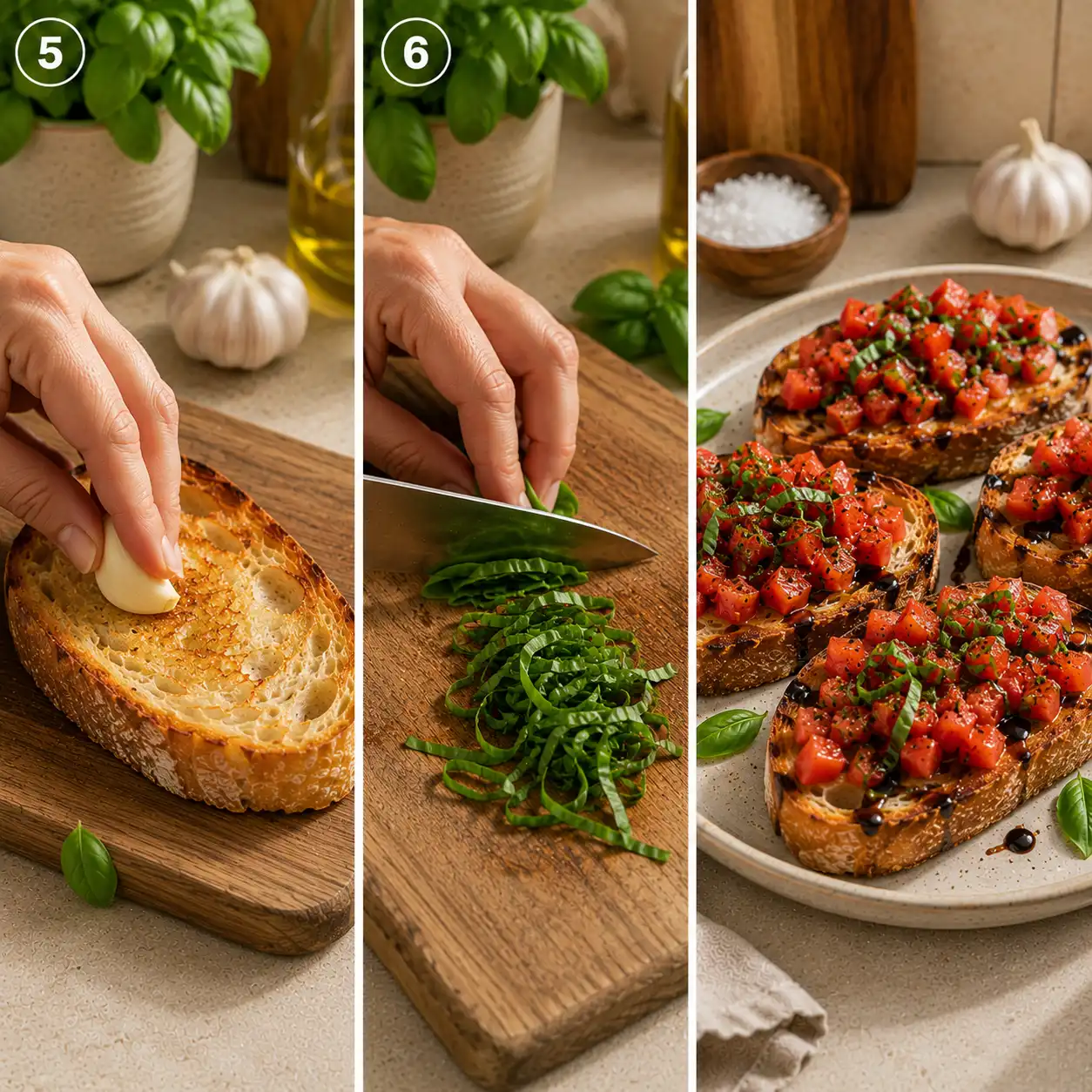
You cannot have a classic bruschetta recipe without fresh basil. Dried basil simply does not provide the same bright, peppery, and slightly sweet notes required for this dish. When preparing the basil, avoid chopping it too finely with a dull knife, as this can bruise the leaves and cause them to turn black. Instead, use a sharp knife to create thin ribbons, a technique known as chiffonade. Stir these ribbons into the tomato mixture at the very last minute to keep them looking vibrant and tasting fresh for your guests.
The Garlic Rub Technique
A secret step in many a professional bruschetta recipe is how the garlic is applied. Rather than just mixing minced garlic into the tomatoes, many traditionalists rub a raw, peeled garlic clove directly onto the surface of the warm, toasted bread. The rough texture of the bread acts like a grater, catching small amounts of garlic and spreading the aroma evenly across the slice. This method provides a subtle garlic flavor that doesn’t overpower the tomatoes. It is a simple trick that separates a basic appetizer from a truly expert-level dish.
Detailed Step-by-Step Bruschetta Recipe
Following a specific order of operations is the best way to get the results you want. This bruschetta recipe is designed to maximize crunch and flavor balance. Follow these steps for a perfect outcome every time you host a gathering or want a light snack.
- Step 1: Prep the Tomatoes – Wash and dry six medium Roma tomatoes, then dice them finely after removing the seeds and watery centers.
- Step 2: Season the Mixture – Place the diced tomatoes in a bowl and mix with three tablespoons of extra virgin olive oil, a pinch of sea salt, and a dash of cracked black pepper.
- Step 3: Marinate Briefly – Let the tomato mixture sit at room temperature for about 10 to 15 minutes to allow the flavors to meld together.
- Step 4: Toast the Bread – Slice a loaf of crusty Italian bread into half-inch rounds and toast them in a 400°F oven for about 5 minutes or until golden.
- Step 5: Apply the Garlic – While the bread is still warm, take a peeled garlic clove and rub it gently over one side of each toasted slice.
- Step 6: Add Fresh Basil – Stack your basil leaves, roll them up, and slice them into thin strips, then toss them into the tomato mixture right before serving.
- Step 7: Assemble the Dish – Spoon a generous amount of the tomato mixture onto each slice of bread and finish with a light drizzle of balsamic glaze if desired.
Pro Tips for the Best Results
Preventing Sogginess
The biggest challenge with any bruschetta recipe is the bread becoming soggy. To prevent this, make sure you drain any excess liquid from the tomato bowl before topping the bread. You can also place the tomatoes in a fine-mesh strainer for a few minutes after dicing. Another trick is to brush the toasted bread with a thin layer of olive oil before adding the tomatoes; the oil acts as a moisture barrier. Serving the components separately for a “build-your-own” style also helps if the appetizer will be sitting out for a while.
Balancing Flavors
A great bruschetta recipe relies on the balance between acidity, salt, and fat. If your tomatoes are not quite sweet enough, a tiny pinch of sugar can help. If the mixture feels flat, a squeeze of fresh lemon juice or a high-quality balsamic glaze can add the necessary brightness. Remember that salt draws out moisture, so if you salt the tomatoes too early, you will end up with more liquid in the bowl. Finding that perfect equilibrium is what makes people keep coming back for more of your signature appetizer.
Serving Suggestions and Pairings
Appetizer Combinations
When planning a party menu, this bruschetta recipe pairs wonderfully with other light starters. If you are looking for a variety of textures, you might consider serving it alongside a shrimp crunchy roll recipe for a seafood-inspired contrast. The crispiness of the bread in the bruschetta complements the textures found in various international rolls. Providing a mix of garden-fresh and ocean-inspired flavors keeps the palate excited and ensures there is something for every guest to enjoy at the table.
Mediterranean Feast
For a complete meal, use the bruschetta recipe as a starter for a larger Mediterranean spread. It sets the stage perfectly for dishes like a mediterranean chicken pita or grilled vegetables. The fresh tomato and basil flavors prepare the taste buds for savory grilled meats and tangy yogurt sauces. This cohesive theme makes for a refreshing lunch or dinner, especially during the warmer months when heavy meals are less appealing. It is a healthy way to eat that emphasizes whole foods and fresh produce.
Ingredient Impact Comparison
To help you understand how different choices affect your bruschetta recipe, look at the table below. This summary shows how ingredient quality and variety change the final outcome of the dish.
| Component | Standard Choice | Premium Choice | Resulting Flavor Profile |
|---|---|---|---|
| Tomatoes | Large Beefsteak | Roma or Vine-Ripened | Meaty texture, less water, concentrated sweetness. |
| Bread | Pre-sliced White | Artisan Ciabatta | Stronger crunch, better juice absorption, rustic look. |
| Olive Oil | Generic Vegetable Blend | Extra Virgin Cold-Pressed | Rich, peppery finish with a smooth mouthfeel. |
| Garlic | Powdered Garlic | Fresh Whole Cloves | Bright, sharp aroma without an artificial aftertaste. |
Variations of the Bruschetta Recipe
Cheese and Creamy Toppings
While the classic bruschetta recipe is vegan-friendly, many people enjoy adding cheese. A smear of goat cheese or ricotta on the bread before adding the tomatoes provides a creamy contrast to the crunch. Fresh mozzarella pearls or shaved Parmesan are also popular additions. If you want to keep it dairy-free but still want that creamy element, avocado slices can be a great substitute. These additions turn a simple snack into a more substantial appetizer that can almost serve as a light lunch on its own.
Vegetable and Fruit Twists
Do not feel limited to just tomatoes for your bruschetta recipe. Roasted red peppers, sautéed mushrooms, or even grilled zucchini make excellent toppings. For a sweet and savory version, some people use sliced peaches or strawberries paired with basil and a balsamic drizzle. During the fall, roasted butternut squash with sage can provide a warm, earthy variation of the traditional dish. The key is to maintain the fundamental elements: toasted bread, a hint of garlic, and a high-quality oil to tie it all together.
Common Mistakes to Avoid
Overloading the Bread
It is tempting to pile the tomatoes high on each slice, but in a bruschetta recipe, less is often more. If you add too much topping, the bread will buckle under the weight, and it becomes impossible to eat neatly. Aim for a balanced layer that covers the surface but allows the guest to take a clean bite. This also keeps the ratio of bread to topping correct, so you get that satisfying crunch in every single mouthful. Keep a small bowl of extra topping on the side for those who want more.
Using Cold Tomatoes
One of the biggest errors in a bruschetta recipe is using tomatoes straight from the refrigerator. Cold temperatures mute the flavor of the fruit and make the appetizer less pleasant to eat. Always keep your tomatoes on the counter and prepare the mixture at room temperature. This allows the natural sugars to shine and makes the oil more fluid. If you have already made the tomato mixture and stored it in the fridge, take it out at least thirty minutes before serving to let it warm up.
Storing and Make-Ahead Tips
How to Handle Leftovers
A bruschetta recipe is best enjoyed immediately after assembly, but you can prepare parts of it in advance. The tomato mixture can be made a few hours ahead of time, but do not add the basil until you are ready to serve. Store the mixture in an airtight container in the fridge, but remember to bring it to room temperature before using it. Once the tomatoes are on the bread, they should be eaten within twenty minutes to avoid the dreaded sogginess. Leftover bread can be stored in a paper bag to keep its crusty exterior.
Refreshing the Components
If you find yourself with leftover toasted bread that has gone soft, you can refresh it by placing it back in a hot oven for two or three minutes. The tomato mixture can be used the next day as a base for a quick pasta sauce or as a topping for grilled chicken if it becomes too watery for bread. While a bruschetta recipe is a “fresh-first” dish, these tips help reduce waste and let you enjoy the flavors over multiple meals. Just remember that fresh basil must always be added new to maintain the color.
FAQs
What is the best bread for a bruschetta recipe?
An artisan loaf with a thick crust and airy center, such as ciabatta or a French baguette, is ideal. These breads hold up well to the moisture of the tomatoes and provide a satisfying crunch when toasted or grilled.
Can I make bruschetta without balsamic vinegar?
Yes, many traditional Italian recipes do not use balsamic. You can use a bit of lemon juice for acidity or simply rely on the high-quality extra virgin olive oil and the natural acidity of the tomatoes to provide the flavor profile.
How do I keep the bread from getting soggy?
Make sure to remove the seeds and pulp from the tomatoes before dicing. Additionally, toast the bread thoroughly and brush it with a thin layer of olive oil before adding the toppings to create a barrier against the juice.
Is bruschetta served hot or cold?
The bread should be warm from the toaster or grill, while the tomato topping is ideally served at room temperature. This contrast in temperatures is part of what makes a traditional bruschetta recipe so appealing to the senses.
Can I use dried basil instead of fresh?
It is strongly recommended to use fresh basil. Dried basil has a very different flavor profile that is more muted and earthy, whereas fresh basil provides the bright, aromatic punch that is central to the identity of this dish.
Conclusion
Mastering a classic bruschetta recipe is a rewarding experience for any home cook. By focusing on the quality of your tomatoes, the crunch of your bread, and the richness of your olive oil, you can create a world-class appetizer with very little effort. This dish represents the heart of Italian cooking: using a few perfect ingredients to create something extraordinary. Whether you serve it at a large party or enjoy it as a quiet snack, the vibrant flavors and satisfying textures of fresh bruschetta are sure to impress everyone at your table.