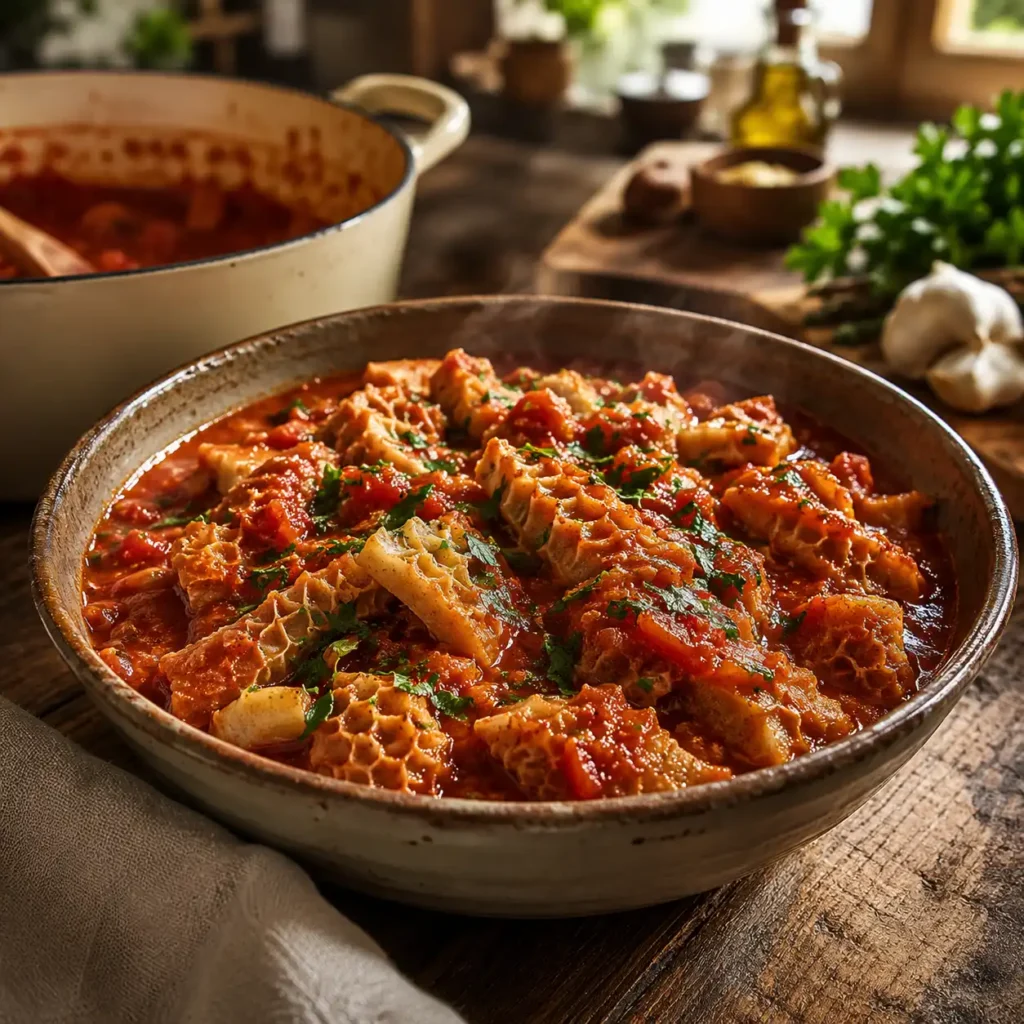
Finding a reliable tripe recipe often feels like searching for a hidden culinary treasure. While offal has fallen out of favor in some modern kitchens, it remains a celebrated staple in global gastronomy. This guide provides a detailed approach to preparing a savory, tender, and aromatic beef tripe dish that focuses on traditional techniques. By following these steps, you can transform a tough cut of meat into a melt-in-your-mouth delicacy that honors the heritage of slow-cooked comfort food.
Table of Contents
Understanding Your Ingredients: The Anatomy of Tripe
Before you start your tripe recipe, it is vital to know what you are working with. Tripe is the edible lining of the stomach from various farm animals, most commonly cattle. It has a distinct texture and an incredible ability to absorb the flavors of the liquids it simmers in for hours. Because it is naturally tough, the secret to any successful tripe recipe lies in the patience of the cook and the acidity used during the cleaning phase.
Types of Beef Tripe
There are four main chambers in a cow’s stomach, but three are primarily used in cooking. Honeycomb tripe, coming from the reticulum, is the most popular choice for a tripe recipe because it holds sauces beautifully in its cells and becomes tender more quickly than other varieties. Blanket or flat tripe comes from the rumen and is smoother but tougher. Finally, book or omasum tripe consists of many thin folds, making it excellent for soaking up thin broths or spicy oils.
| Type of Tripe | Stomach Chamber | Best Use in a Tripe Recipe |
|---|---|---|
| Honeycomb | Reticulum | Stews, soups, and braised dishes |
| Blanket / Flat | Rumen | Long-simmered broths and sausages |
| Book / Leaf | Omasum | Quick-boiled salads or hot pots |
The Importance of Sourcing
When selecting meat for your tripe recipe, look for “bleached” or “scalded” tripe at the butcher. This means the meat has already been professionally cleaned and parboiled, which saves you hours of labor. High-quality tripe should be pale off-white or cream-colored and have a fresh, clean smell. Avoid any pieces that look gray or have a strong, unpleasant odor, as these will negatively affect the final outcome of your dish.
Print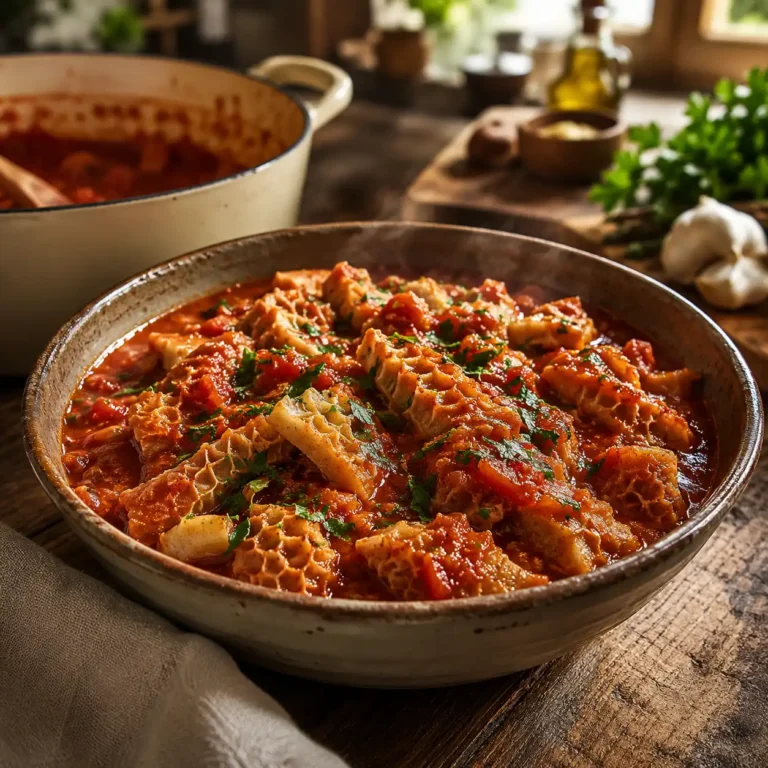
The Master Guide to a Tender Beef Tripe Recipe
A detailed approach to preparing a savory, tender, and aromatic beef tripe dish using traditional slow-cooking techniques to create a melt-in-your-mouth delicacy.
- Total Time: 3 hours 45 minutes
- Yield: 4 servings 1x
Ingredients
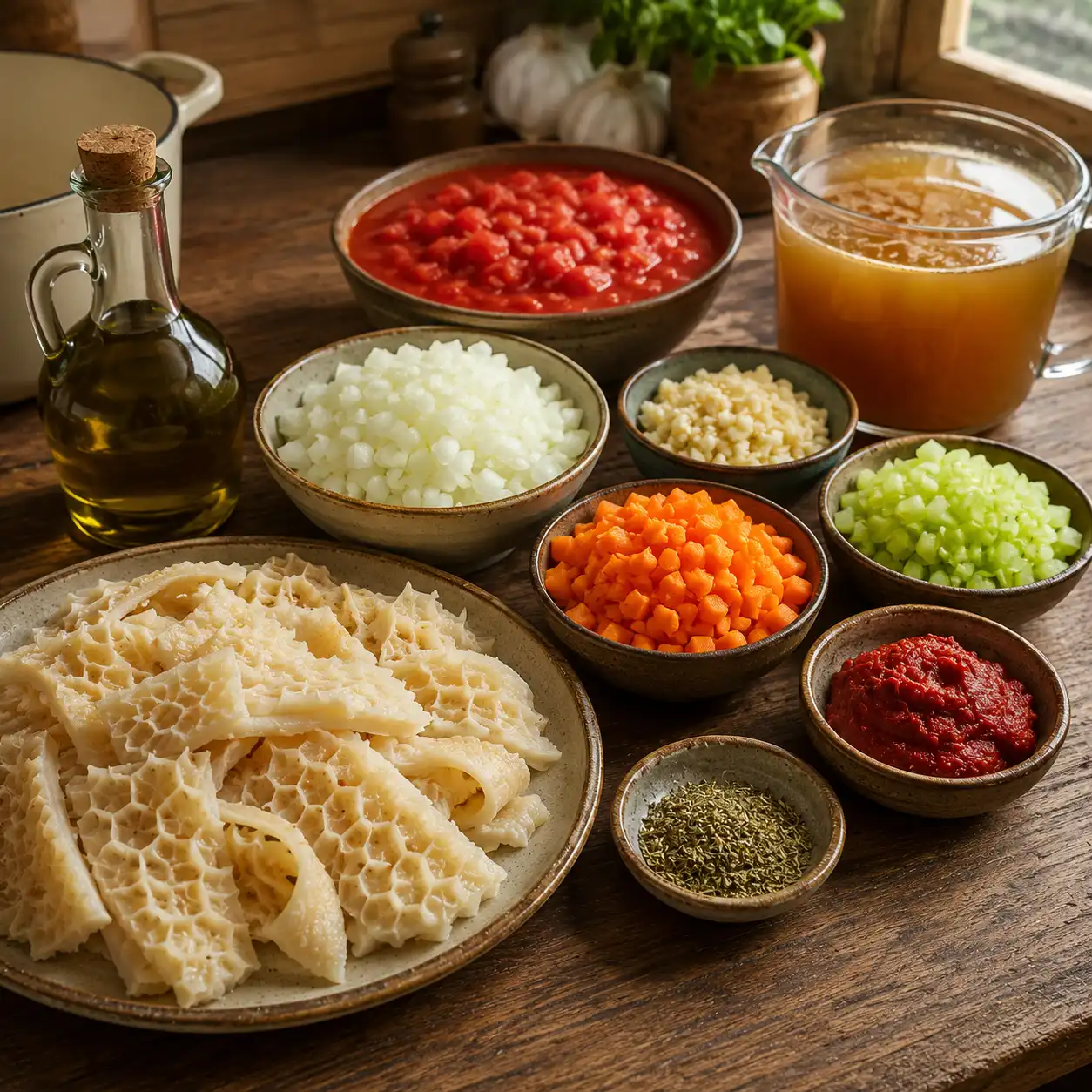
- 2 lbs honeycomb beef tripe, cleaned
- 1 large yellow onion, diced
- 4 cloves garlic, minced
- 2 carrots, sliced into rounds
- 2 stalks celery, chopped
- 1 can (14.5 oz) crushed tomatoes
- 4 cups beef bone broth
- 2 bay leaves
- 1 tsp dried oregano
- 1/2 tsp red pepper flakes
- 2 tbsp olive oil
- Salt and black pepper to taste
- Fresh parsley for garnish
Instructions
- Step 1: Clean Tripe – Rinse the tripe thoroughly under cold water and scrub with salt and vinegar to ensure cleanliness.
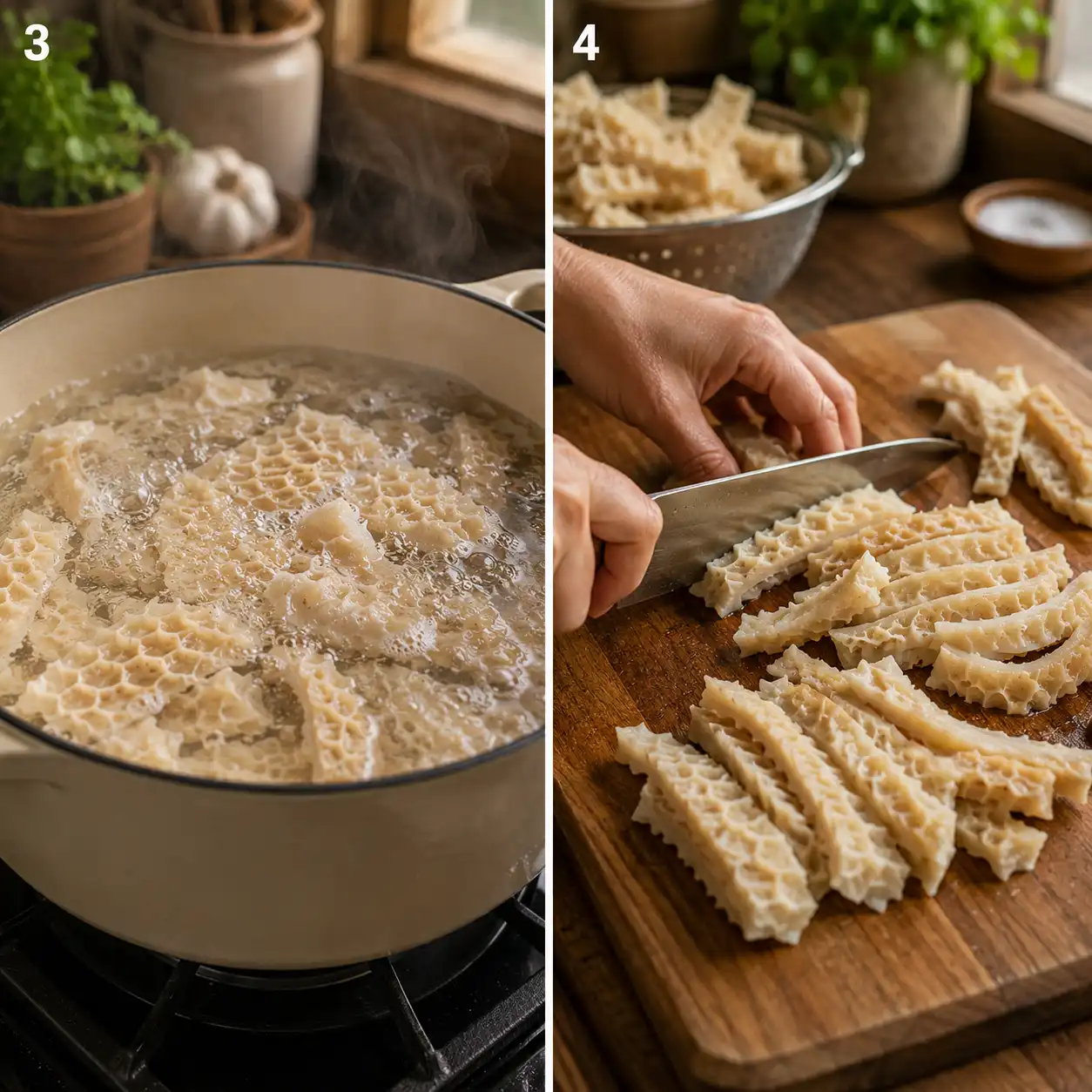
- Step 2: Parboil Tripe – Place tripe in a large pot of water, bring to a boil for 15 minutes, then drain and rinse again.
- Step 3: Slice Tripe – Cut the parboiled tripe into bite-sized strips or squares.
- Step 4: Sauté Aromatics – In a heavy-bottomed pot, heat olive oil and sauté onion, garlic, carrots, and celery until softened.
- Step 5: Combine Ingredients – Add the tripe strips, crushed tomatoes, beef broth, bay leaves, oregano, and red pepper flakes to the pot.
- Step 6: Initial Boil – Bring the mixture to a gentle boil over medium-high heat.
- Step 7: Slow Simmer – Reduce heat to low, cover, and simmer for 2.5 to 3 hours until the tripe is completely tender.
- Step 8: Reduce Sauce – Remove the lid and simmer for an additional 15 minutes to allow the sauce to thicken slightly.
- Step 9: Final Seasoning – Remove bay leaves, season with salt and pepper, and garnish with fresh parsley before serving.
Notes
Traditional tripe requires a long, slow simmer to break down tough connective tissues; do not rush the cooking process.
- Prep Time: 30 minutes
- Cook Time: 3 hours 15 minutes
- Category: Main Course
- Method: Slow Cooking
- Cuisine: International
- Diet: High-Protein
Nutrition
- Serving Size: 1.5 cups
- Calories: 320 kcal
- Sugar: 5g
- Sodium: 840mg
- Fat: 14g
- Saturated Fat: 5g
- Unsaturated Fat: 9g
- Trans Fat: 0.4g
- Carbohydrates: 10g
- Fiber: 2g
- Protein: 38g
- Cholesterol: 175mg
Keywords: beef tripe, offal, honeycomb tripe, tender tripe recipe, slow cooked beef, traditional stew
Preparation and Cleaning: The Foundation of Flavor
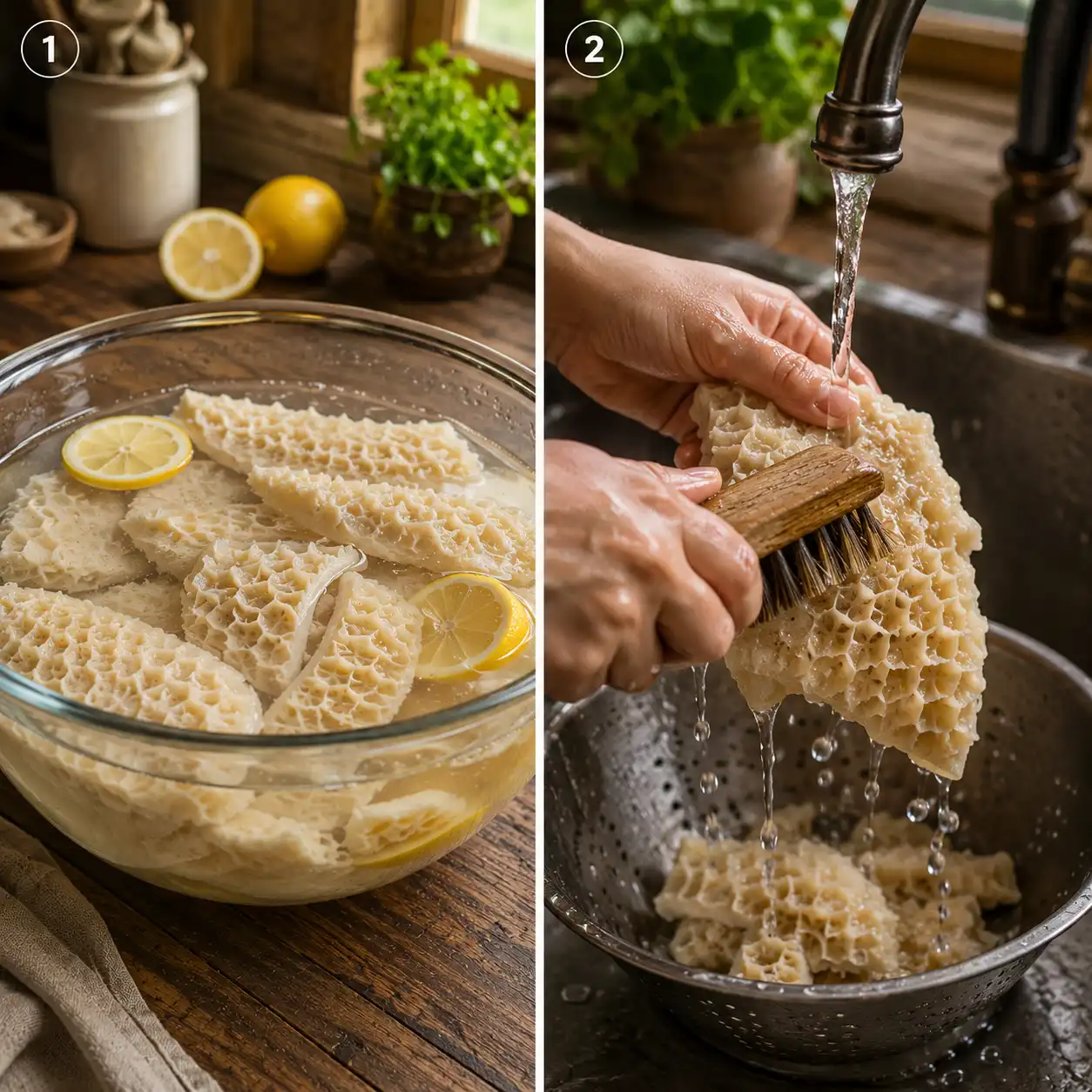
Even if you buy pre-cleaned meat, a thorough secondary cleaning is mandatory for a high-quality tripe recipe. This stage removes any lingering grit and softens the natural gamey scent of the offal. Most experts recommend soaking the meat in a mixture of cold water, salt, and lemon juice or white vinegar for at least an hour. This acidic bath helps neutralize odors and prepares the fibers for the long cooking process ahead.
After soaking, you must scrub the surface with a coarse brush or salt to remove any remaining impurities. Many traditional cooks believe that the time spent on this stage determines the success of the entire tripe recipe. Once scrubbed, rinse the meat multiple times under cold running water. It is helpful to follow food safety guidelines provided by the USDA Food Safety and Inspection Service regarding the handling of raw beef products to keep your kitchen safe from cross-contamination.
Initial Parboiling
Before the main simmer, a short parboil is necessary. Place the cleaned meat in a large pot of cold water and bring it to a rolling boil for about ten to fifteen minutes. Discard this initial water entirely. This step is a critical part of a professional tripe recipe because it extracts the last of the unwanted proteins and odors, leaving you with a clean slate for building deep, complex flavors with herbs and vegetables.
The Hearty Tomato and Garlic Tripe Recipe
This specific tripe recipe focuses on a rich, tomato-based sauce infused with garlic, onions, and beef stock. Since we are strictly avoiding pig products and alcohol, we rely on high-quality beef tallow or olive oil to provide the necessary fat and richness. This version is similar to many Mediterranean stews, providing a warm and satisfying meal that pairs perfectly with crusty bread or steamed grains.
Ingredients You Will Need
- 2 lbs Honeycomb beef tripe, cleaned and parboiled
- 3 tablespoons extra virgin olive oil
- 2 large yellow onions, finely diced
- 6 cloves of garlic, minced
- 1 carrot and 1 stalk of celery, finely chopped (mirepoix)
- 28 oz crushed tomatoes (canned or fresh)
- 4 cups high-quality beef bone broth
- 2 tablespoons tomato paste
- 1 tablespoon dried oregano and 1 teaspoon ground cumin
- Salt and black pepper to taste
- Fresh parsley for garnish
Step-by-Step Instructions
- Step 1: Slicing the Meat – Cut the parboiled beef tripe into bite-sized strips, roughly two inches long and half an inch wide. Consistency in size helps the meat cook evenly throughout the duration of the tripe recipe.
- Step 2: Sautéing Aromatics – Heat the olive oil in a heavy-bottomed Dutch oven over medium heat. Add the onions, carrots, and celery, cooking until they are soft and translucent. Add the garlic in the last minute to prevent it from burning.
- Step 3: Building the Base – Stir in the tomato paste and cook for two minutes until it turns a deep brick red. This deepens the savory notes of your tripe recipe without needing any additives.
- Step 4: Simmering – Add the sliced tripe, crushed tomatoes, beef broth, oregano, and cumin. Bring the mixture to a gentle boil, then immediately reduce the heat to low.
- Step 5: Long Braising – Cover the pot tightly and let it simmer for 2.5 to 3 hours. Check every 30 minutes to make sure there is enough liquid; add more broth if the sauce becomes too thick. The tripe recipe is finished when the meat is tender enough to be cut with a spoon.
- Step 6: Final Seasoning – Taste the sauce and add salt and pepper as needed. Garnish with fresh parsley before serving to add a bright, herbal finish.

The Nutritional Value of Tripe
While often overlooked, tripe is a nutritional powerhouse. It is a dense source of high-quality protein while remaining relatively low in calories and fat compared to other beef cuts. Many people who follow a high fiber foods for weight loss plan include tripe as their primary protein because it is incredibly satiating. It is also rich in vitamin B12, selenium, and zinc, which are essential for immune function and metabolic health.
Furthermore, the connective tissue in tripe breaks down during the slow-cooking process into gelatin. This makes a well-prepared tripe recipe excellent for supporting joint health and skin elasticity. If you are interested in how similar cooked animal proteins benefit the body, you might look into gelatin recipes gut health benefits, as the collagen released during the simmer provides a soothing effect on the digestive lining.
Texture and Culinary Science
The biggest challenge for a novice attempting a tripe recipe is the texture. If undercooked, tripe is rubbery and unpleasant. If overcooked, it can lose its structural integrity, though it rarely becomes “mushy” in the way muscle meat does. The science involves the breakdown of collagen into gelatin, a process that only happens with consistent, low heat over a long period. This is why a “quick” tripe recipe is almost impossible to find; time is the most important ingredient.
Adding acidic components like tomatoes or a splash of lemon juice helps speed up this breakdown by weakening the protein bonds. This chemical reaction is a staple in many classic dishes, much like the slow-cooked elements found in a traditional moussaka recipe, where layers of flavor are built through patience and heat. Research published in the Journal of Food Science suggests that the mineral content of tripe, particularly its calcium and phosphorus, remains stable even after several hours of boiling.
Global Variations Without Prohibited Ingredients
Many cultures have their own version of a tripe recipe. In Greece, “Patsas” is a famous soup often eaten after celebrations. It uses a simple broth of lemon and garlic, making it a cousin to the well-known avgolemono soup which uses similar citrus notes to brighten a heavy meat base. The key is to keep the seasonings simple so the unique flavor of the beef can shine through.
In Middle Eastern versions of a tripe recipe, the meat is often stuffed with rice and chickpeas, then seasoned with allspice and cinnamon. Because we are avoiding all pig products, using beef suet or additional olive oil is a great way to maintain the moistness of the rice stuffing. These variations show how versatile this offal can be when you understand the basic principles of cleaning and slow simmering.
FAQs
How do I know when the tripe is done?
The tripe is ready when a fork can easily pierce through the thickest part of the strip with almost no resistance. It should feel soft and tender, not bouncy or chewy. Most honeycomb tripe takes at least two and a half hours of simmering to reach this state.
Can I make this tripe recipe in a pressure cooker?
Yes, you can use a pressure cooker to save time. After the initial cleaning and parboiling, place all ingredients in the pressure cooker and cook on high for 45 to 60 minutes. Allow a natural pressure release to keep the meat from toughening up due to a sudden temperature change.
Is tripe healthy for everyone?
Tripe is a healthy, lean protein. However, like most organ meats, it is moderately high in cholesterol. If you are on a strictly heart-healthy diet, consult with a professional, but for most people, a tripe recipe offers a nutrient-dense alternative to standard steaks or ground beef.
Why does my tripe still smell after cleaning?
If a smell persists, it usually means the soaking process was too short or the initial parboiling was skipped. Make sure to use plenty of lemon or vinegar during the soak and always discard the water from the first 15 minutes of boiling before starting your actual stew.
Conclusion
Mastering a tripe recipe is a rewarding journey that connects you with centuries of culinary tradition. By focusing on meticulous cleaning and the “low and slow” cooking method, you can create a dish that is both sophisticated and deeply comforting. Whether you prefer the honeycomb texture in a rich tomato sauce or a light, garlicky broth, the key remains the same: respect the ingredient and give it the time it needs to soften. This beef-focused approach ensures a delicious, halal-friendly, and alcohol-free meal that will impress even the most skeptical diners.