When you think of Greek food, few dishes are as iconic and beloved as a traditional moussaka recipe. This hearty, layered casserole is the ultimate comfort food, bringing together the earthy flavors of roasted eggplant, a rich spiced meat sauce, and a velvety layer of bechamel. While it might seem intimidating to make at home, this guide will walk you through every stage of creating a perfect meal. Whether you are hosting a dinner party or preparing a Sunday family feast, this dish will quickly become a household favorite.
Table of Contents
Understanding the Classic Moussaka Recipe
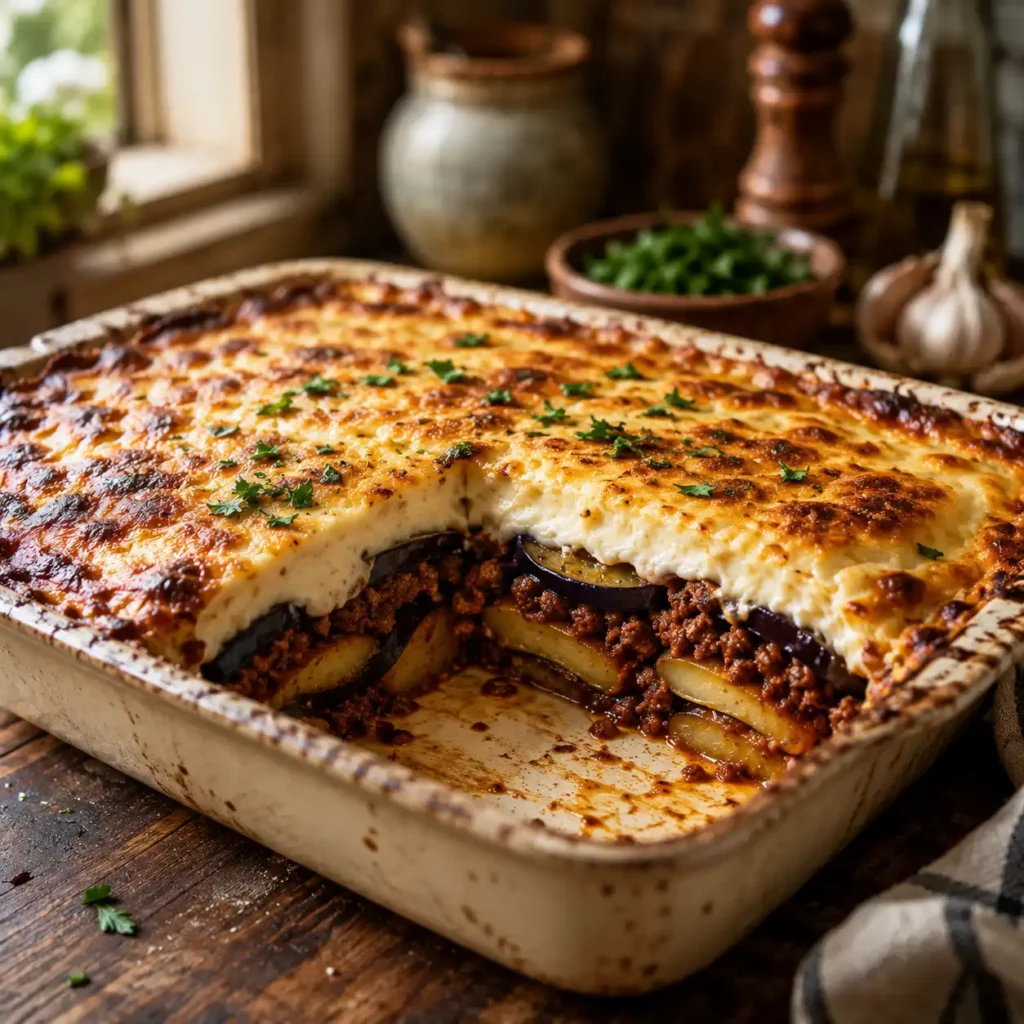
A great moussaka recipe is all about the harmony of its layers. Unlike a lasagna that uses pasta, this Mediterranean classic relies on fresh vegetables to provide structure. The base typically consists of sliced potatoes and eggplants that have been baked or fried until tender. These vegetables act as a foundation for the savory meat filling, which is simmered with warm spices that give the dish its signature aroma. The final crowning glory is a thick, custard-like bechamel sauce that browns beautifully in the oven.
A Brief History of This Iconic Dish
While variations of eggplant and meat dishes have existed in the Middle East for centuries, the modern version we know and love was popularized in the early 20th century by a Greek chef named Nicholas Tselementes. He wanted to bring French culinary techniques to Greek kitchens, which led to the addition of the creamy bechamel topping. This French influence is why the white sauce is so central to a modern moussaka recipe. If you are interested in the origins of classic sauces, you can read about the history of bechamel sauce and how it became one of the “mother sauces” in French cooking.
Why This Version Stands Out
This specific moussaka recipe focuses on balancing textures. We avoid the common pitfall of a greasy casserole by roasting the vegetables instead of deep-frying them. This allows the natural sweetness of the eggplant to shine without being weighed down by excess oil. Additionally, we use a blend of warm spices in the meat sauce like cinnamon and allspice to provide a depth of flavor that is uniquely Mediterranean. By taking the time to cook each layer properly, you create a dish that is light yet satisfyingly rich.
Print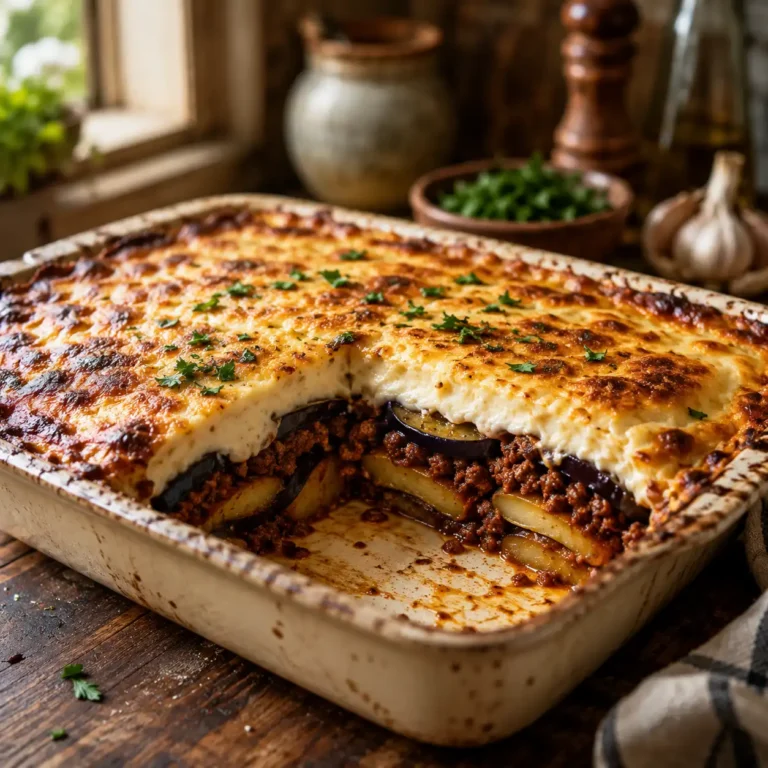
The Ultimate Greek Moussaka Recipe
A hearty, layered Greek casserole featuring roasted eggplant and potatoes, a rich spiced meat sauce, and a velvety bechamel topping.
- Total Time: 1 hour 45 minutes
- Yield: 8 servings 1x
Ingredients
- 2 large eggplants, sliced into 1/2 inch rounds
- 2 large russet potatoes, peeled and sliced into rounds
- 1/2 cup olive oil for brushing
- 1.5 lbs ground lamb or beef
- 1 large onion, finely chopped
- 3 cloves garlic, minced
- 1 can (14 oz) crushed tomatoes
- 1/2 cup red wine
- 1 tsp ground cinnamon
- 1/2 tsp ground allspice
- 4 tbsp unsalted butter
- 1/2 cup all-purpose flour
- 3 cups whole milk
- 2 egg yolks, lightly beaten
- 1/2 cup grated kefalotyri or parmesan cheese
- 1/4 tsp ground nutmeg
Instructions
- Step 1: Prep Vegetables – Slice the eggplant and potatoes into even rounds and salt the eggplant to draw out moisture.
- Step 2: Roast Vegetables – Brush vegetable slices with olive oil and bake at 400°F until tender and lightly browned.
- Step 3: Sauté Aromatics – Heat oil in a large pan and sauté onions and garlic until softened.
- Step 4: Brown Meat – Add the ground meat to the pan, breaking it up and cooking until fully browned.
- Step 5: Simmer Sauce – Stir in tomatoes, wine, cinnamon, and allspice, then simmer for 30 minutes until thick.
- Step 6: Prepare Roux – Melt butter in a saucepan, whisk in flour, and cook for 2 minutes over medium heat.
- Step 7: Whisk Bechamel – Slowly add milk while whisking constantly until the sauce thickens into a creamy consistency.
- Step 8: Temper Eggs – Remove bechamel from heat and whisk in egg yolks, nutmeg, and half the cheese.
- Step 9: Layer Dish – In a baking pan, layer potatoes first, followed by eggplant, and then the meat sauce.
- Step 10: Final Assembly – Spread the bechamel over the meat and sprinkle with the remaining cheese.
- Step 11: Bake Moussaka – Bake at 350°F for 45-50 minutes until the top is golden brown and bubbling.
- Step 12: Rest and Serve – Let the dish rest for 20 minutes before slicing to ensure the layers hold their shape.
Notes
Roasting the vegetables instead of frying keeps the dish light and avoids excess oiliness in the final casserole.
- Prep Time: 45 minutes
- Cook Time: 1 hour
- Category: Main Course
- Method: Baking
- Cuisine: Greek
- Diet: Mediterranean
Nutrition
- Serving Size: 1 slice
- Calories: 520 kcal
- Sugar: 7g
- Sodium: 680mg
- Fat: 34g
- Saturated Fat: 16g
- Unsaturated Fat: 18g
- Trans Fat: 0.5g
- Carbohydrates: 29g
- Fiber: 6g
- Protein: 25g
- Cholesterol: 115mg
Keywords: Greek, Moussaka, Eggplant, Comfort Food, Bechamel, Casserole
Essential Ingredients for an Authentic Moussaka Recipe
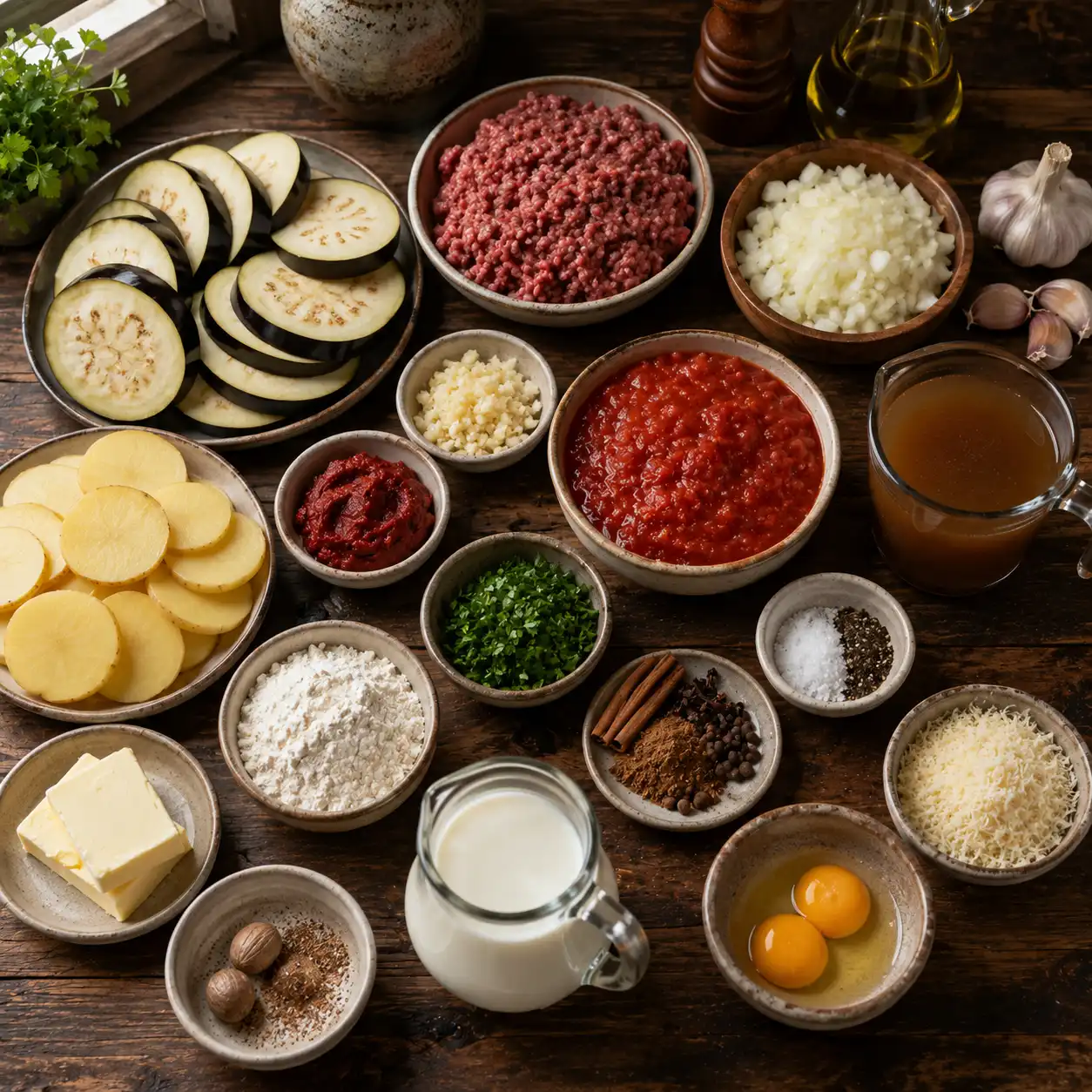
To achieve the best results, start with high-quality ingredients. For the vegetable layers, you will need large, firm globe eggplants and waxy potatoes that hold their shape. The meat sauce traditionally uses ground lamb or ground beef. In this moussaka recipe, we stick to ground beef for a flavor that most people find accessible and delicious. Remember to avoid any pig-related products like lard or bacon, as they are not used in a traditional Greek kitchen and can distract from the clean, herb-forward taste of the dish.
Choosing the Best Eggplants and Potatoes
Selecting the right vegetables is the first step toward success. Look for eggplants that are heavy for their size with smooth, shiny skin. Eggplants are packed with fiber and antioxidants, which contribute to a healthy diet. You can learn more about the nutritional benefits of eggplant to see why this vegetable is a staple in Mediterranean cooking. For the potatoes, Yukon Gold or Red Bliss work well because they stay firm even after being baked under a heavy meat sauce. Layering the base is quite similar to the method used in a recipe for scalloped potatoes, where thin slices create a sturdy bottom for the rest of the ingredients.
The Secrets of the Meat Sauce
The meat sauce is the heart of any moussaka recipe. It should be thick and concentrated, rather than watery. We achieve this by sautéing onions and garlic until soft, then browning the ground beef thoroughly. The addition of tomato paste, crushed tomatoes, and a splash of beef broth creates a savory base. The real magic, however, comes from the spices. A touch of cinnamon, a pinch of cloves, and fresh parsley give the meat a complex profile. Make sure to simmer the sauce until most of the liquid has evaporated so it doesn’t soak into the vegetables and make them soggy.
Crafting a Rich and Creamy Bechamel
The bechamel topping sets a Greek moussaka recipe apart from other versions found in the Balkans or Turkey. It is essentially a white sauce made from a roux of butter and flour, mixed with milk. To give it that thick, Greek-style finish, we whisk in egg yolks and a pinch of nutmeg once the sauce has thickened. This creates a sauce that sets into a firm, golden-brown layer as it bakes. It should be poured over the meat and smoothed out to the edges of the pan to seal everything in.
| Component | Cooking Method | Key Prep Tip |
|---|---|---|
| Potatoes | Baked or Fried | Slice thinly and evenly |
| Eggplants | Roasted | Salt to remove bitterness |
| Meat Sauce | Simmered | Reduce until very thick |
| Bechamel | Stovetop | Whisk constantly to avoid lumps |
Step-by-Step Instructions for the Best Moussaka Recipe
Follow these steps to build your masterpiece. While there are several parts to the process, you can prepare the meat sauce and the vegetables ahead of time to make the assembly day much easier. Organizing your workspace before you begin will make certain that everything goes smoothly.
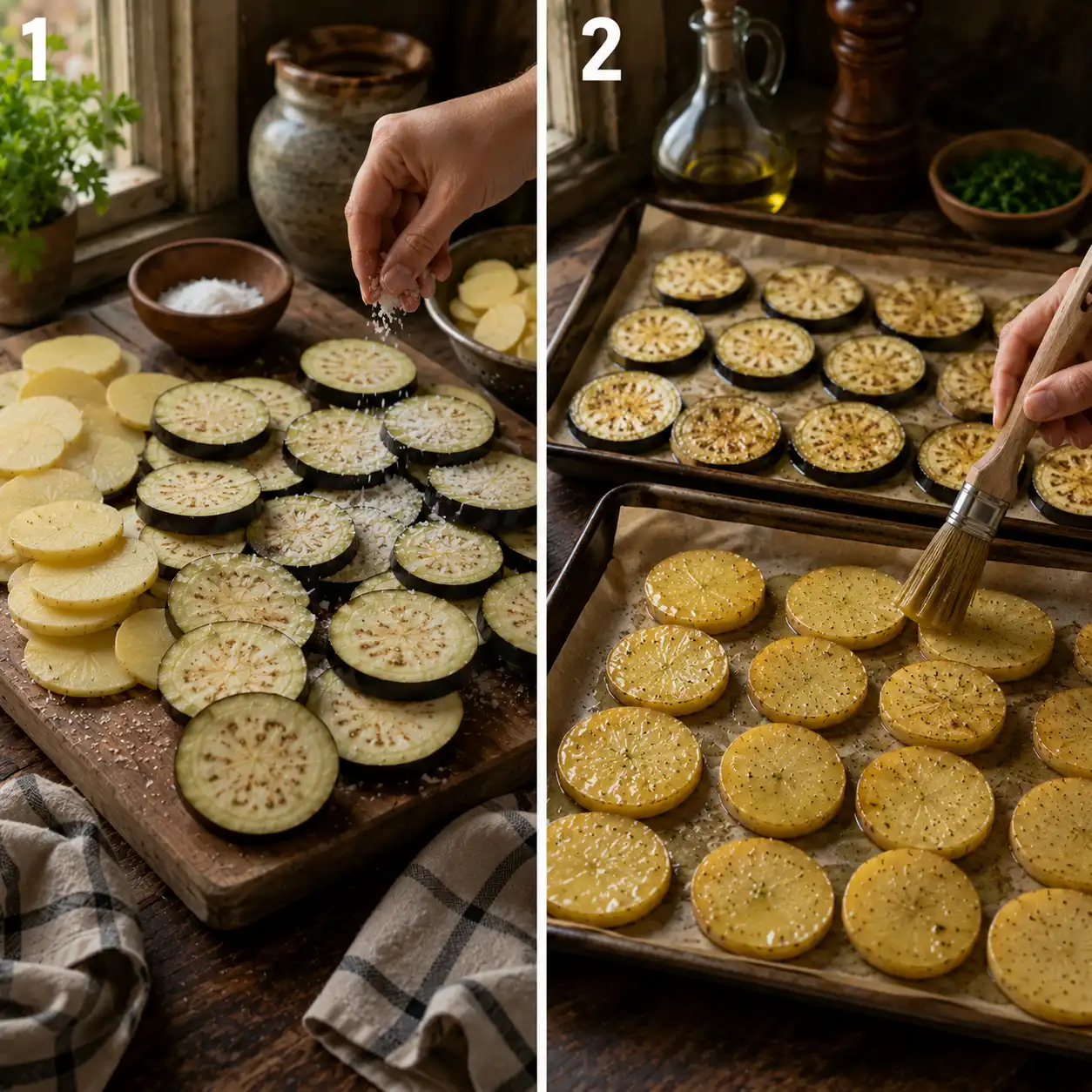
- Step 1: Prep the Veggies – Slice the eggplants and potatoes into 1/4-inch rounds. Sprinkle the eggplant with salt and let it sit for 30 minutes to draw out excess moisture. Rinse and pat dry.
- Step 2: Roast the Layers – Brush the potato and eggplant slices with olive oil and bake at 400°F (200°C) until tender and lightly browned. Set them aside to cool.
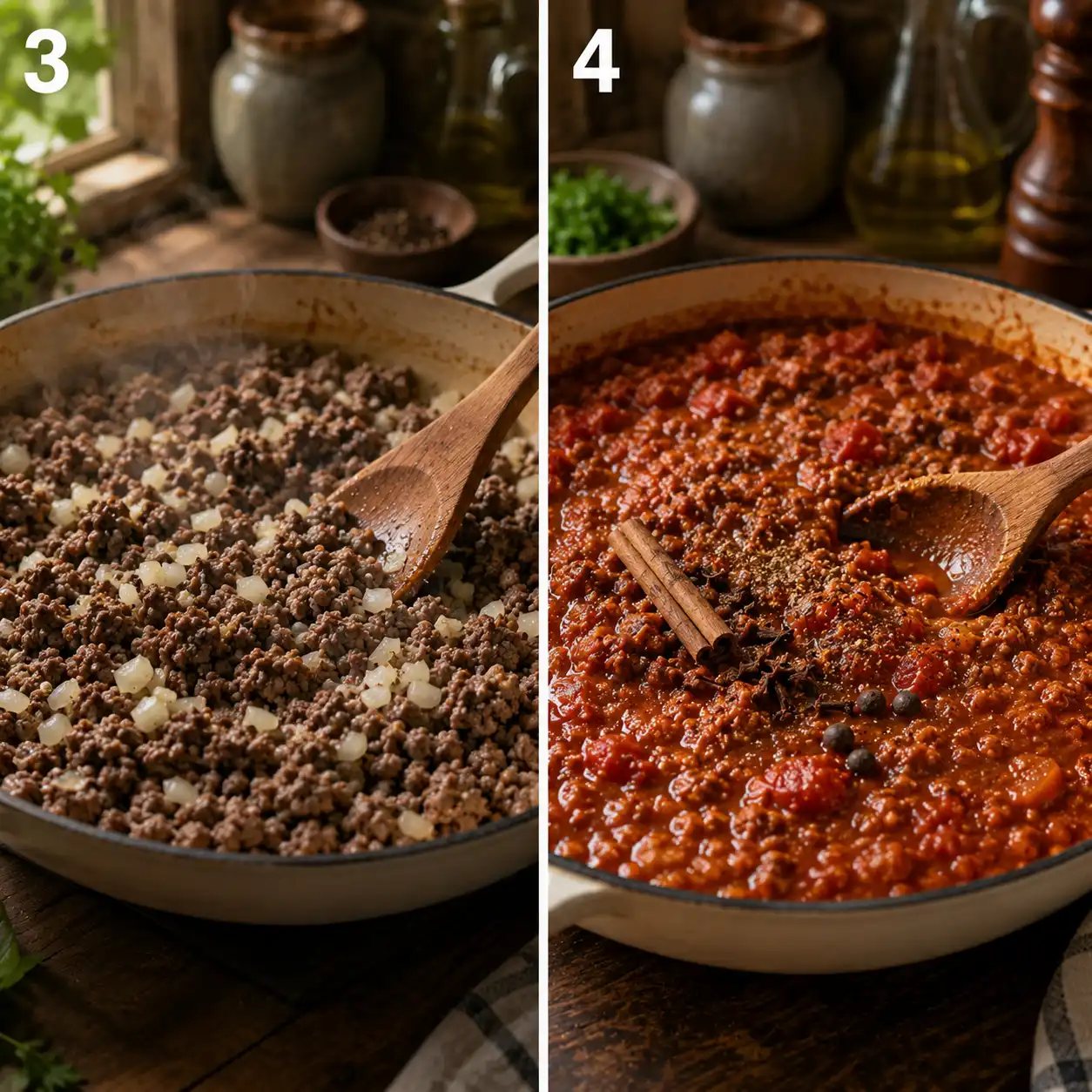
- Step 3: Cook the Meat – In a large pan, brown the ground beef with diced onions and garlic. Drain any excess fat to keep the dish from becoming greasy.
- Step 4: Simmer the Sauce – Add tomato paste, crushed tomatoes, cinnamon, allspice, salt, and pepper. Let the mixture simmer on low heat for about 20-30 minutes until thick.
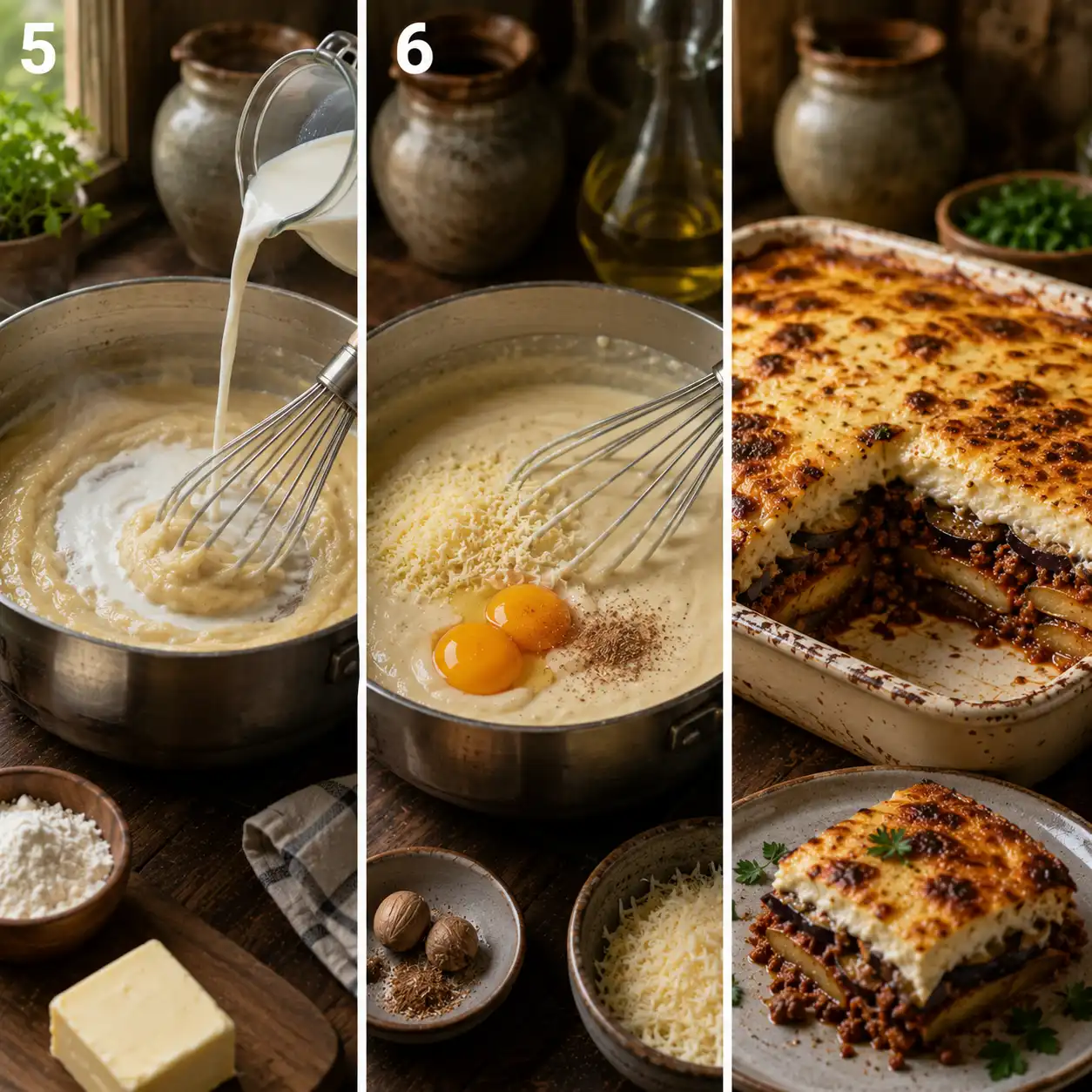
- Step 5: Prepare the Bechamel – Melt butter in a pot, whisk in flour, and slowly add milk while stirring. Once thickened, remove from heat and whisk in egg yolks, nutmeg, and a handful of grated cheese.
- Step 6: Assemble the Dish – In a deep baking pan, layer the potatoes first, followed by the eggplant. Spread the meat sauce over the vegetables and top with the bechamel sauce.
- Step 7: Bake and Rest – Bake at 350°F (175°C) for 45-60 minutes until the top is golden. Let the dish rest for at least 30 minutes before slicing to make sure the layers hold together.
Pro Tips for Success with Your Moussaka Recipe
Achieving the perfect consistency is the biggest challenge when following a moussaka recipe. If you don’t handle the vegetables correctly, they can release water during the baking process, resulting in a pool of liquid at the bottom of your pan. Always take the time to salt your eggplants and roast them thoroughly. This not only improves the texture but also concentrates the flavor. Another tip is to use a light touch with the oil; since eggplants act like sponges, roasting them on parchment paper is a great way to keep the dish light.
Managing Moisture in Vegetables
The moisture content in vegetables can make or break your moussaka recipe. Beyond salting the eggplant, you should also make sure your potatoes are dry after washing. If you are looking for other ways to enjoy healthy vegetable dishes, you might find that a silky avgolemono soup is another great way to use Mediterranean ingredients. Both dishes rely on creating a smooth, creamy texture through careful temperature control and ingredient preparation.
The Importance of Letting It Rest
It is incredibly tempting to dig into a fresh tray of moussaka as soon as it comes out of the oven. However, patience is key. Letting the dish rest for at least 30 to 45 minutes is vital for a moussaka recipe. During this time, the bechamel firms up and the juices from the meat sauce are reabsorbed by the vegetables. This resting period allows you to cut clean, beautiful squares that show off all those lovely layers. If you cut it too early, the layers will slide apart and the sauce will run.
Serving Suggestions and Pairings
Moussaka is a very filling dish, so it is best served with light and fresh accompaniments. A crisp Greek salad with tomatoes, cucumbers, olives, and feta cheese is the traditional choice. The acidity of the salad dressing cuts through the richness of the bechamel sauce beautifully. To make your meal complete, serve this with a fresh tzatziki recipe on the side; the cool yogurt and cucumber provide a refreshing contrast to the warm spices of the meat.
If you love these flavors, you might also enjoy a mediterranean chicken pita for a lighter lunch on another day. Greek cuisine offers a wonderful variety of dishes that use similar herbs like oregano, mint, and garlic. Pairing your moussaka with a side of crusty bread or even some lemon-roasted potatoes can also help soak up any of the delicious sauce that remains on your plate.
Common Mistakes to Avoid
One of the most frequent errors when following a moussaka recipe is making a bechamel that is too thin. If the sauce is runny, it will seep through the meat layer rather than sitting on top like a cloud. Make sure your roux is well-cooked before adding the milk, and don’t be afraid to let it thicken on the stove until it coats the back of a spoon. Another mistake is over-spicing the meat. While cinnamon is essential, it should be a subtle background note, not the dominant flavor. Start with a small amount and taste as you go.
Also, watch the salt levels. Since the eggplant is salted early on and the cheese in the bechamel is naturally salty, you should be careful when seasoning the meat sauce. Always taste each component before assembly to make sure the final result is perfectly balanced. Finally, avoid using watery tomatoes; if your canned tomatoes have a lot of juice, drain some of it off or simmer the sauce longer to thicken it up.
Variations and Dietary Adjustments
While the classic moussaka recipe is hard to beat, there are many ways to adapt it to your preferences. Some people prefer a version made only with eggplant, skipping the potatoes entirely for a lower-carb option. Others like to add a layer of sautéed zucchini or even red bell peppers for extra color and nutrition. No matter how you change it, the core principle remains the same: beautiful layers and a creamy topping.
Making a Vegetarian Moussaka
To create a vegetarian version of this moussaka recipe, simply replace the ground beef with a hearty meat substitute. Lentils or finely chopped mushrooms work wonderfully because they provide a similar texture and absorb the spices well. You can also use a mixture of brown lentils and walnuts for a nutty, earthy flavor. The bechamel remains the same, ensuring you still get that signature creamy finish that makes the dish so satisfying.
Healthier Swaps and Alternatives
If you are looking to lighten up the dish, you can make a few simple swaps. Instead of a traditional flour-based bechamel, some people use a mixture of Greek yogurt and eggs, which provides a similar tangy creaminess with more protein. You can also skip the frying of the vegetables entirely and roast them with just a light spray of olive oil. These changes can reduce the overall calorie count while still providing the deep, comforting flavors that make this moussaka recipe a staple in Greek households.
How to Store and Reheat Your Moussaka
One of the best things about a moussaka recipe is that it often tastes even better the next day. As the dish sits in the refrigerator, the flavors continue to meld together. You can store leftovers in an airtight container for up to three or four days. When you are ready to eat, reheat it in the oven at a low temperature to keep the bechamel from drying out. Covering the dish with foil while reheating will help keep the moisture locked in.
Moussaka also freezes surprisingly well. If you have made a large batch, you can freeze individual slices for a quick and easy meal later on. Just make sure to wrap them tightly in plastic wrap and then foil to prevent freezer burn. To serve from frozen, thaw it in the fridge overnight and then warm it through in the oven until the center is hot. It is a fantastic “make-ahead” meal for busy weeks.
Conclusion
Mastering a traditional moussaka recipe is a rewarding journey that brings the vibrant flavors of Greece right into your kitchen. By focusing on the quality of your ingredients and taking the time to build each layer with care, you can create a meal that is both impressive and deeply comforting. This dish is more than just a casserole; it is a celebration of Mediterranean culinary history. We hope this guide inspires you to roll up your sleeves and enjoy the process of making this legendary dish for your loved ones.
FAQs
Can I make moussaka without potatoes?
Yes, many people prefer a version of the moussaka recipe that only uses eggplants. This results in a slightly lighter dish. Simply double the amount of eggplant slices to ensure you have enough layers to support the meat sauce and bechamel.
What is the best cheese to use in the bechamel?
Traditionally, a hard Greek cheese like Kefalotyri or Graviera is used. If you cannot find these locally, Pecorino Romano or a sharp Parmesan are excellent substitutes that provide a similar salty, nutty flavor to the topping.
Why is my moussaka falling apart when I slice it?
This usually happens if the dish hasn’t rested long enough after baking. The layers need time to set as they cool slightly. Also, make sure your meat sauce is thick and not watery, as excess liquid will cause the layers to slide.
Can I use ground lamb instead of beef?
Absolutely! Ground lamb is the most traditional choice for a Greek moussaka recipe. It has a richer, more distinct flavor that pairs beautifully with the cinnamon and allspice in the sauce. Some people even use a 50/50 mix of lamb and beef.