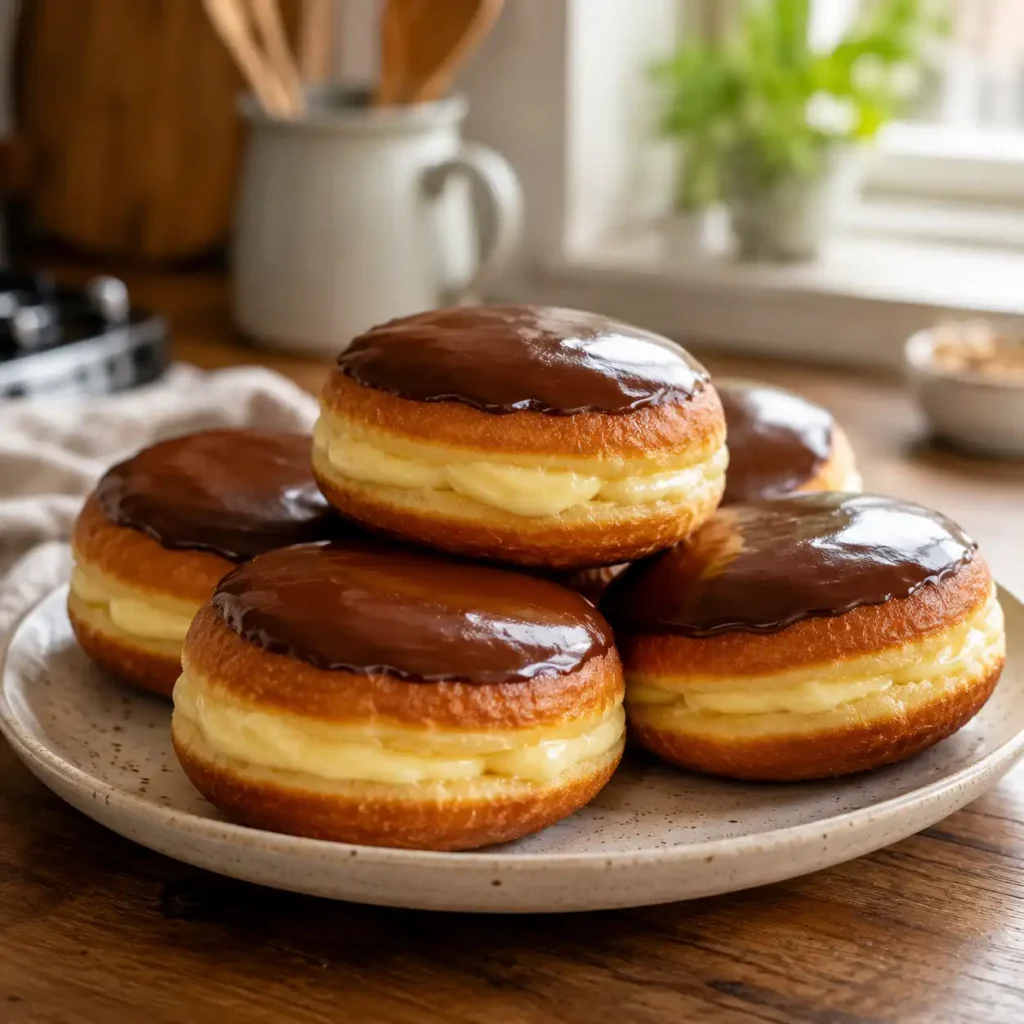
There is something truly magical about a fresh Boston cream donut. That first bite into a soft, pillowy yeast donut, followed by the cool rush of vanilla custard and the rich snap of chocolate glaze, is a pure delight. Whether you find them at a local bakery or decide to try your hand at making them at home, these treats represent the height of comfort food. In this guide, we will look at everything that makes this pastry a legend and help you master the art of making them in your own kitchen.
Table of Contents
The Fascinating History of the Boston Cream Donut
The story of the Boston cream donut is closely tied to the official dessert of Massachusetts: the Boston Cream Pie. This “pie” was actually a cake created by Chef M. Sanzian at Boston’s Parker House Hotel in the mid-19th century. Over time, the flavor profile of sponge cake, pastry cream, and chocolate ganache moved from the cake stand to the bakery case. According to the history of the Boston cream donut, it became a staple in New England before spreading across the world. It successfully turned a refined hotel dessert into a portable, handheld snack that anyone could enjoy on the go.
Print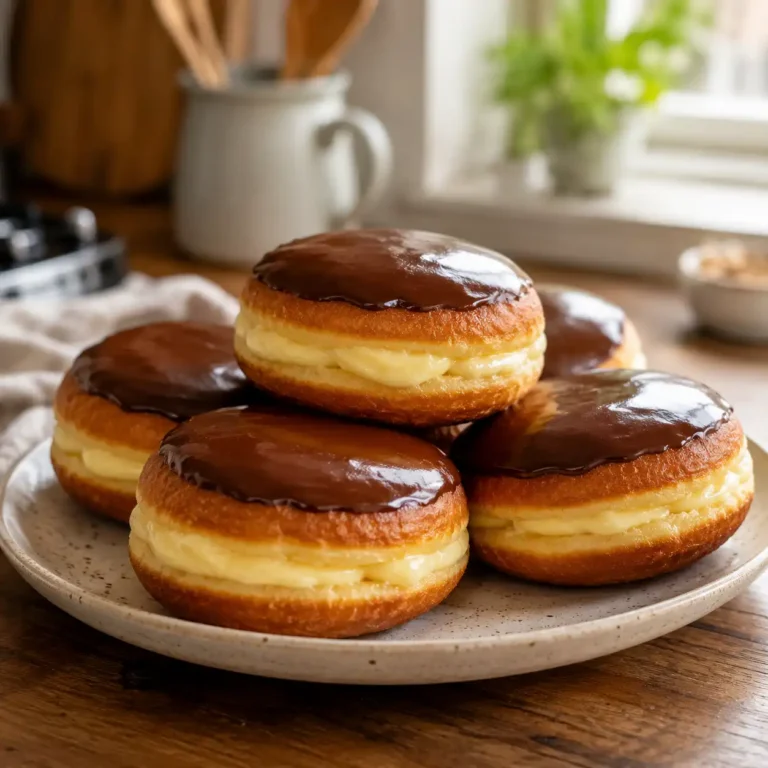
Ultimate Guide to the Perfect Boston Cream Donut
Master the art of creating soft, pillowy yeast donuts filled with silky vanilla pastry cream and finished with a rich, shiny chocolate ganache glaze.
- Total Time: 3 hours
- Yield: 12 donuts 1x
Ingredients
- 2 1/4 tsp Active dry yeast
- 1 cup Warm milk (110°F)
- 1/3 cup Granulated sugar
- 1/2 cup Unsalted butter, softened
- 2 Large eggs
- 4 cups All-purpose flour
- 1/2 tsp Salt
- 4 Large egg yolks
- 1/4 cup Cornstarch
- 2 cups Whole milk (for custard)
- 2 tsp Vanilla extract
- 4 oz Semi-sweet chocolate, chopped
- 1/2 cup Heavy cream
- Oil for frying (Canola or Vegetable)
Instructions
- Step 1: Mix Dough – Combine yeast, warm milk, sugar, butter, eggs, and flour; knead until a soft, smooth dough forms.
- Step 2: First Rise – Place dough in a greased bowl, cover, and let rise in a warm spot until doubled in size.
- Step 3: Make Custard – Whisk yolks, sugar, and cornstarch; temper with hot milk and cook until thick and velvet-like.
- Step 4: Chill Filling – Stir vanilla into the custard, cover with plastic wrap touching the surface, and refrigerate until cold.
- Step 5: Shape Donuts – Roll dough to 1/2-inch thickness, cut into rounds, and let rise on parchment paper for 45 minutes.
- Step 6: Fry Donuts – Fry in 350°F oil until golden-brown on both sides with a pale ring around the center.
- Step 7: Prepare Glaze – Heat heavy cream and pour over chopped chocolate; stir until a smooth, rich ganache forms.
- Step 8: Assemble Donuts – Pipe chilled custard into the side of each donut and dip the top into the chocolate glaze.
Notes
Always ensure the pastry cream is completely chilled before filling to maintain the donut’s structure and prevent the glaze from melting.
- Prep Time: 45 minutes
- Cook Time: 15 minutes
- Category: Dessert
- Method: Deep Frying
- Cuisine: American
- Diet: Vegetarian
Nutrition
- Serving Size: 1 donut
- Calories: 380 kcal
- Sugar: 22 g
- Sodium: 150 mg
- Fat: 18 g
- Saturated Fat: 10 g
- Unsaturated Fat: 6 g
- Trans Fat: 0.1 g
- Carbohydrates: 48 g
- Fiber: 1.5 g
- Protein: 6 g
- Cholesterol: 85 mg
Keywords: Boston Cream, Donut, Pastry Cream, Chocolate Glaze, Yeast Donut, Boston Cream Pie
The Three Pillars of a Perfect Boston Cream Donut
The Fluffy Yeast Dough
The foundation of any great Boston cream donut is the dough. Unlike cake donuts, which are chemically leavened, these rely on yeast to create a light, airy structure. The dough should be slightly sweet and very soft, often enriched with butter and eggs. When fried correctly, it develops a golden-brown exterior and a pale “ring” around the center, which is a sign of a well-proofed donut. The goal is to create a vessel that is sturdy enough to hold the cream but soft enough to melt in your mouth.
The Silky Vanilla Custard
The heart of the Boston cream donut is the filling. Traditional recipes use a cooked pastry cream, also known as crème pâtissière. This is made by tempering hot milk into a mixture of egg yolks, sugar, and cornstarch. The result is a thick, velvet-like custard that tastes strongly of vanilla. It must be completely chilled before it goes into the donut, otherwise, it will melt the dough and the chocolate on top. A high-quality custard is what separates a gourmet donut from a standard grocery store version.
The Rich Chocolate Glaze
A Boston cream donut isn’t complete without its shiny chocolate hat. This glaze is typically a ganache or a thick chocolate icing. It should be dark enough to balance the sweetness of the custard but smooth enough to provide a clean bite. Some bakers prefer a dip that sets firmly, while others like a slightly softer, fudgy topping. No matter the texture, the chocolate must be of good quality to provide that deep, satisfying finish that lingers after the donut is gone.
Essential Ingredients for Success
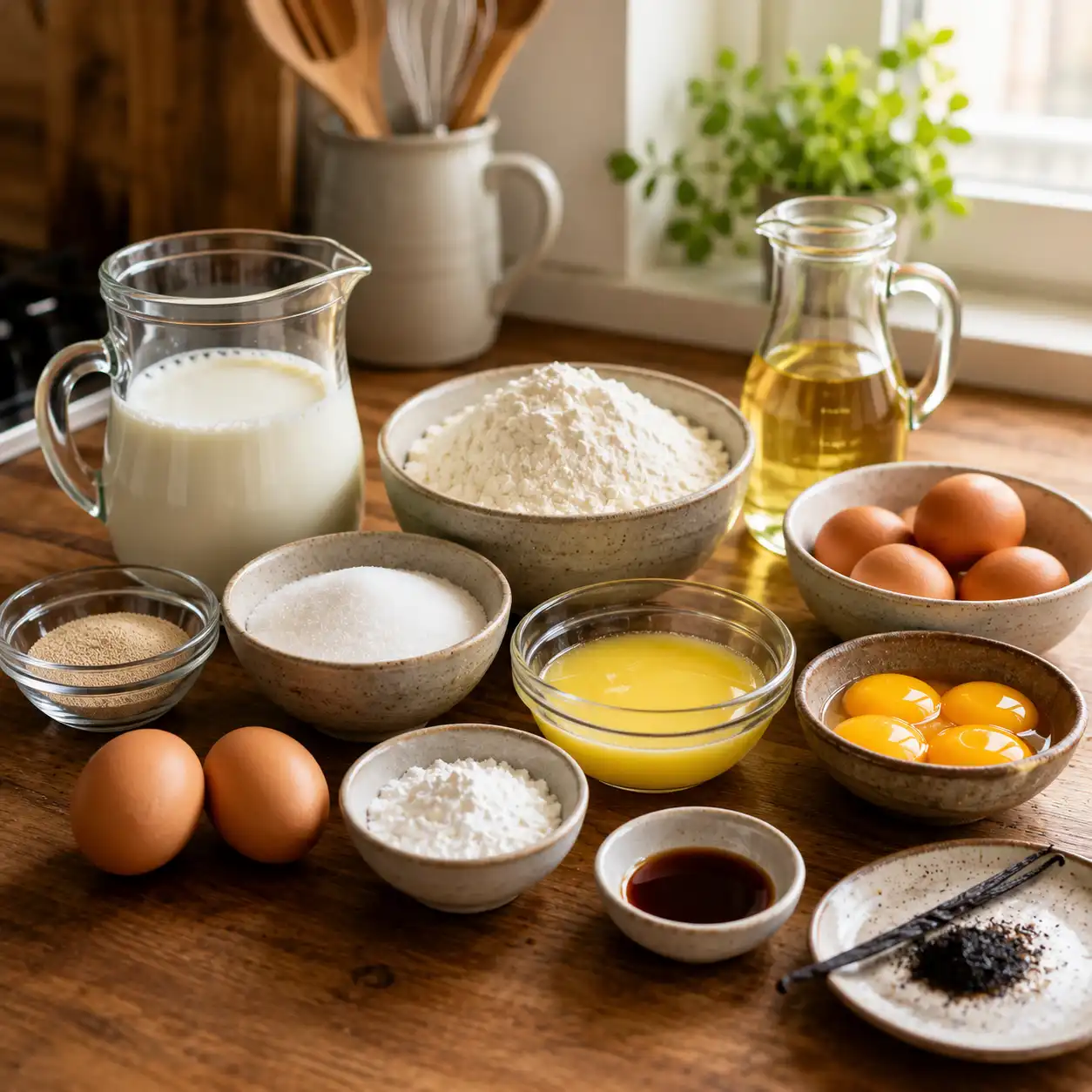
To make a top-tier Boston cream donut, you need fresh ingredients. Start with bread flour if you want a bit more chew, or all-purpose flour for a softer bite. You will also need active dry yeast, whole milk, and unsalted butter. For the filling, use the best vanilla bean paste or vanilla extract you can find. Since we are avoiding certain products, you can use vegetable shortening or a high-smoke-point vegetable oil for frying. Avoid any fats derived from animals like pigs to keep the recipe clean and accessible for everyone. High-quality cocoa powder or semi-sweet chocolate chips will work perfectly for the glaze.
Step-by-Step Guide to Making the Boston Cream Donut
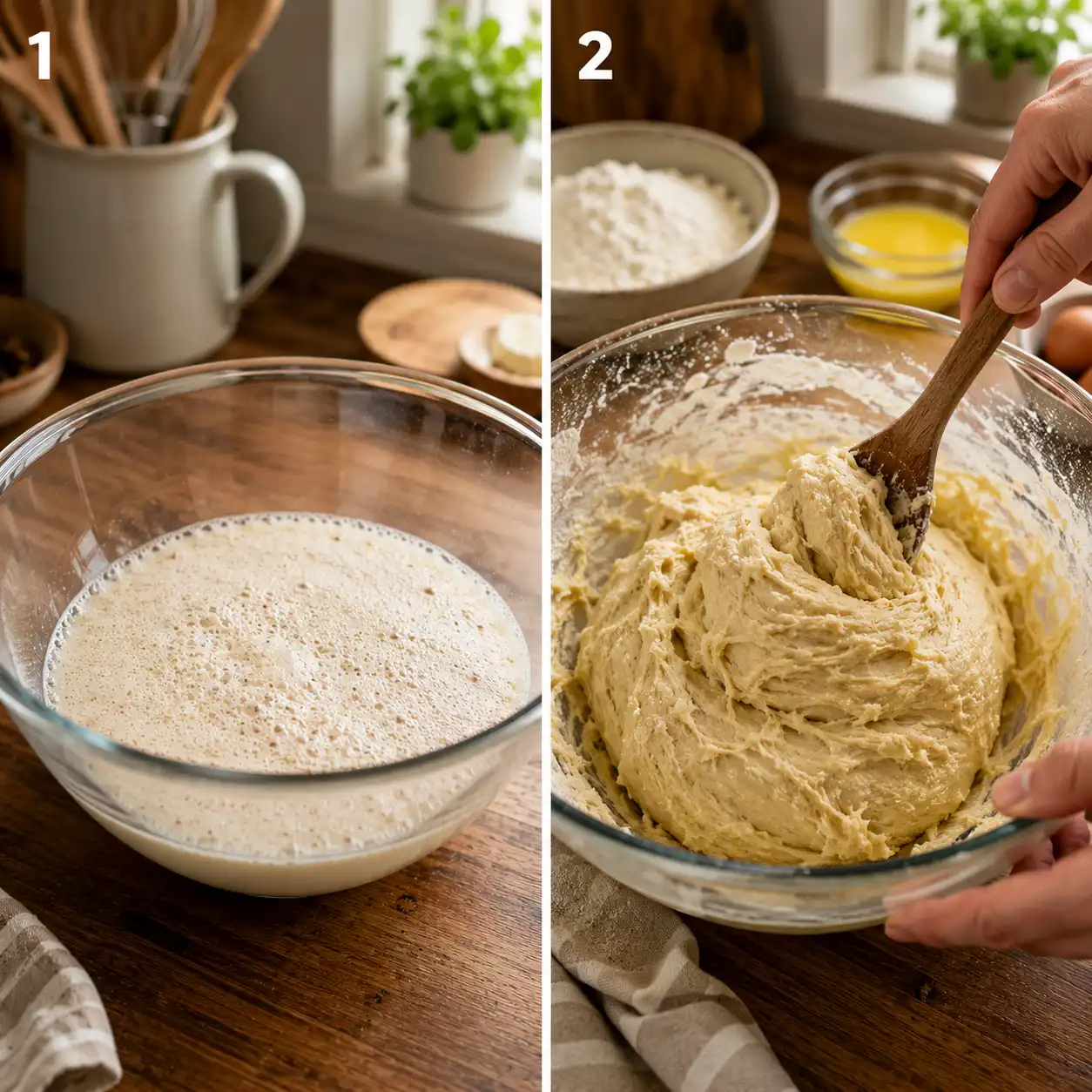
Step 1: Preparing the Dough – Mix your warm milk with yeast and a bit of sugar, letting it sit until it becomes foamy and active. Add in your melted butter, eggs, and flour, mixing until a soft dough forms. It should be slightly tacky but not stick to your fingers excessively.
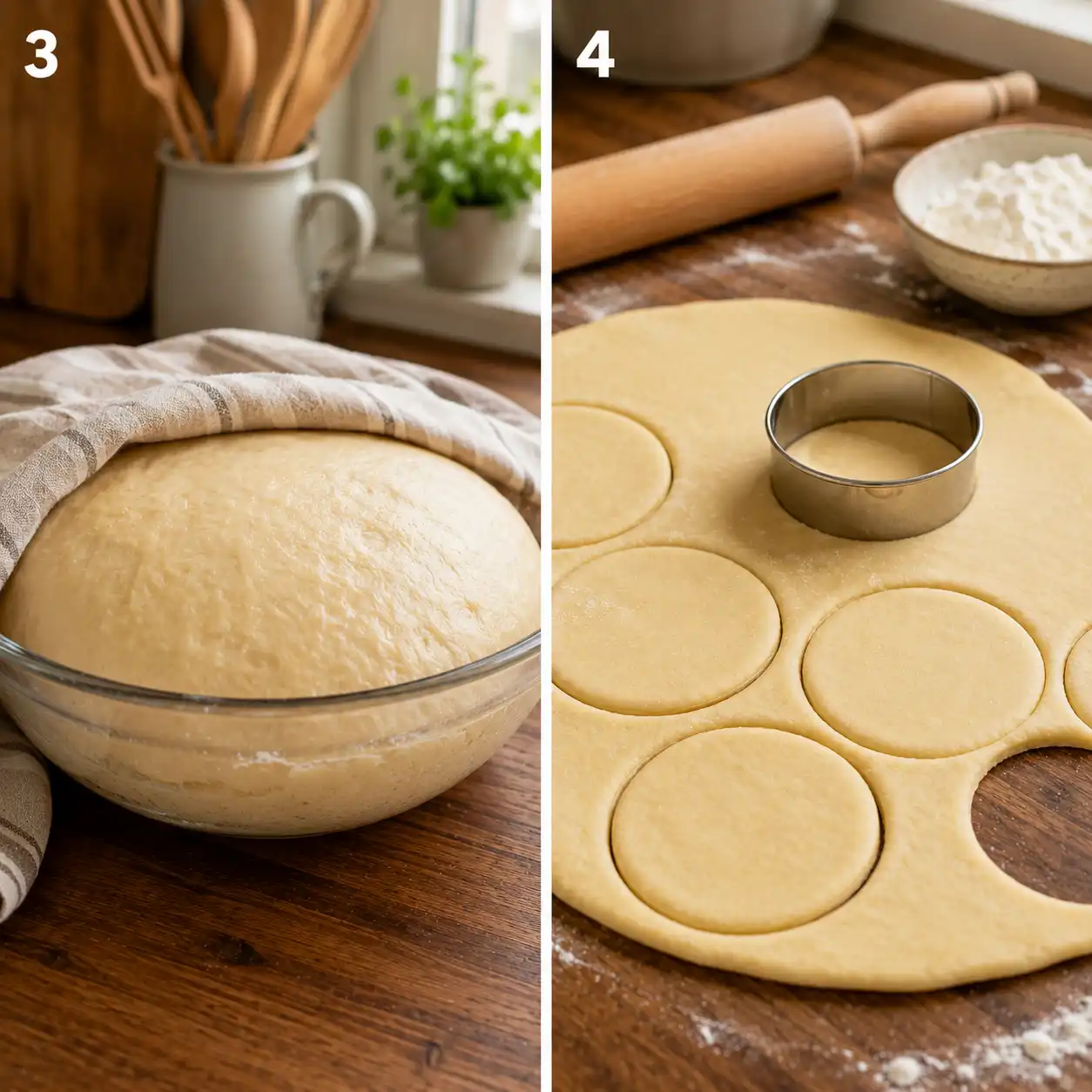
Step 2: The First Rise – Place your dough in a greased bowl and cover it with a warm towel. Let it rise in a draft-free spot for about an hour or until it has doubled in size. This step is vital for building the airy texture we love in a Boston cream donut.
Step 3: Rolling and Cutting – Gently punch down the dough and roll it out on a floured surface to about half an inch thick. Use a round cutter to make circles, ensuring you don’t leave a hole in the middle like a traditional ring donut.
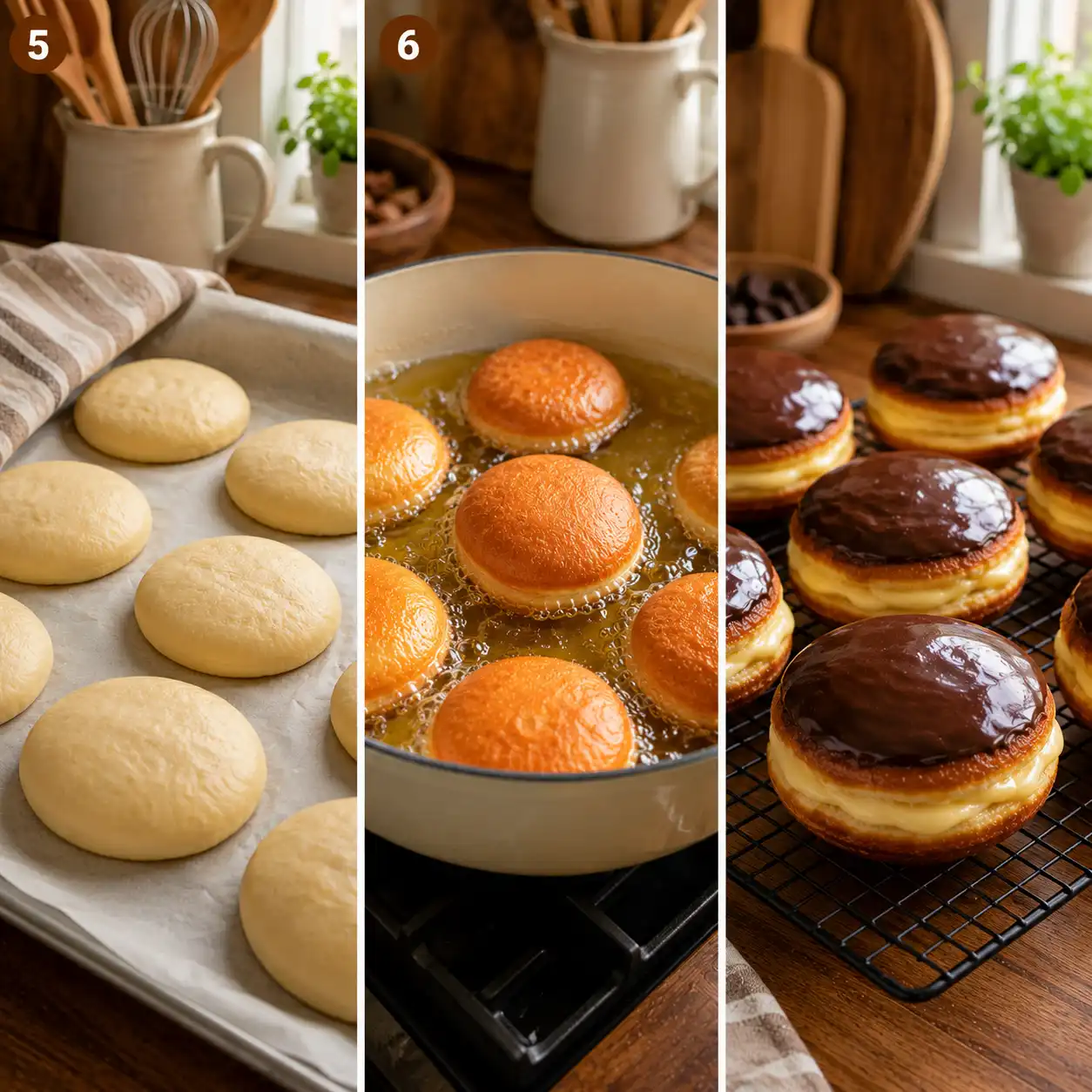
Step 4: The Second Rise – Place your cut rounds on a parchment-lined baking sheet. Cover them again and let them rise for another 30 to 45 minutes. They should look puffy and feel light when you gently touch the side.
Step 5: Frying the Donuts – Heat your vegetable oil to 350 degrees Fahrenheit. Carefully drop a few rounds into the oil, frying for about two minutes per side. They should turn a beautiful golden brown. Remove them and let them drain on a wire rack or paper towels.
Step 6: Making the Custard – While the donuts cool, whisk together your egg yolks, sugar, and cornstarch. Slowly add hot milk while whisking constantly. Cook the mixture over medium heat until it thickens into a heavy pudding. Stir in your vanilla and butter, then cover with plastic wrap and chill.
Step 7: Filling the Centers – Once the donuts and cream are both cool, use a small knife or a straw to poke a hole in the side of each donut. Use a piping bag to squeeze the vanilla custard into the center until the Boston cream donut feels heavy.
Step 8: Glazing the Tops – Melt your chocolate and a little butter or cream together to create a smooth glaze. Dip the top of each filled donut into the chocolate, let the excess drip off, and set them back on the rack to firm up.
Mastering the Pastry Cream Filling
The filling is often where people struggle, but a few tips can make it easy. Always cook the custard over medium-low heat to avoid curdling the eggs. If you find that your filling is too thin to stay inside the Boston cream donut, you might need a little extra help with the structure. Some professional bakers use a tiny amount of unflavored gelatin powder to give the custard a more stable, sliceable consistency. This helps the cream stay put when you take a bite, preventing it from squishing out the sides. Just remember to strain your custard through a fine-mesh sieve after cooking to remove any tiny bits of cooked egg, making sure the texture is perfectly smooth.
The Art of the Chocolate Ganache
A shiny glaze is the hallmark of a great Boston cream donut. To achieve this, avoid overheating your chocolate, as it can become grainy or dull. If you want a glaze that stays soft and glossy, use a 1:1 ratio of chocolate to heavy cream. If you prefer something that sets hard, use more chocolate and a touch of corn syrup for shine. For those who want to experiment with different flavor profiles, you could even look into a chocolate hazelnut custard dessert style of filling or glaze. Adding a hint of nuttiness to the chocolate can provide a fun twist on the traditional recipe while keeping that classic look everyone recognizes.
Comparing the Boston Cream to the Bavarian Cream
Many people confuse the Boston cream donut with the Bavarian cream donut. While they look similar, the difference lies in the filling and the topping. A Boston cream uses a traditional pastry cream and is always topped with chocolate. A Bavarian cream donut is filled with a lighter cream that has whipped cream folded into the custard, and it is usually rolled in powdered sugar or granulated sugar rather than glazed with chocolate. The Boston version is much richer and heavier, making it a more substantial treat for chocolate lovers.
| Feature | Boston Cream Donut | Bavarian Cream Donut |
|---|---|---|
| Filling Type | Dense Pastry Cream (Custard) | Lightened Pastry Cream (with Whipped Cream) |
| Topping | Chocolate Glaze | Powdered or Granulated Sugar |
| Dough | Yeast-raised | Yeast-raised |
| Flavor Profile | Rich, Chocolatey, Creamy | Light, Airy, Sweet |
Variations for Every Occasion
While the classic donut is hard to beat, the flavors are so popular that they have inspired many other desserts. For example, if you don’t feel like deep-frying dough, you can try making boston cream pie cookies. These cookies offer the same combination of soft dough, creamy center, and chocolate topping but in a much simpler, baked format. They are great for parties or lunchboxes where a messy donut might not be practical. You can also turn these flavors into a trifle, a giant cake, or even a breakfast parfait by layering pudding and chocolate with pieces of cake.
When to Serve These Delicious Treats
Because they are a bit more labor-intensive than a simple glazed donut, these are perfect for special gatherings. They fit right in with other sweet morning treats weekend plans where you have more time to spend in the kitchen. Serving a platter of homemade donuts at a brunch or a holiday breakfast will always impress your guests. They also make a fantastic dessert for an outdoor picnic, provided you keep them in a cool spot so the chocolate doesn’t melt. Their iconic look makes them a favorite for birthdays or office celebrations as well.
Common Mistakes to Avoid
One of the most frequent errors when making a Boston cream donut is under-proofing the dough. If the dough doesn’t rise enough, the donut will be dense and oily rather than light and fluffy. Another common pitfall is filling the donuts while they are still warm. This causes the custard to thin out and soak into the bread, making it soggy. Finally, make sure your oil temperature remains steady. If the oil is too cool, the dough will absorb too much fat; if it is too hot, the outside will burn before the inside is fully cooked. Using a kitchen thermometer is the best way to make sure your results are consistent.
How to Store Your Donuts
Because of the dairy in the custard, a Boston cream donut should not be left at room temperature for more than a few hours. To keep them fresh, store them in an airtight container in the refrigerator. They will stay good for about two to three days. When you are ready to eat one, you can take it out of the fridge about fifteen minutes early to let the dough soften slightly, but many people actually enjoy them cold. Avoid freezing them if possible, as the custard can sometimes separate and become watery once thawed, ruining the texture of the filling.
FAQs
Can I bake Boston cream donuts instead of frying them?
Yes, you can bake the dough rounds in the oven at 350 degrees Fahrenheit for about 12-15 minutes. While they won’t have the exact same flavor as a fried Boston cream donut, they will still be delicious and a bit lighter. Brush them with a little melted butter after baking to give them a richer taste.
What is the best way to fill the donuts without a piping bag?
If you don’t have a professional piping bag, you can use a heavy-duty plastic storage bag. Simply fill the bag with the custard and snip off one of the bottom corners. It works surprisingly well for filling a Boston cream donut, though you have a bit less control than you would with a dedicated pastry tip.
Why did my chocolate glaze turn grey or dull?
This usually happens due to “bloom,” which occurs when the chocolate is heated too quickly or stored in a place with too much moisture. To keep the glaze on your Boston cream donut shiny, melt the chocolate slowly over a water bath (double boiler) and avoid getting any water drops into the bowl.
Can I use instant pudding instead of homemade pastry cream?
In a pinch, you can use instant vanilla pudding. However, it won’t have the same rich, thick consistency as a traditional cooked custard. If you do use instant pudding, use slightly less milk than the package calls for to make sure the filling is sturdy enough to stay inside the Boston cream donut.
Conclusion
The Boston cream donut remains one of the most beloved pastries for a reason. Its combination of textures and flavors is perfectly balanced, offering a nostalgic taste that appeals to people of all ages. While it takes a bit of patience to prepare the dough, cook the custard, and dip the chocolate, the final result is well worth the effort. By following these steps and paying attention to the small details, you can create a bakery-quality treat right in your own kitchen that your family and friends will talk about for weeks to come.