Eggplant recipes are a great way to bring rich flavor, soft texture, and satisfying meals to your table. Whether you like eggplant roasted, baked, fried, stuffed, or simmered in sauce, this versatile vegetable can fit into weeknight dinners and special meals alike. In this guide, you’ll find practical eggplant recipes, simple cooking tips, and ideas that help you get the best taste and texture every time.
Table of Contents
Why Eggplant Recipes Are Worth Making
A versatile vegetable with big flavor
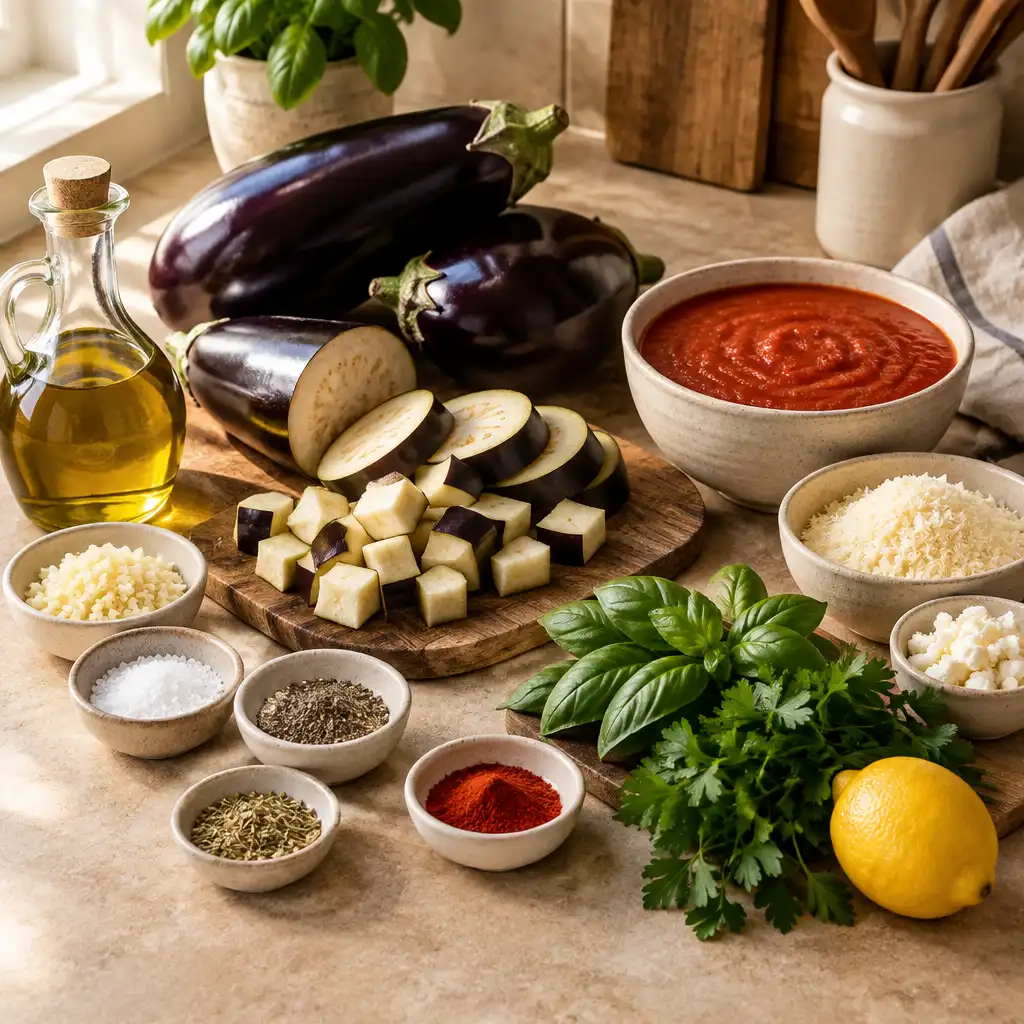
Eggplant recipes work well because eggplant absorbs seasoning beautifully. Its mild taste makes it easy to pair with garlic, tomato, herbs, cheese, and bold spices. When cooked properly, eggplant turns tender and rich without feeling heavy. That is why eggplant recipes show up in so many kitchens around the world, from simple roasted sides to hearty main dishes.
Great for everyday meals
Another reason people love eggplant recipes is how flexible they are. You can make a quick skillet dinner, a baked casserole, a meatless main, or a simple side dish. Eggplant also fits into many eating styles, including vegetarian meals and lighter dinners. If you enjoy vegetable-forward cooking, eggplant recipes can become a regular part of your meal plan.
Eggplant in global cooking
Eggplant has a long history in many cuisines, and that helps explain why eggplant recipes are so varied. A helpful background source is the Wikipedia page on eggplant, which covers the plant’s history, culinary uses, and common varieties. That broad food tradition is part of what makes eggplant recipes so appealing: one ingredient, many different directions.
Print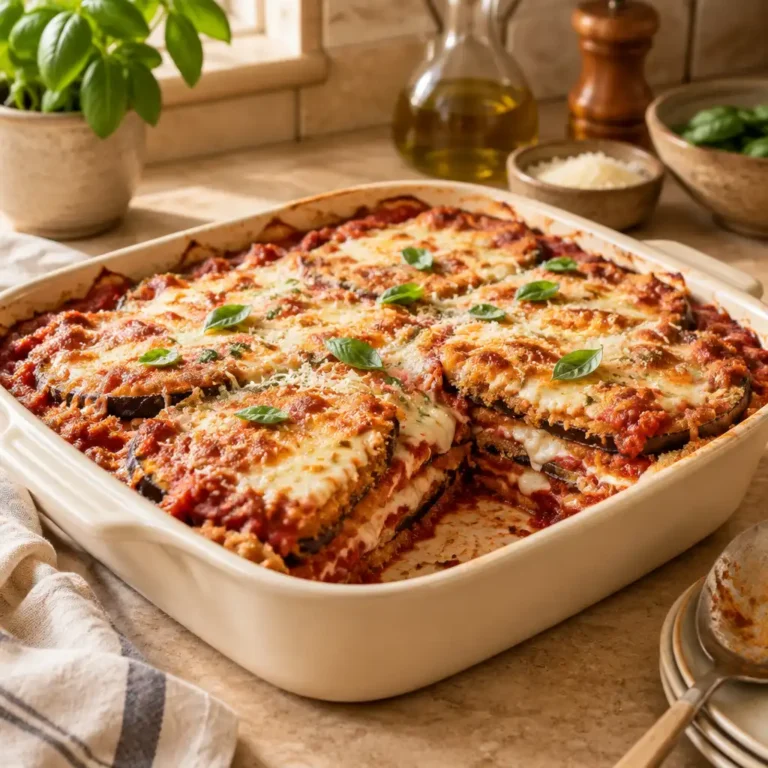
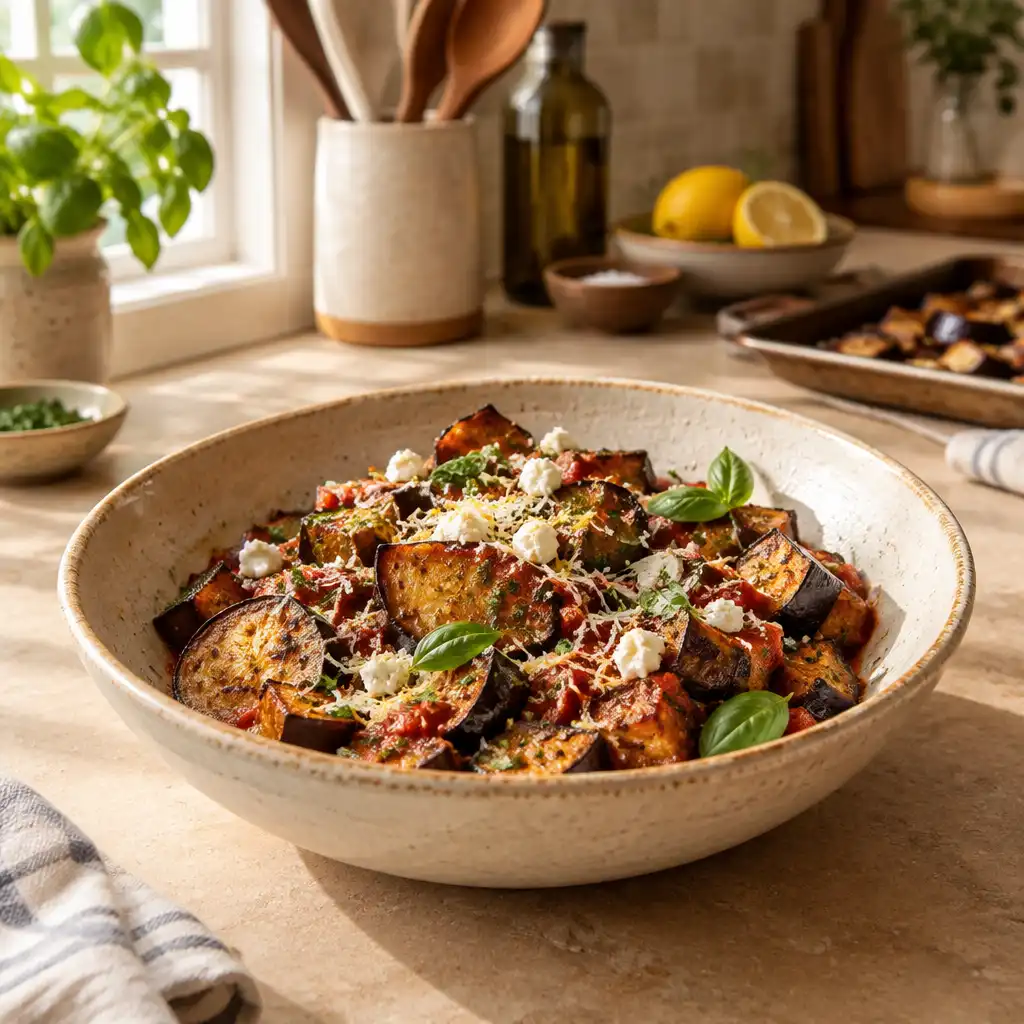
Roasted Eggplant with Tomato Sauce and Herbs
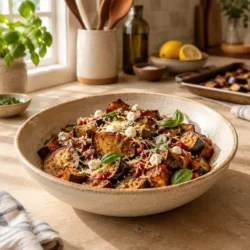
Roasted eggplant with garlic, tomato sauce, Parmesan, and fresh herbs. This easy vegetable dish serves four and is ready in 45 minutes.
- Total Time: 45 minutes
- Yield: 4 servings 1x
Ingredients
- 2 medium eggplants (about 2 pounds total), cut into 1-inch cubes
- 3 tablespoons olive oil
- 3 garlic cloves, minced
- 1 teaspoon kosher salt
- 1/2 teaspoon black pepper
- 1 teaspoon dried oregano
- 1/2 teaspoon paprika
- 1 cup tomato sauce
- 1/4 cup grated Parmesan cheese
- 2 tablespoons chopped fresh basil or parsley
- 1 tablespoon lemon juice (optional)
Instructions
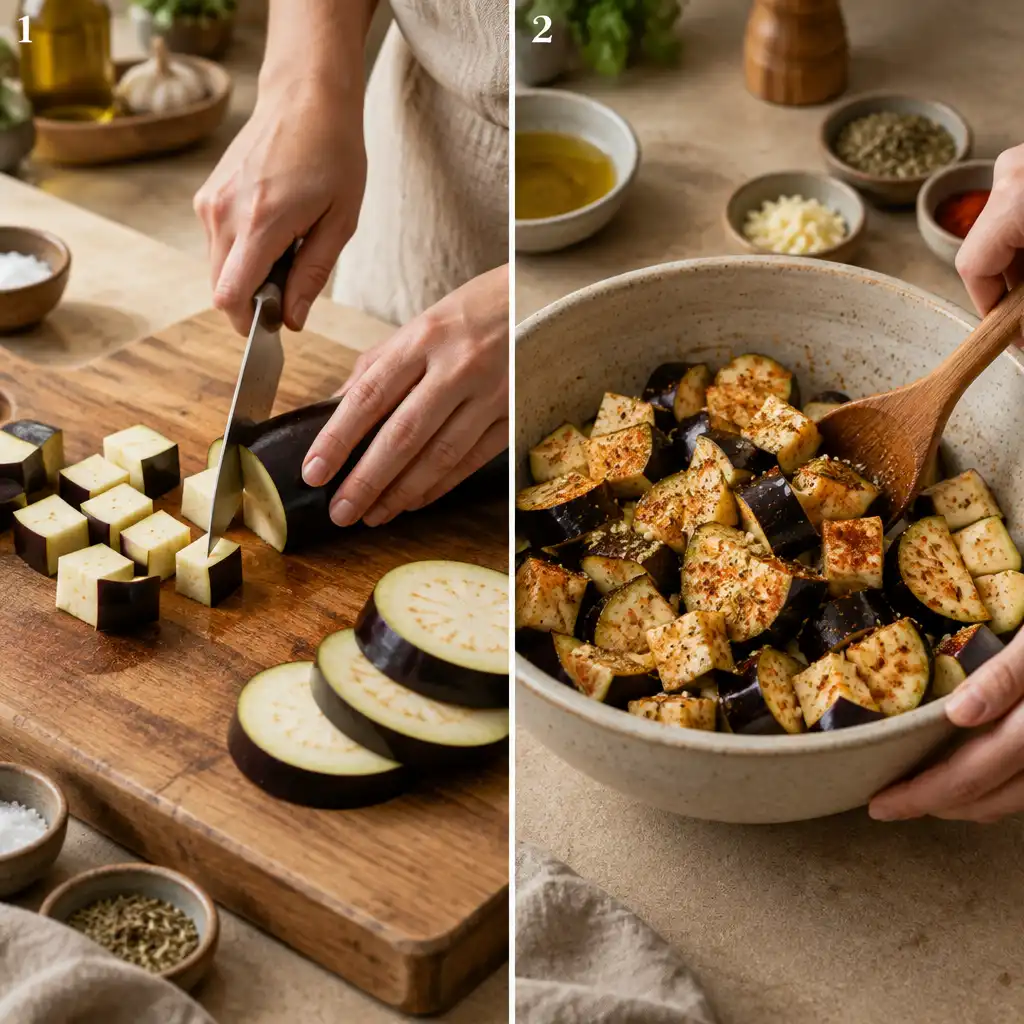
- Step 1: Prepare the eggplant. Preheat the oven to 425°F (220°C). Wash the eggplants and cut them into even 1-inch cubes.
- Step 2: Season the eggplant. Toss the cubes with olive oil, garlic, salt, pepper, oregano, and paprika until evenly coated.
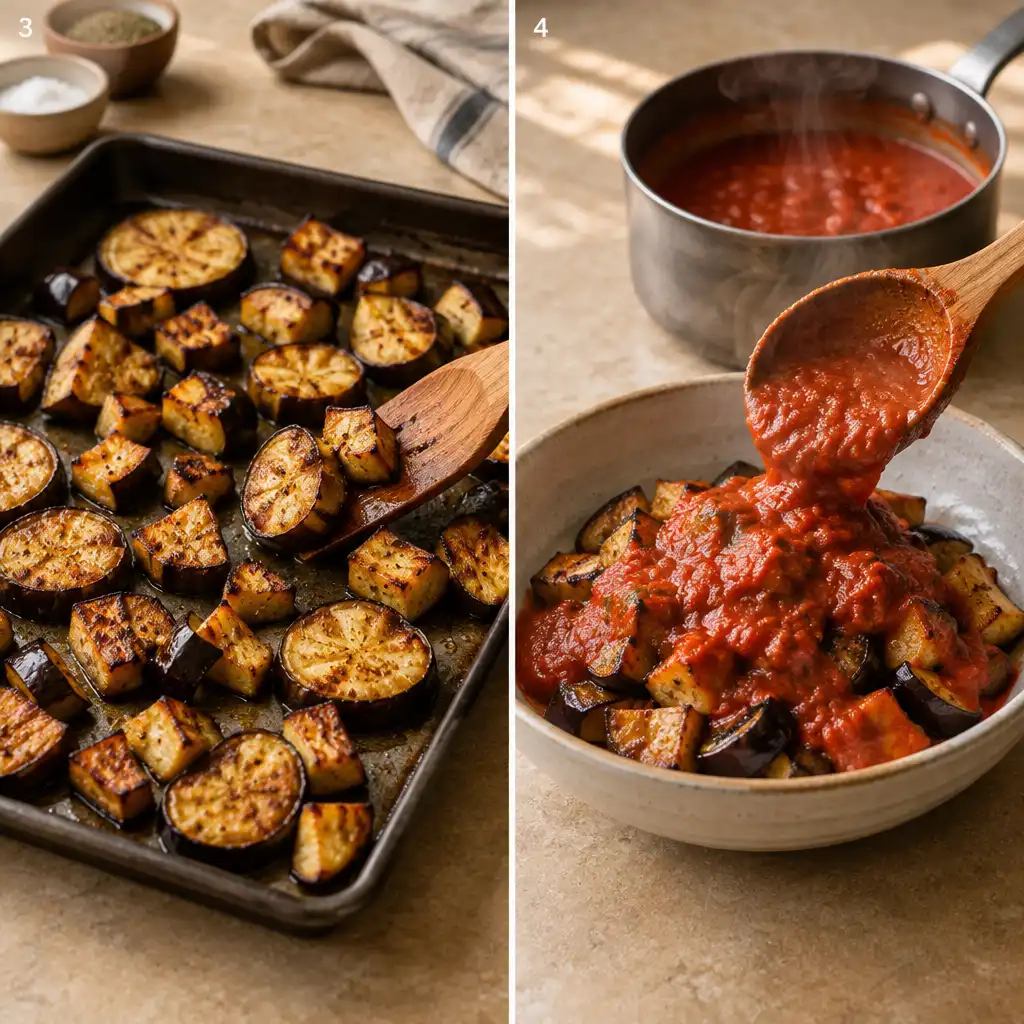
- Step 3: Roast until tender. Spread the eggplant in a single layer on a large baking sheet. Roast for 25 to 30 minutes, turning halfway through, until tender and browned at the edges.
- Step 4: Warm the sauce. Heat the tomato sauce in a small saucepan over medium-low heat until hot. Spoon it over the roasted eggplant or toss gently to coat.
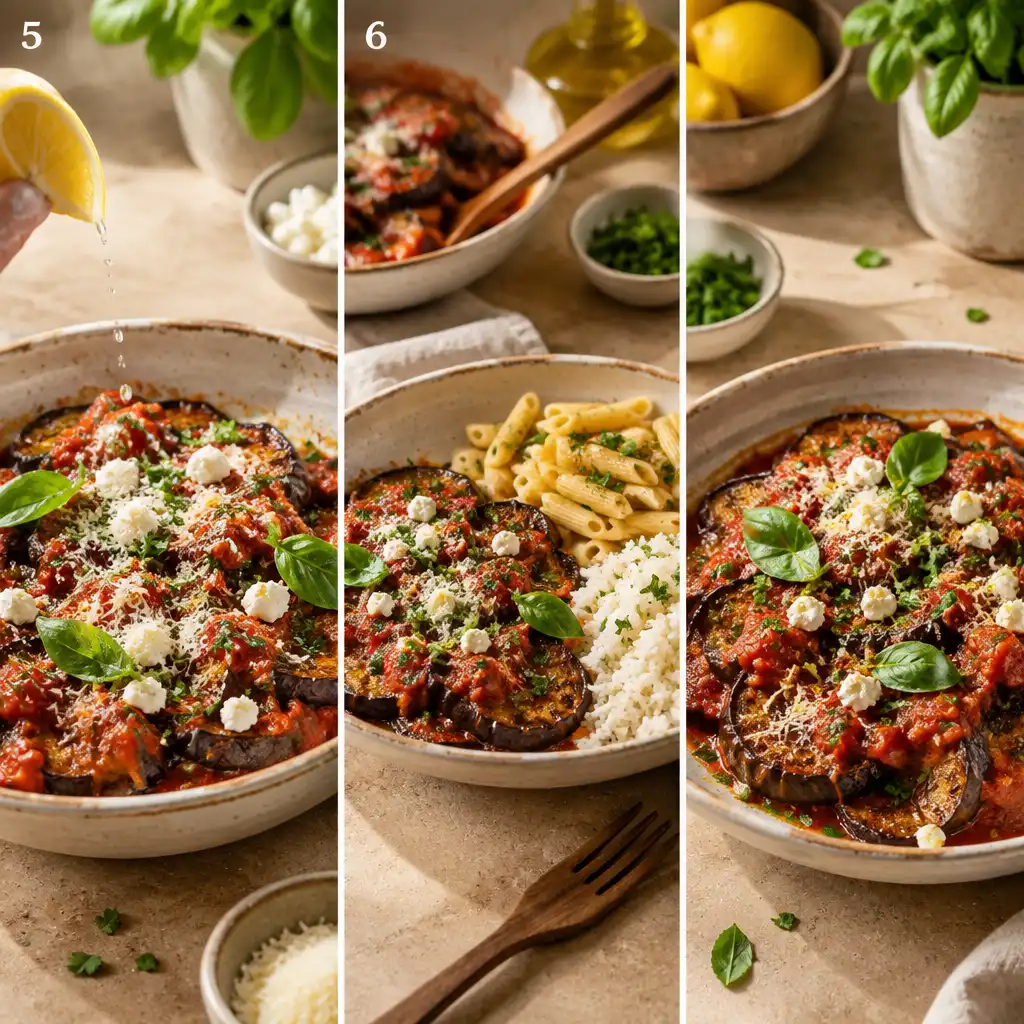
- Step 5: Add cheese and herbs. Sprinkle with Parmesan and fresh basil or parsley. Add the optional lemon juice if desired.
- Step 6: Serve the roasted eggplant. Divide into four portions and serve warm as a side dish or over pasta or rice.
Notes
Use a large baking sheet so the eggplant browns evenly. You can replace the Parmesan with 1/4 cup crumbled feta. The nutrition estimate excludes optional lemon juice and any pasta or rice.
- Prep Time: 15 minutes
- Cook Time: 30 minutes
- Category: Side dish
- Method: Roasting
- Cuisine: Mediterranean-inspired
- Diet: Vegetarian
Nutrition
- Serving Size: 1/4 of recipe
- Calories: 220
- Sugar: 10 g
- Sodium: 780 mg
- Fat: 13 g
- Saturated Fat: 3 g
- Unsaturated Fat: 10 g
- Trans Fat: 0 g
- Carbohydrates: 24 g
- Fiber: 8 g
- Protein: 5 g
- Cholesterol: 5 mg
Keywords: roasted eggplant, eggplant recipes, eggplant with tomato sauce
How to Prep Eggplant for Better Results
Choose the right eggplant
Good eggplant recipes start with good eggplant. Look for firm skin, a smooth surface, and a fruit that feels heavy for its size. Smaller eggplants are often less bitter and have fewer seeds. Globe eggplants are common for baking and slicing, while slimmer varieties can be excellent for roasting or pan cooking. Freshness matters because older eggplant can become spongy or overly seedy.
Salt or no salt?
Many classic eggplant recipes call for salting the slices before cooking. This can help draw out extra moisture and may reduce bitterness. That said, younger eggplants often need less treatment, and some cooks skip salting altogether. If you want a firmer texture and a more concentrated flavor, salting can still be useful. Just rinse lightly and pat dry before cooking so the seasoning sticks well.
Cutting tips that help texture
The way you cut eggplant changes the final dish. Thick rounds are good for grilling and layering, while cubes work well in stews and sheet-pan meals. Long slices are ideal for roll-ups and baked casseroles. For most eggplant recipes, try to keep the pieces even so they cook at the same rate. Uneven cuts can lead to some pieces turning mushy while others stay underdone.
Best Cooking Methods for Eggplant Recipes
Roasting for deep flavor
Roasting is one of the easiest ways to build flavor in eggplant recipes. A hot oven helps the edges brown while the center becomes soft and creamy. Toss eggplant with olive oil, salt, pepper, and herbs, then roast until golden. Roasted eggplant works well in grain bowls, pasta, sandwiches, and dips. It is also a smart method if you want less hands-on cooking time.
Pan-frying for crisp edges
Pan-frying gives eggplant recipes a golden crust and a more indulgent feel. This method is popular for eggplant parmesan, layered dishes, and quick side plates. Because eggplant can absorb oil quickly, use a moderate amount and cook over medium heat. A light coating of flour or breadcrumbs can help create a crisp finish. If you want a restaurant-style texture, pan-frying is a strong choice.
Grilling for smoky depth
Grilling adds a smoky note that works beautifully in eggplant recipes. Thick slices hold up well on the grill and pair nicely with herbs, lemon, and garlic. Brush the eggplant lightly with oil so it does not stick, then cook until tender and marked with grill lines. Grilled eggplant can be served as a side, layered in sandwiches, or chopped into salads and spreads.
Baking for layered dishes
Baking is ideal for eggplant recipes that include sauce, cheese, or other vegetables. It is especially useful for casseroles and stuffed eggplant. The oven softens the eggplant while allowing the other ingredients to blend together. If you prefer a lighter approach, baking usually needs less oil than frying. It is a dependable method for family-style meals and make-ahead dinners.
Classic Eggplant Recipes to Try First
Roasted eggplant with garlic and herbs
This is one of the simplest eggplant recipes and a perfect starting point. Cut the eggplant into cubes or thick slices, toss with olive oil, minced garlic, salt, pepper, and chopped herbs, then roast until tender and caramelized. Serve it with rice, pasta, or grilled proteins. The flavor is simple, clean, and easy to build on with lemon or tomato sauce.
Eggplant parmesan
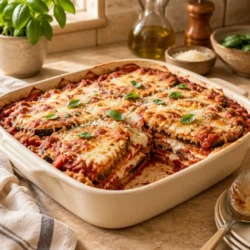
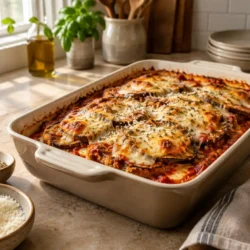
Eggplant parmesan remains one of the most loved eggplant recipes because it combines crispy texture, savory sauce, and melted cheese. The eggplant is usually breaded, baked or fried, then layered with tomato sauce and cheese before returning to the oven. For a lighter version, bake the slices instead of frying. This dish works well for dinner, leftovers, and even meal prep.
Stuffed eggplant boats
Stuffed eggplant is one of those eggplant recipes that feels special without being difficult. Halve the eggplant, scoop out a little of the center, and fill it with a mixture of vegetables, grains, herbs, and cheese. Bake until the filling is hot and the eggplant is tender. It is a flexible meal that can be adjusted based on what you already have in the kitchen.
Eggplant pasta sauce
Eggplant recipes are not only about whole slices or cubes. Eggplant also makes a rich, hearty pasta sauce when simmered with tomatoes, garlic, onions, and herbs. The eggplant breaks down and gives the sauce a thick, silky texture. Serve it over spaghetti, penne, or any pasta you like. This is a smart way to turn a few vegetables into a filling meal.
| Cooking Method | Best For | Texture Result |
|---|---|---|
| Roasting | Bowls, sides, dips | Soft, caramelized |
| Pan-frying | Parmesan, cutlets | Crisp outside, tender inside |
| Grilling | Salads, sandwiches | Smoky and tender |
| Baking | Casseroles, stuffed eggplant | Evenly soft and layered |
Flavor Ideas That Make Eggplant Recipes Better
Pair eggplant with bold seasonings
Eggplant recipes shine when you season generously. Garlic, onion, paprika, cumin, oregano, basil, thyme, and chili flakes all work well. Eggplant also pairs nicely with tomato, lemon, tahini, cheese, and fresh herbs. Because the vegetable itself is mild, the seasoning can be the star. A simple spice mix can turn a basic tray of eggplant into a dish with real depth.
Add texture for balance
Texture makes eggplant recipes more interesting. Try topping baked eggplant with breadcrumbs, nuts, seeds, or grated cheese for a crisp finish. Pair soft eggplant with something crunchy, like toasted pita or a fresh salad. If the dish feels too soft, a bright sauce or a finishing drizzle can help. Good texture balance keeps eggplant recipes from feeling one-note.
Use sauces wisely
Sauces can carry eggplant recipes from simple to memorable. Tomato sauce gives familiar comfort, while yogurt-based or tahini-based sauces add cool contrast. A garlicky herb sauce can brighten roasted eggplant, and a spicy sauce can wake up a mild dish. If you enjoy vegetable meals with a lot of flavor, a sauce is often the easiest upgrade.
Simple Eggplant Recipe Ideas for Busy Weeknights
Sheet-pan eggplant and vegetables
One of the easiest eggplant recipes for busy nights is a sheet-pan meal. Combine eggplant with zucchini, onions, peppers, and tomatoes, then season with olive oil and herbs. Roast everything together until tender and browned. Serve with rice, couscous, or crusty bread. This kind of meal is easy to scale up and makes excellent leftovers.
Quick eggplant skillet with tomato
A skillet version is another fast option among eggplant recipes. Cook diced eggplant with onion and garlic, then add tomatoes and seasonings. Let the mixture simmer until thick and soft. You can serve it over pasta, spoon it onto toast, or pair it with beans or grains. It is a simple way to make a satisfying dinner from pantry staples.
Eggplant toast or flatbread topping
If you want a lighter meal, turn eggplant recipes into a topping. Roast or sauté the eggplant, then pile it onto toast, flatbread, or warm pita with herbs and cheese. This works well for lunch or a quick dinner. It is also a smart way to use leftover eggplant from another recipe and keep food waste low.
Common Mistakes to Avoid with Eggplant Recipes
Using too much oil
Eggplant recipes can go wrong when the eggplant absorbs more oil than expected. This happens easily because the flesh is porous. To avoid greasy results, brush or toss with a controlled amount of oil instead of pouring it on. High heat and proper spacing on the pan also help the eggplant brown instead of soaking up excess fat.
Underseasoning
Because eggplant has a mild base flavor, underseasoned eggplant recipes can taste flat. Salt, herbs, spices, and acidic ingredients all matter. Taste the dish as it cooks and adjust gradually. A squeeze of lemon, a spoonful of tomato sauce, or a sprinkle of fresh herbs can make a big difference in the final result.
Overcooking until mushy
Eggplant should be soft, but not falling apart unless that is the goal of the recipe. Overcooking can make eggplant recipes watery or mushy. Keep an eye on roasting time and check for tenderness with a fork. If you want firmer pieces, cut them larger and cook just until they are done through.
Eggplant Recipes That Fit Different Meals
As a side dish
Many eggplant recipes work well as sides. Roasted wedges, grilled slices, or sautéed cubes can sit beside chicken, fish, beans, or grain dishes. A side of eggplant adds color and substance without taking over the plate. If you want a simple way to add more vegetables to dinner, this is a reliable choice.
As a main dish
Eggplant recipes can also carry the whole meal. Stuffed eggplant, baked casseroles, and hearty pasta sauces are filling enough for dinner on their own. Add a salad or bread if you want more variety. These meals are especially useful when you want a meatless dinner that still feels satisfying and complete.
As part of a larger spread
Eggplant fits nicely into a spread with dips, breads, salads, and small plates. It can be served warm or at room temperature, which makes planning easier. For a menu with variety, pair eggplant recipes with other vegetable dishes such as zucchini recipes and a bright side like bruschetta recipe. That combination gives you color, texture, and a balanced table.
More Recipe Inspiration for Vegetable Lovers
Keep your meal rotation fresh
If you like building meals around vegetables, there are plenty of recipes that pair well with eggplant. You might enjoy tofu recipes for a plant-based protein option, or black beans recipe ideas for hearty, budget-friendly meals. Eggplant recipes fit naturally into that kind of cooking style because they bring body and flavor without needing complicated steps.
Pair with other simple dishes
Eggplant recipes also work well alongside easy side dishes and sauces. For a fresh, savory pairing, try olive tapenade recipe ideas or a bright sauce to spoon over roasted eggplant. If you want a full meal plan, you can build around vegetables, grains, and simple proteins. That keeps dinner practical while still feeling interesting.
FAQs
Do I need to salt eggplant before cooking?
Not always. Some eggplant recipes benefit from salting because it can reduce moisture and help with texture. Smaller, fresher eggplants often need less treatment. If the recipe calls for a crisp finish or you want a firmer bite, salting can help.
What is the best way to cook eggplant?
It depends on the dish. Roasting is easy and flavorful, pan-frying gives crisp edges, grilling adds smoky flavor, and baking works well for layered eggplant recipes. The best method is the one that matches the texture you want.
How do I keep eggplant from getting soggy?
Use enough heat, avoid overcrowding the pan, and do not add too much oil. Cutting the eggplant evenly also helps. For many eggplant recipes, roasting or grilling gives the best chance of a tender but not soggy result.
Can eggplant recipes be made ahead?
Yes. Many eggplant recipes taste even better after the flavors blend for a few hours. Roasted eggplant, baked casseroles, and tomato-based dishes all hold up well in the fridge and reheat nicely.
Conclusion
Eggplant recipes are easy to adapt, full of flavor, and useful for everything from quick sides to full dinners. Once you learn the basics of prep and cooking, eggplant becomes a dependable ingredient you can use in many ways. Try roasting, baking, grilling, or simmering it in sauce, and you may find yourself reaching for eggplant recipes again and again.