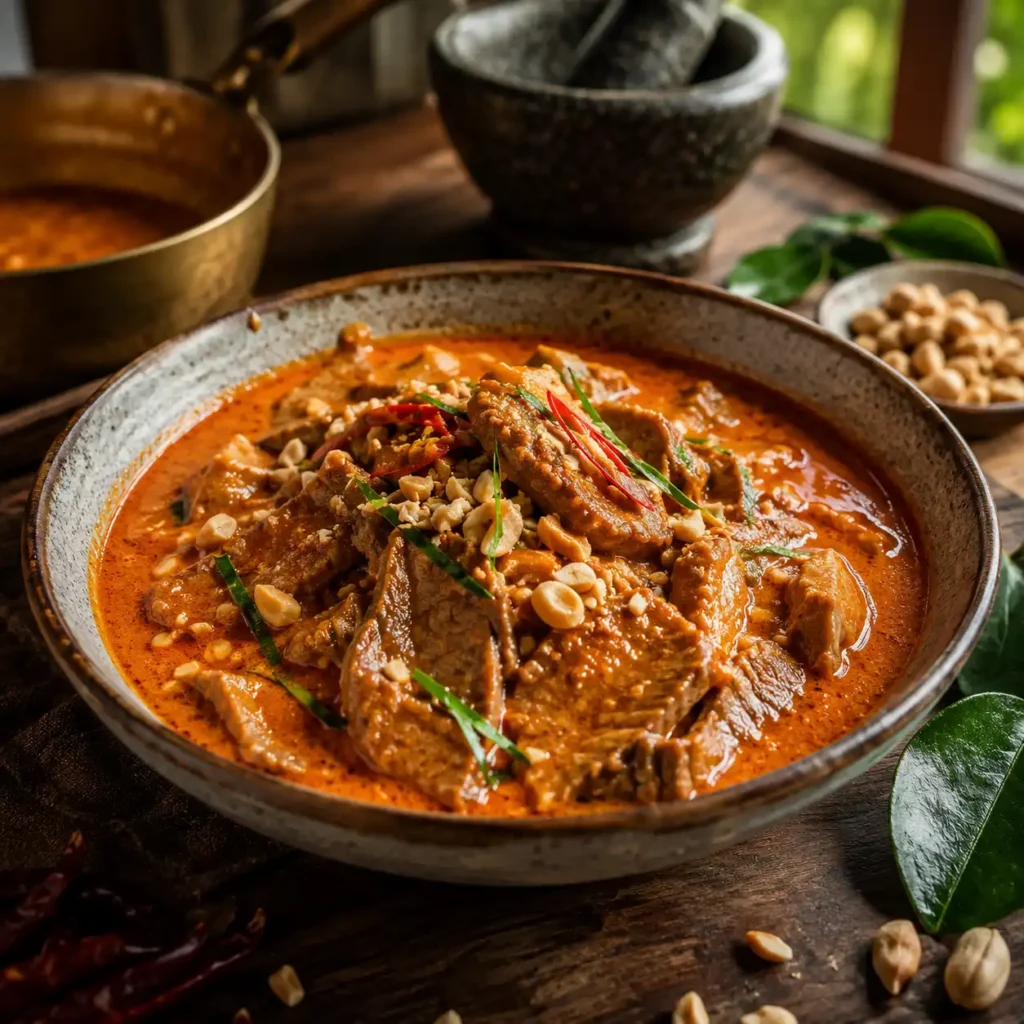
Panang curry stands as one of the most beloved exports of Thai cuisine, known for its thick, luscious texture and distinctively nutty flavor profile. Unlike its more watery counterparts, this dish offers a concentrated burst of salty and sweet notes, balanced by the creaminess of coconut milk and the earthy depth of roasted peanuts. Whether you are a seasoned home cook or a newcomer to Southeast Asian flavors, understanding the nuances of panang curry will allow you to recreate this restaurant-quality masterpiece in your own kitchen.
Table of Contents
The Origins and Evolution of Panang Curry
A Culinary Journey from the South
The history of panang curry is often linked to the island of Penang in Malaysia, though the dish has been thoroughly integrated into the Thai culinary identity for generations. The name “Phanaeng” likely refers to the ancient style of grilling chicken where the legs were crossed and placed upright, a method that utilized a thick sauce to baste the meat. Over time, the recipe shifted from a dry grill to a more sauce-centric stew, becoming a staple in central Thailand. This historical background provides a window into why the dish remains thicker and more indulgent than other regional varieties.
Why Peanuts Define This Dish
The inclusion of roasted peanuts is the most defining characteristic of panang curry compared to red or green curries. These legumes provide a structural thickness to the sauce and contribute a toasted, savory base that works in tandem with the spices. While other Thai curries rely heavily on fresh herbs and heat, the peanuts in panang curry mellow the spice levels, creating a more accessible heat that lingers on the palate without overwhelming the senses. This addition transforms a standard chili paste into something uniquely rich and aromatic.
Print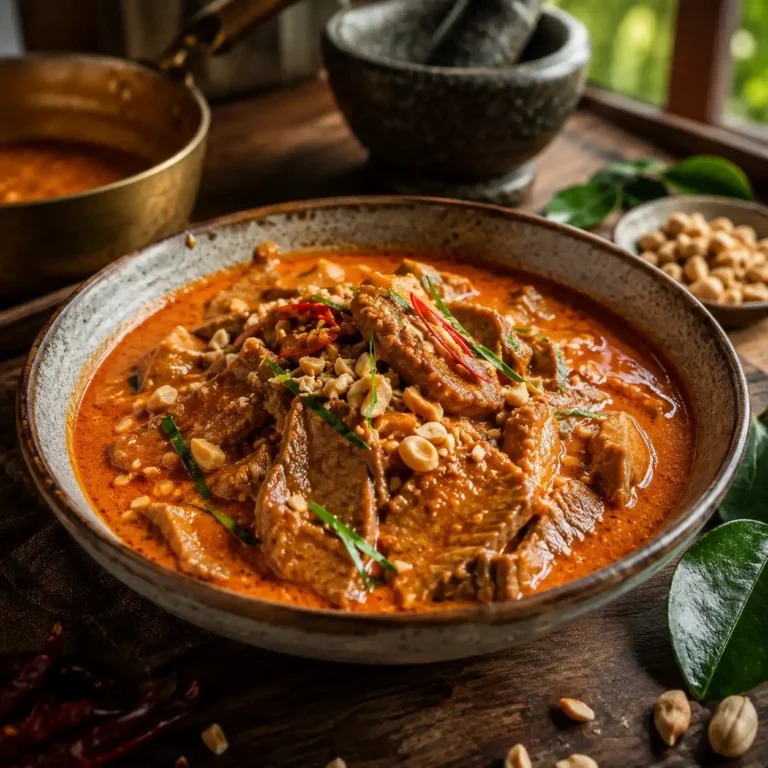
Mastering Panang Curry: A Rich and Nutty Thai Classic
A thick, luscious Thai curry featuring a concentrated blend of salty and sweet notes, balanced by creamy coconut milk and the signature earthy depth of roasted peanuts.
- Total Time: 35 minutes
- Yield: 4 servings 1x
Ingredients
- 1 lb chicken breast or thighs, thinly sliced
- 3 tablespoons Panang curry paste
- 1.5 cups full-fat coconut milk
- 2 tablespoons roasted peanuts, finely crushed
- 1 tablespoon vegetable oil
- 1 tablespoon palm sugar
- 1.5 tablespoons fish sauce
- 4 kaffir lime leaves, finely julienned
- 1 red bird's eye chili, sliced for garnish
- 1/2 cup fresh Thai basil leaves
Instructions
- Step 1: Fry Paste – Heat vegetable oil in a large skillet or wok over medium heat and sauté the curry paste for 2 minutes until fragrant.
- Step 2: Reduce Cream – Pour in 1/2 cup of coconut milk and stir constantly until the oil begins to separate from the cream.
- Step 3: Sear Meat – Add the sliced chicken to the pan and stir-fry for 3-4 minutes until the exterior is cooked through.
- Step 4: Incorporate Liquids – Add the remaining coconut milk, crushed peanuts, palm sugar, and fish sauce to the skillet.
- Step 5: Simmer Sauce – Reduce heat to low and simmer for 10 minutes, allowing the sauce to thicken into a rich, nutty gravy.
- Step 6: Season Aromatics – Stir in half of the julienned kaffir lime leaves and the Thai basil leaves until just wilted.
- Step 7: Final Plate – Transfer to a serving bowl and garnish with the remaining lime leaves and sliced red chilies.
- Step 8: Serve – Present immediately alongside a warm bowl of jasmine rice for a complete Thai experience.
Notes
For the most authentic texture, ensure you use full-fat coconut milk to achieve the traditional oil separation. If the curry is too thick, add a splash of water or chicken broth.
- Prep Time: 15 minutes
- Cook Time: 20 minutes
- Category: Main Course
- Method: Stovetop Simmering
- Cuisine: Thai
- Diet: Gluten-Free
Nutrition
- Serving Size: 1 bowl
- Calories: 480 kcal
- Sugar: 9g
- Sodium: 1150mg
- Fat: 34g
- Saturated Fat: 24g
- Unsaturated Fat: 10g
- Trans Fat: 0.1g
- Carbohydrates: 14g
- Fiber: 3g
- Protein: 32g
- Cholesterol: 75mg
Keywords: Panang Curry, Thai Cuisine, Peanut Curry, Coconut Milk, Authentic Thai
Essential Ingredients for Authentic Panang Curry Paste
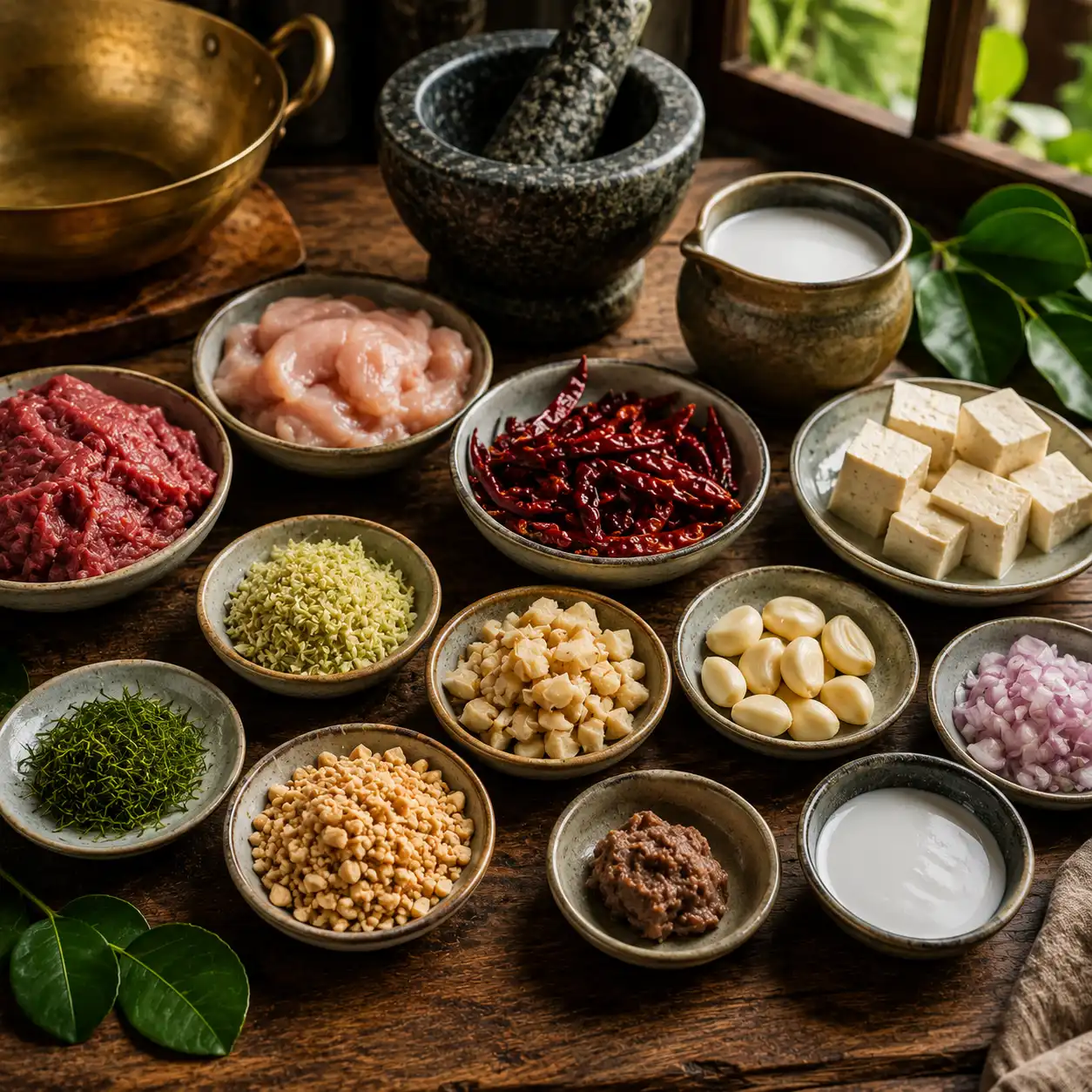
The Importance of Fresh Aromatics
A truly exceptional panang curry begins with the paste. While store-bought versions are convenient, making your own allows you to control the vibrancy of the aromatics. Fresh lemongrass, galangal, and kaffir lime zest form the “holy trinity” of Thai curry bases. Galangal, a tougher cousin of ginger, provides a piney, sharp citrus note that is indispensable. To learn more about the health properties of these root vegetables, you can look at the benefits of a turmeric ginger shot recipe, as these ingredients often share similar anti-inflammatory and digestive advantages in traditional medicine.
Dried Chilies and Heat Levels
Panang curry typically uses dried red spur chilies, which are soaked until soft before being pounded. These chilies provide a deep red hue and a moderate spice level. To achieve the right consistency, practitioners of Thai cooking use a mortar and pestle to grind the ingredients into a smooth, oily paste. This manual labor breaks down the cellular walls of the shallots and garlic, releasing essential oils that heat alone cannot extract. If you prefer a milder version, removing the seeds from the dried chilies before soaking will keep the flavor intense while reducing the burning sensation.
How to Cook the Perfect Panang Curry at Home
The Technique of “Cracking” Coconut Milk
Professional Thai chefs often start the cooking process by “cracking” the coconut cream. This involves boiling the thickest part of the coconut milk until the oil separates from the water. You then fry the panang curry paste in this rendered coconut oil until it becomes incredibly fragrant. This traditional method makes certain that the flavors of the spices are fully awakened. Many modern recipes skip this to save time, but taking the extra few minutes to fry the paste until the oil turns red and shimmering is the secret to a deep, complex sauce that doesn’t taste “raw.”
Balancing Sweet, Salty, and Savory
The final flavor of panang curry should be a harmonious balance of salty fish sauce and sweet palm sugar. Unlike green curry, which can be quite sweet, or red curry, which leans toward the savory, panang thrives in the middle. The goal is to create a sauce that coats the back of a spoon. If the sauce is too thin, simmering it longer will reduce the liquid and intensify the flavors. If it becomes too salty, a small pinch more of palm sugar or a splash of coconut milk can bring the dish back into balance. According to culinary experts at Thai Table, the texture should be thick enough to cling to the meat rather than forming a soup-like pool.
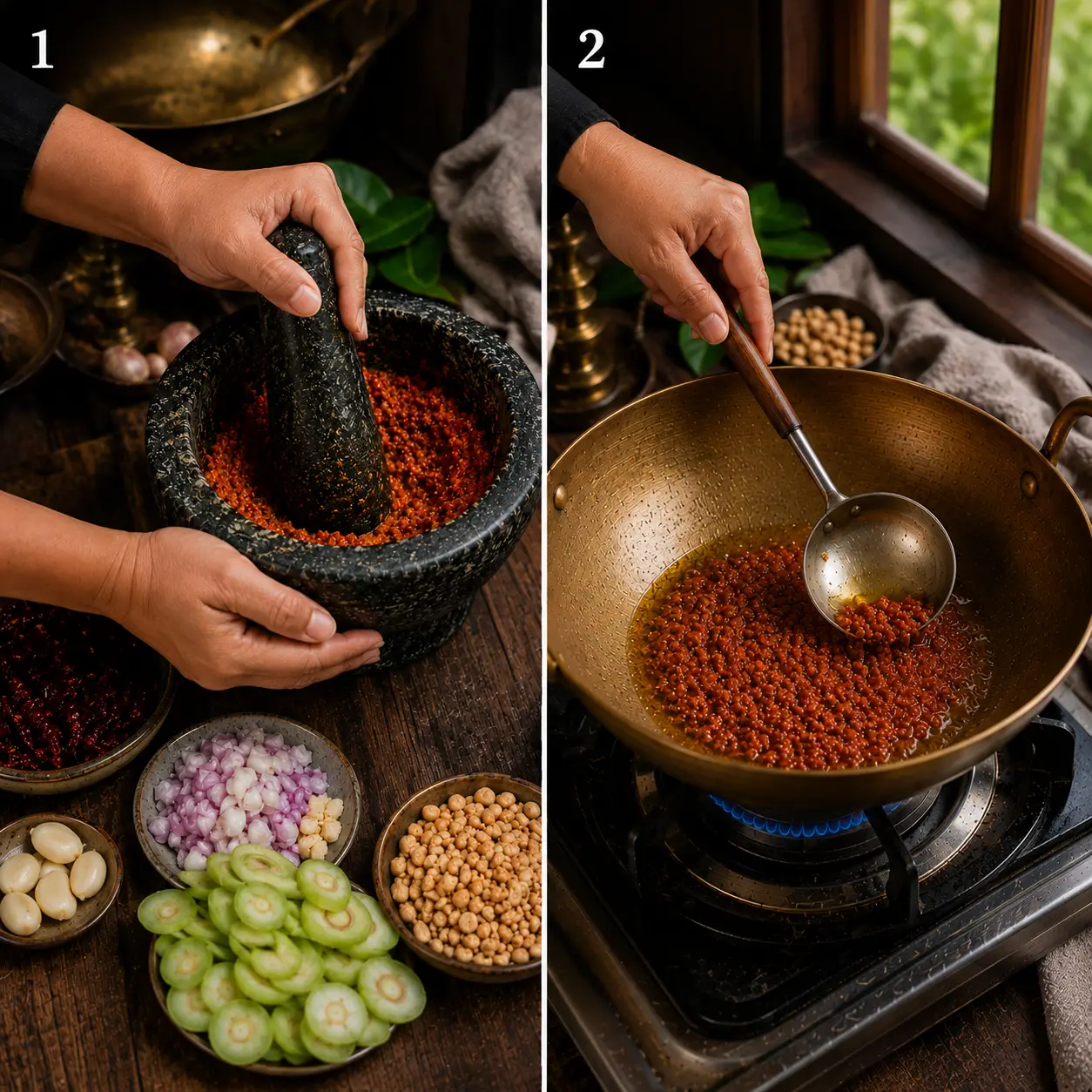
- Step 1: Paste Preparation – Grind dried red chilies, lemongrass, galangal, garlic, shallots, and roasted peanuts into a fine, uniform paste using a mortar and pestle.
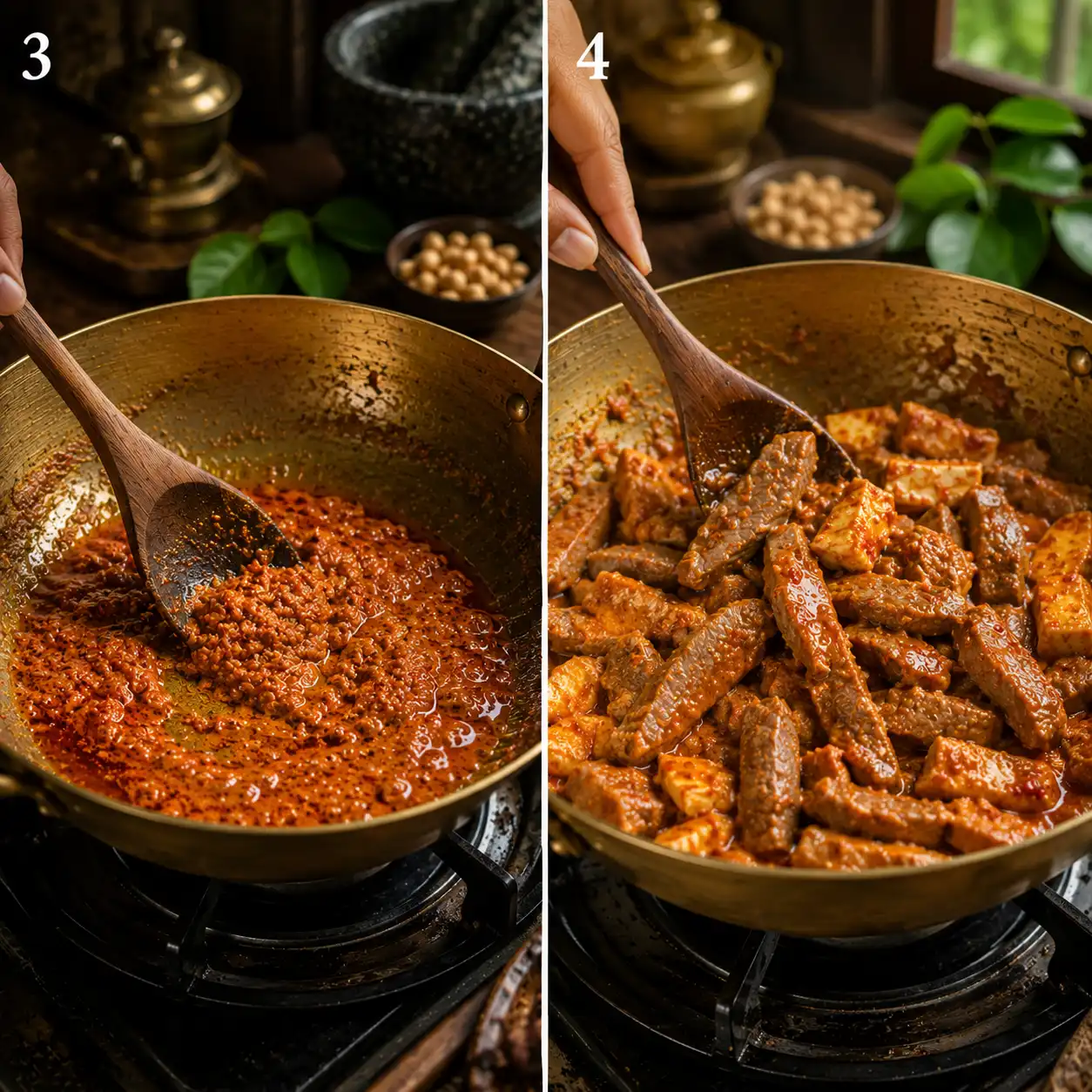
- Step 2: Sauté the Aromatics – Boil a half cup of thick coconut cream in a pan until the oil begins to separate, then stir in the panang curry paste and fry until fragrant.
- Step 3: Add Protein – Incorporate sliced beef, chicken, or tofu into the pan, stirring to coat every piece with the concentrated curry oil.
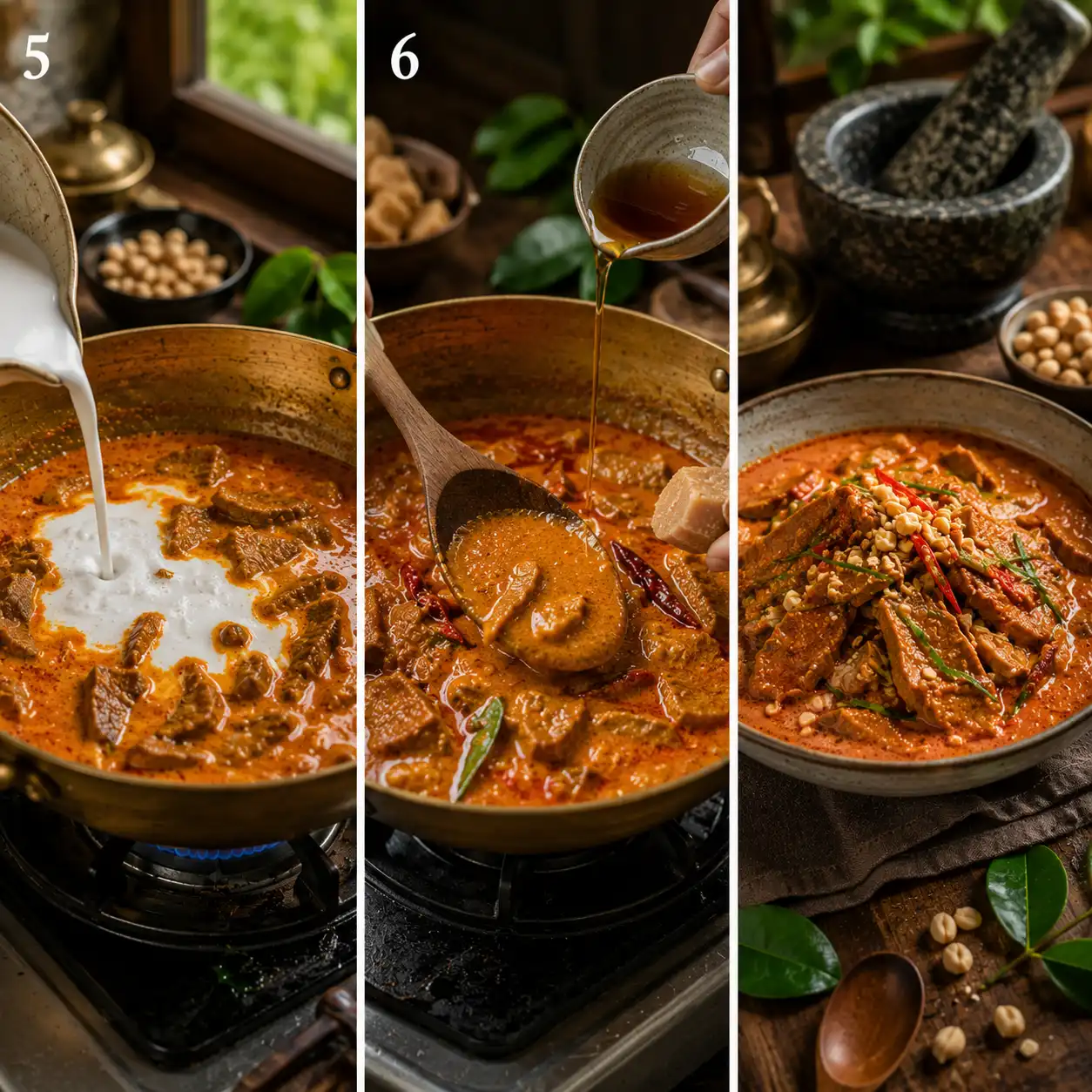
- Step 4: Simmer with Liquid – Pour in the remaining coconut milk and a splash of water or broth, letting the mixture simmer until the protein is fully cooked and tender.
- Step 5: Season and Finish – Add fish sauce and palm sugar to taste, then stir in thinly sliced kaffir lime leaves and fresh red chili strips for a bright finish.
Serving Suggestions and Pairings
Rice Varieties and Alternatives
Traditionally, panang curry is served with jasmine rice, which provides a floral aroma and a soft texture that absorbs the thick sauce. However, if you are looking for a lower-calorie or lower-carb option that still provides a satisfying base, you might want to learn how to make cauliflower rice at home. This alternative mimics the grain structure of rice while allowing the rich coconut flavors of the curry to take center stage. The neutral profile of cauliflower ensures the complex spices of the curry are not overshadowed.
Adding Fresh Vegetable Components
While many restaurant versions of panang curry focus primarily on the meat, adding vegetables can provide a refreshing crunch and nutritional boost. Snap peas, bell peppers, or baby corn are common additions. For those who enjoy leafy greens, incorporating a side of steamed or sautéed bok choy can provide a bitter contrast to the sweet and salty sauce. The water content in the vegetables also helps lighten the richness of the coconut cream, making the meal feel more balanced and less heavy on the stomach.
Panang Curry vs. Other Thai Curries
When comparing different Thai dishes, it helps to look at the liquid-to-solid ratio and the primary spice profile. While a chickpea curry with coconut milk might lean toward Indian influences with turmeric and cumin, panang curry stays firmly in the Thai tradition with its use of kaffir lime and shrimp paste. The following table summarizes the key differences between the most common Thai curry varieties to help you choose the right one for your palate.
| Curry Type | Primary Flavor Profile | Key Ingredients | Consistency |
|---|---|---|---|
| Panang Curry | Nutty, Sweet, Mild-Hot | Roasted Peanuts, Kaffir Lime | Thick and Concentrated |
| Red Curry | Spicy, Savory, Herbal | Dried Red Chilies, Shrimp Paste | Medium Soupy |
| Green Curry | Sweet, Fresh, Very Hot | Fresh Green Chilies, Basil | Light and Soupy |
| Massaman | Mild, Earthy, Sweet | Cinnamon, Star Anise, Potatoes | Thick and Hearty |
Health and Nutritional Value of Thai Spices
Anti-Inflammatory and Digestive Benefits
Beyond its delicious taste, panang curry contains a variety of spices that offer significant health benefits. The galangal used in the paste has been studied for its ability to reduce inflammation and soothe digestive distress. Similarly, lemongrass contains antioxidants that may help protect the body against cellular damage. Scientific research published in the National Center for Biotechnology Information highlights that many of the bioactive compounds found in Thai herbs possess antimicrobial properties, potentially supporting the immune system when consumed as part of a balanced diet.
Protein and Healthy Fats
The use of coconut milk and peanuts provides a source of healthy fats that are necessary for the absorption of fat-soluble vitamins found in the added vegetables and spices. While the dish is calorie-dense, these fats help promote satiety, meaning you feel full longer after eating. By choosing lean proteins like chicken breast or plant-based proteins like tofu, you can make certain that the meal fits into various dietary plans. The combination of protein, fiber from the chilies and herbs, and healthy fats makes this dish a powerhouse of nutrition when served with a moderate portion of grains.
FAQs
Is panang curry spicy?
Panang curry is generally considered a medium-heat curry. It is typically less spicy than green or red curries because the peanuts and coconut milk work to neutralize the heat of the dried chilies. However, the spice level can be adjusted based on the number of chilies used in the paste.
Can I make panang curry vegan?
Yes, you can easily make a vegan version. Instead of using fish sauce, substitute with light soy sauce or a vegan “no-fish” sauce. Also, make sure the curry paste you use does not contain shrimp paste, which is a common ingredient in authentic Thai brands.
What is the difference between panang and red curry?
The main difference lies in the peanuts and the thickness. Panang curry includes crushed roasted peanuts in the paste and is simmered until the sauce is thick and creamier. Red curry does not contain peanuts and usually has a thinner, more soup-like consistency with a higher spice level.
How do I store leftovers?
Panang curry stores remarkably well. The flavors often deepen after a night in the refrigerator. Store it in an airtight container for up to three days. When reheating, you may need to add a splash of water or coconut milk, as the sauce will thicken significantly when cold.
Conclusion
Panang curry is a testament to the sophistication of Thai cooking, offering a complex interplay of flavors that satisfy the palate in every bite. By focusing on the quality of your aromatics and taking the time to properly fry your paste, you can achieve a level of depth that rivals the best Thai kitchens. This dish is more than just a meal; it is a celebration of texture and tradition. Whether you serve it over traditional jasmine rice or a modern alternative, this nutty, creamy masterpiece will surely become a favorite in your culinary repertoire.