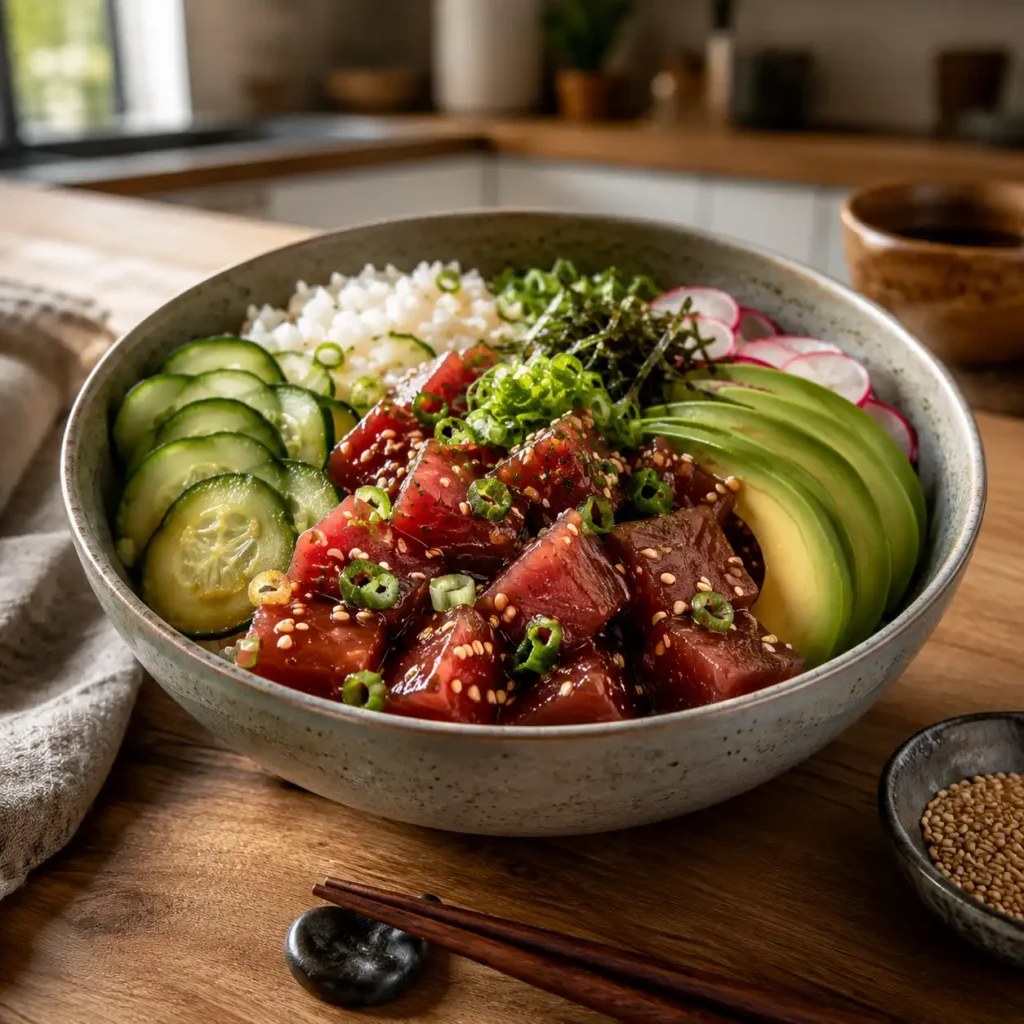
If you are craving a meal that feels like a tropical vacation in a bowl, a homemade poke bowl recipe tuna is exactly what you need. This dish brings together the freshness of high-quality fish, the comfort of warm rice, and a burst of flavor from colorful toppings. Making this at home is surprisingly simple, allowing you to customize every bite to your liking. Let’s look at how you can create a restaurant-quality meal in your own kitchen with ease and confidence.
Table of Contents
The Heart of the Dish: Understanding the Poke Bowl
The Traditional Roots of Poke
To truly appreciate a poke bowl recipe tuna, it helps to understand where it comes from. The word “poke” literally means “to slice” or “to cut crosswise into pieces” in Hawaiian. Traditionally, fishermen would season the cut-offs from their catch as a quick snack. Over time, these simple bites of seasoned fish transformed into the vibrant bowls we see today. If you want to learn more about the heritage of this meal, you can find a detailed history on Wikipedia’s page about poke, which explains how local island traditions met Asian influences to create this global favorite.
Why Tuna is the Perfect Choice
When searching for the ultimate poke bowl recipe tuna, the fish is the star of the show. Yellowfin or Bigeye tuna are the most common varieties used because of their firm texture and mild, buttery flavor. Because the fish is served raw, the quality of your ingredients is the most important part of the process. Choosing the right cut makes the difference between an average meal and a spectacular one. It provides a clean, protein-rich foundation that pairs beautifully with bold sauces and crunchy vegetables.
The Rise of Home-Style Poke
In recent years, the popularity of this dish has grown because it fits perfectly into a busy, health-conscious lifestyle. A poke bowl recipe tuna is fast to assemble once your ingredients are prepped. It offers a balance of healthy fats, complex carbohydrates, and lean protein. By making it yourself, you control the sodium levels and the freshness of the fish, which is often a concern when buying pre-made versions at the grocery store. It is a creative way to bring fresh, vibrant colors to your dinner table.
Print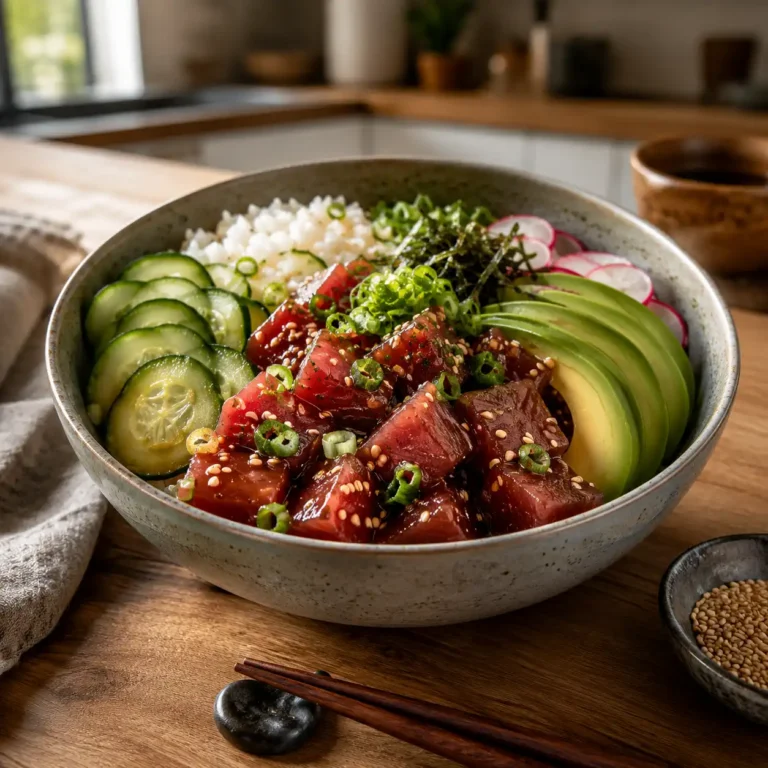
Mastering the Best Poke Bowl Recipe Tuna at Home
Craving a tropical vacation in a bowl? This homemade poke bowl recipe with high-quality tuna, warm rice, and vibrant toppings is surprisingly simple to make. Customize every bite to your liking and create a restaurant-quality meal with ease.
- Total Time: 45 minutes
- Yield: 2 servings 1x
Ingredients
- 1 lb sashimi-grade tuna (yellowfin or bigeye), cut into 1/2-inch cubes
- 1/4 cup soy sauce (or tamari for gluten-free)
- 2 tbsp sesame oil
- 1 tbsp rice vinegar
- 1 tsp grated fresh ginger
- 1 clove garlic, minced
- 1 tsp sriracha (optional)
- 1 tsp honey or agave (optional)
- 2 cups cooked sushi rice
- 1/2 avocado, sliced or diced
- 1/2 cucumber, thinly sliced or diced
- 1/4 cup shelled edamame
- 2 tbsp chopped green onions
- 1 tbsp sesame seeds
- Optional: seaweed salad, pickled ginger, radish slices
Instructions
- Step 1: Prepare Rice – Cook sushi rice according to package directions and keep warm.
- Step 2: Cube Tuna – Carefully cut the sashimi-grade tuna into uniform 1/2-inch cubes.
- Step 3: Make Sauce – In a medium bowl, whisk together soy sauce, sesame oil, rice vinegar, grated ginger, minced garlic, sriracha (if using), and honey or agave (if using).
- Step 4: Marinate Tuna – Add the cubed tuna to the prepared sauce, gently toss to coat, and let marinate for 10-15 minutes in the refrigerator.
- Step 5: Prepare Toppings – While the tuna marinates, slice or dice the avocado and cucumber. Chop the green onions.
- Step 6: Assemble Bowls – Divide the warm sushi rice evenly between two serving bowls.
- Step 7: Add Tuna & Toppings – Arrange the marinated tuna over the rice. Neatly add your prepared toppings such as avocado, cucumber, and shelled edamame.
- Step 8: Garnish & Serve – Garnish with chopped green onions and sesame seeds. Add any optional toppings like seaweed salad or pickled ginger, then serve immediately.
Notes
Always use sashimi-grade tuna for raw consumption; look for fish with a deep, consistent red color and no ‘fishy’ odor. This recipe is highly customizable, feel free to add other favorite vegetables or different sauces.
- Prep Time: 20 minutes
- Cook Time: 25 minutes
- Category: Main Dish
- Method: Assembly
- Cuisine: Hawaiian
- Diet: Pescatarian
Nutrition
- Serving Size: 1 bowl
- Calories: 550 kcal
- Sugar: 8g
- Sodium: 750mg
- Fat: 20g
- Saturated Fat: 4g
- Unsaturated Fat: 15g
- Trans Fat: 0.1 g
- Carbohydrates: 60g
- Fiber: 6g
- Protein: 35g
- Cholesterol: 60mg
Keywords: Poke Bowl, Tuna, Sashimi Grade, Hawaiian, Healthy, Fish, Raw Fish, Home Cooking
Selecting the Best Fish for Your Poke Bowl Recipe Tuna
What Does Sashimi Grade Really Mean?
When you head to the market for your poke bowl recipe tuna, you will likely see labels like “sashimi grade” or “sushi grade.” While these are not official USDA grades, they indicate that the fish has been handled and frozen in a way that makes it safe for raw consumption. Look for tuna that has a deep, consistent red color and lacks any “fishy” odor. The flesh should be firm to the touch and not look dull or brown around the edges. This step is vital for the safety and enjoyment of your meal.
How to Handle Raw Fish Safely
Working with raw seafood in a poke bowl recipe tuna requires a little bit of care. Keep the tuna refrigerated until the very moment you are ready to slice it. Use a very sharp knife to make clean cuts, which prevents tearing the delicate muscle fibers. It is also a good idea to use a dedicated cutting board for your fish to avoid cross-contamination with other raw ingredients. By maintaining a cold temperature and a clean workspace, you make sure your poke bowl recipe tuna is as safe as it is delicious.
Alternative Tuna Options
If you cannot find fresh sashimi-grade tuna, some high-end grocery stores sell frozen tuna steaks that are specifically meant for raw use. These are often vacuum-sealed and can be thawed slowly in the refrigerator. This is a great way to keep ingredients on hand for whenever the craving for a poke bowl recipe tuna hits. Just avoid using standard “cooking-only” tuna steaks for this raw preparation, as they may not have been handled with the necessary protocols for raw consumption.
Building the Foundation: Choosing Your Base
The Classic Sushi Rice Base
A traditional poke bowl recipe tuna usually starts with a bed of seasoned sushi rice. This short-grain rice is sticky enough to hold onto the fish but light enough not to overpower the other ingredients. Seasoning the rice with a little bit of rice vinegar and a pinch of sugar creates that signature tangy-sweet flavor that complements the savory tuna. Make sure to let the rice cool slightly before adding the fish so that the heat doesn’t start to cook the raw tuna.
Lower Carb Alternatives
If you are looking to keep your meal on the lighter side, you can swap out the traditional grain. Many people find that making cauliflower rice is a fantastic way to enjoy the textures of a poke bowl recipe tuna without the extra starch. It provides a mild backdrop that lets the marinade of the fish shine through. This substitution is perfect for those who want a high-volume meal that still feels refreshing and light.
Health Benefits of Different Bases
The choice of base can change the nutritional profile of your meal significantly. For those interested in fiber and satiety, brown rice or quinoa are excellent choices. However, if you are curious about the dietary impact of your swaps, you might ask, is cauliflower rice good for you when compared to traditional grains? Generally, it is a great way to increase vegetable intake while keeping calories lower, making it a popular choice for many following a poke bowl recipe tuna guide.
Crafting the Perfect Poke Marinade
The Magic of Soy and Sesame
The sauce is what brings the poke bowl recipe tuna to life. A classic marinade consists of soy sauce (or tamari for a gluten-free option) and toasted sesame oil. The soy sauce provides salt and depth, while the sesame oil adds a nutty aroma that is quintessential to Hawaiian poke. You don’t need a lot of ingredients to make a big impact; just a few tablespoons can transform the fish into a savory delight. Let the fish sit in the sauce for about 15 to 30 minutes to absorb the flavors.
Adding a Spicy Kick
For those who love a bit of heat, adding Sriracha or chili flakes to your poke bowl recipe tuna marinade is a game-changer. You can also mix a little bit of mayonnaise with Sriracha to create a “spicy mayo” drizzle that adds creaminess and heat. This contrast between the cool, fresh fish and the spicy sauce is one of the reasons people keep coming back to this dish. It wakes up the palate and makes every bite exciting.
Acid and Aromatics
To round out the flavors in your poke bowl recipe tuna, consider adding a splash of lime juice or rice vinegar. The acidity helps to “cut” through the fattiness of the tuna. Freshly grated ginger and minced garlic also add layers of complexity. If you want a bit of sweetness, a tiny drizzle of honey or a sprinkle of brown sugar can balance the salty soy sauce. These small additions help create a professional-tasting bowl right at home.
Essential Toppings and Mix-ins
Adding Crunch and Color
The beauty of a poke bowl recipe tuna lies in its variety of textures. Cucumber is a must-have for its cooling crunch. If you are looking for a side that fits this theme perfectly, a quick Asian cucumber salad can serve as both a topping and a refreshing side dish. It adds a vinegary snap that pairs brilliantly with the richness of the marinated tuna and the soft rice.
The Role of Healthy Fats
Avocado is perhaps the most popular topping for any poke bowl recipe tuna. Its creamy texture mimics the mouthfeel of the fish and adds a wealth of healthy fats to the meal. You can slice it thinly or cube it to match the size of your tuna. Adding a sprinkle of sesame seeds or furikake (a Japanese seaweed seasoning) adds a final touch of visual appeal and a gentle saltiness that ties all the components together.
Vibrant Vegetable Options
To make your bowl as nutritious as possible, look for a variety of colorful vegetables. Radishes, shredded carrots, and seaweed salad are all excellent choices. Another fantastic addition is using mukimame, which are shelled edamame beans. These little green gems provide extra plant-based protein and a satisfying bite. They also look beautiful against the red of the tuna and the white of the rice in your poke bowl recipe tuna.
Step-by-Step Instructions for Poke Bowl Recipe Tuna
Following a clear sequence makes the assembly of your poke bowl recipe tuna a stress-free experience. Here is how to put it all together for the best results.
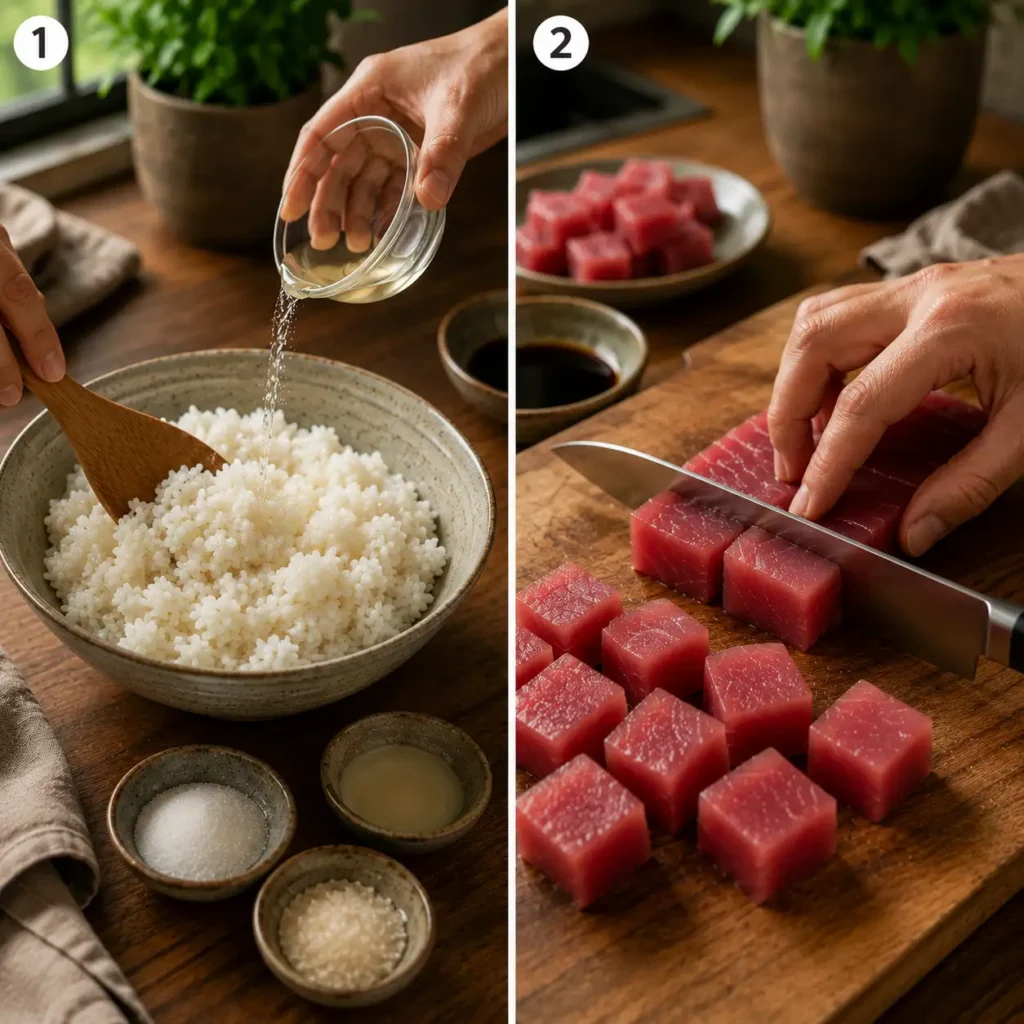
- Step 1: Prepare the Rice – Cook your choice of rice according to package instructions. While it is still warm, fold in a mixture of rice vinegar, sugar, and salt. Set it aside to cool to room temperature.
- Step 2: Slice the Tuna – Use a sharp knife to cut the sashimi-grade tuna into equal-sized cubes, roughly 1/2 inch to 3/4 inch thick. Make sure the fish stays cold during this process.
- Step 3: Marinate the Fish – In a medium bowl, whisk together soy sauce, sesame oil, grated ginger, and green onions. Toss the tuna cubes gently in the sauce until well coated. Let them marinate in the fridge for 20 minutes.
- Step 4: Prep the Toppings – While the fish marinate, slice your cucumber, avocado, and radishes. Prepare any other add-ins like edamame or seaweed salad.
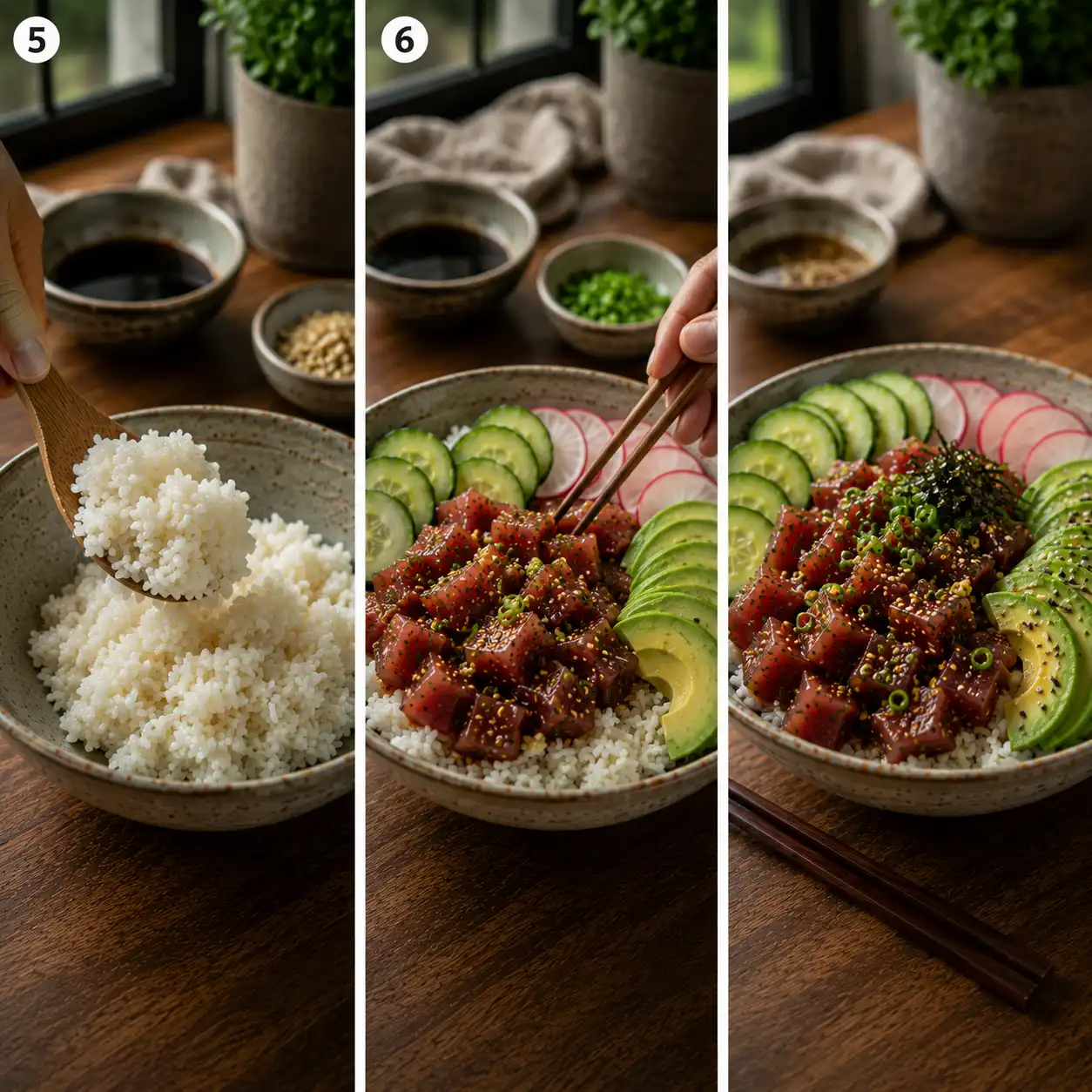
- Step 5: Assemble the Bowl – Place a generous scoop of cooled rice in the bottom of each bowl. Arrange the marinated tuna on one side and the various vegetables in neat piles around it.
- Step 6: Add the Finishes – Drizzle any remaining marinade or a bit of spicy mayo over the top. Garnish with sesame seeds, sliced green onions, or shredded nori.
- Step 7: Serve Immediately – Poke is best enjoyed fresh. Serve the bowls right away while the textures and temperatures are at their peak.

The Perfect Ingredient Ratios
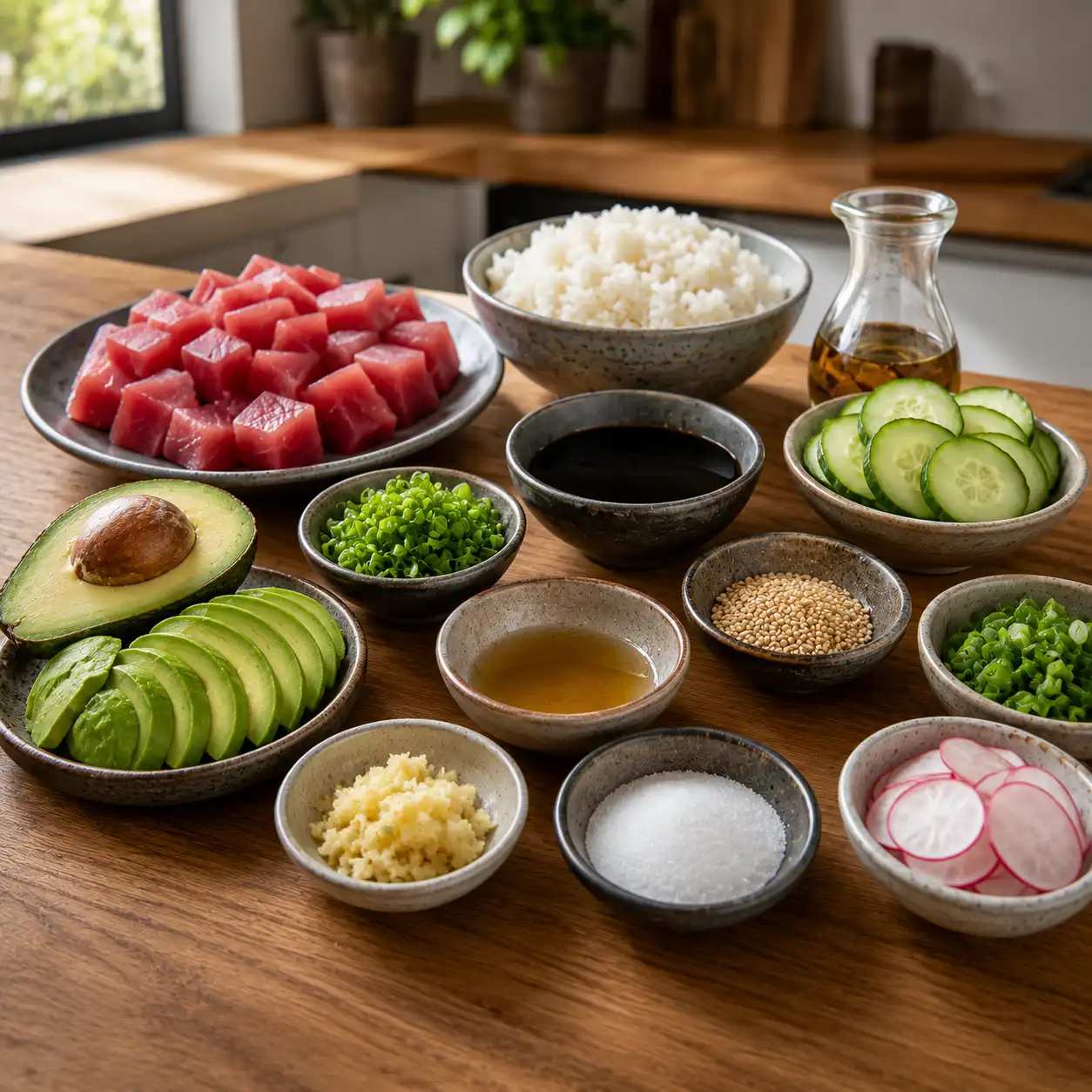
While poke is all about personal preference, having a baseline for your poke bowl recipe tuna can help you get started. Use this table as a quick reference for a standard two-person serving.
| Component | Suggested Amount | Role in the Bowl |
|---|---|---|
| Ahi Tuna | 1/2 lb (cubed) | Main Protein |
| Cooked Rice | 2 cups | Filling Base |
| Soy Sauce | 3 tbsp | Salty Flavor |
| Sesame Oil | 1 tsp | Aromatic Fat |
| Avocado | 1 small (sliced) | Creamy Texture |
| Cucumber | 1/2 cup (sliced) | Cooling Crunch |
Tips for a Professional Poke Bowl Recipe Tuna
Consistent Sizing for Better Bites
One of the secrets to a great poke bowl recipe tuna is the way you cut your ingredients. Try to keep the tuna cubes and the vegetable pieces roughly the same size. This makes it easier to get a little bit of everything in every spoonful. It also makes the bowl look much more polished and appetizing, similar to what you would receive at a high-end poke shop.
Controlling the Marinade Time
While you want the tuna to soak up flavor, be careful not to leave it in the marinade for too long. If there is a lot of acid (like lime juice) in your sauce, it can begin to “cook” the fish, similar to ceviche. For a true poke bowl recipe tuna, you want the fish to remain translucent and soft. Aim for a 15 to 30-minute window for the best texture and flavor balance.
Temperature Contrast is Key
The most satisfying poke bowls offer a contrast in temperatures. The rice should be slightly warm or room temperature, while the tuna and toppings should be quite cold. This variation makes the meal feel more dynamic. If the rice is too hot, it will wilt the vegetables and warm up the fish, which can take away from that signature refreshing quality of a poke bowl recipe tuna.
Customizing Your Poke Bowl
Fruit for a Tropical Twist
Many people love adding fruit to their poke bowl recipe tuna for a touch of sweetness. Mango and pineapple are the most common additions. The sweetness of the fruit cuts through the salty soy sauce and adds a bright, tropical vibe to the meal. It is a fantastic way to experiment with different flavor profiles if you want something a bit different from the standard savory bowl.
Crunchy Topping Ideas
If you feel like your bowl is missing a bit of texture, look to your pantry. Fried onions, crushed macadamia nuts, or even toasted wonton strips can add a delightful snap to your poke bowl recipe tuna. These toppings provide a heavy crunch that contrasts beautifully with the soft fish and tender rice. It’s these small details that take a home-cooked meal to the next level.
Greens and Grains
Don’t feel limited to just rice. You can mix your rice with baby spinach or kale to increase your nutrient density. Some even prefer a “half-and-half” base of greens and grains. This approach makes the poke bowl recipe tuna feel more like a hearty salad while still providing the satisfaction of a grain-based meal. It is a flexible dish that adapts to whatever you have in your refrigerator.
Nutritional Highlights of Tuna Poke
Lean Protein and Omega-3s
The primary benefit of a poke bowl recipe tuna is the high-quality protein found in the fish. Tuna is a lean source of energy that helps with muscle repair and satiety. Additionally, it is packed with Omega-3 fatty acids, which are known to support heart health and brain function. When you prepare this at home, you are treating your body to a nutrient-dense powerhouse of a meal.
Vitamins and Minerals
Beyond the protein, the variety of vegetables in a poke bowl recipe tuna provides a wide range of vitamins. You get Vitamin K from the cucumbers and edamame, Vitamin E from the avocado, and various antioxidants from the radishes and ginger. It is a naturally colorful meal, and as the saying goes, “eating the rainbow” is one of the best ways to get a broad spectrum of nutrients.
Low-Calorie and Filling
Because the dish relies on fresh ingredients rather than heavy fats or frying, a poke bowl recipe tuna is naturally lower in calories than many other takeout options. The combination of protein, healthy fats, and fiber-rich vegetables helps you feel full for longer. This makes it an excellent choice for those who want to maintain a healthy weight without feeling like they are sacrificing flavor or volume in their meals.
FAQs
Can I use canned tuna for this recipe?
While you certainly can make a bowl with canned tuna, it will not be a traditional poke bowl recipe tuna. Canned tuna is cooked and has a very different texture. If you use canned tuna, it is best mixed with a little bit of mayo and sriracha to create a “tuna salad” style bowl. For the authentic experience, fresh or frozen sashimi-grade tuna is necessary.
How long does leftover tuna poke last?
Because the fish is raw, it is best to eat your poke bowl recipe tuna on the day it is made. If you have leftovers, they can be stored in an airtight container in the fridge for up to 24 hours, but the texture of the fish may change as it continues to sit in the marinade. Always use your best judgment regarding the freshness of raw seafood.
Is it safe to eat raw tuna?
Eating raw fish always carries a small risk, but choosing “sashimi-grade” tuna significantly reduces that risk. This fish is frozen to specific temperatures to kill any potential parasites. If you are pregnant or have a compromised immune system, it is usually recommended to avoid raw seafood and perhaps try a cooked version of the poke bowl recipe tuna using seared tuna instead.
What if I don’t like soy sauce?
If you want to avoid soy, you can use coconut aminos as a substitute in your poke bowl recipe tuna. It has a similar salty and savory profile but is slightly sweeter and completely soy-free. It works perfectly with the sesame oil and ginger to create a delicious marinade that everyone can enjoy regardless of dietary restrictions.
Conclusion
Creating your own poke bowl recipe tuna is a rewarding way to bring fresh, Hawaiian-inspired flavors into your home. By focusing on high-quality fish, a well-balanced marinade, and a variety of crunchy toppings, you can build a meal that is both nutritious and incredibly satisfying. The flexibility of the dish means you can change it up every time you make it, ensuring that it never gets boring. Whether you stick to the classics or experiment with new flavors, the result is sure to be a hit. Enjoy the process of building your perfect bowl!