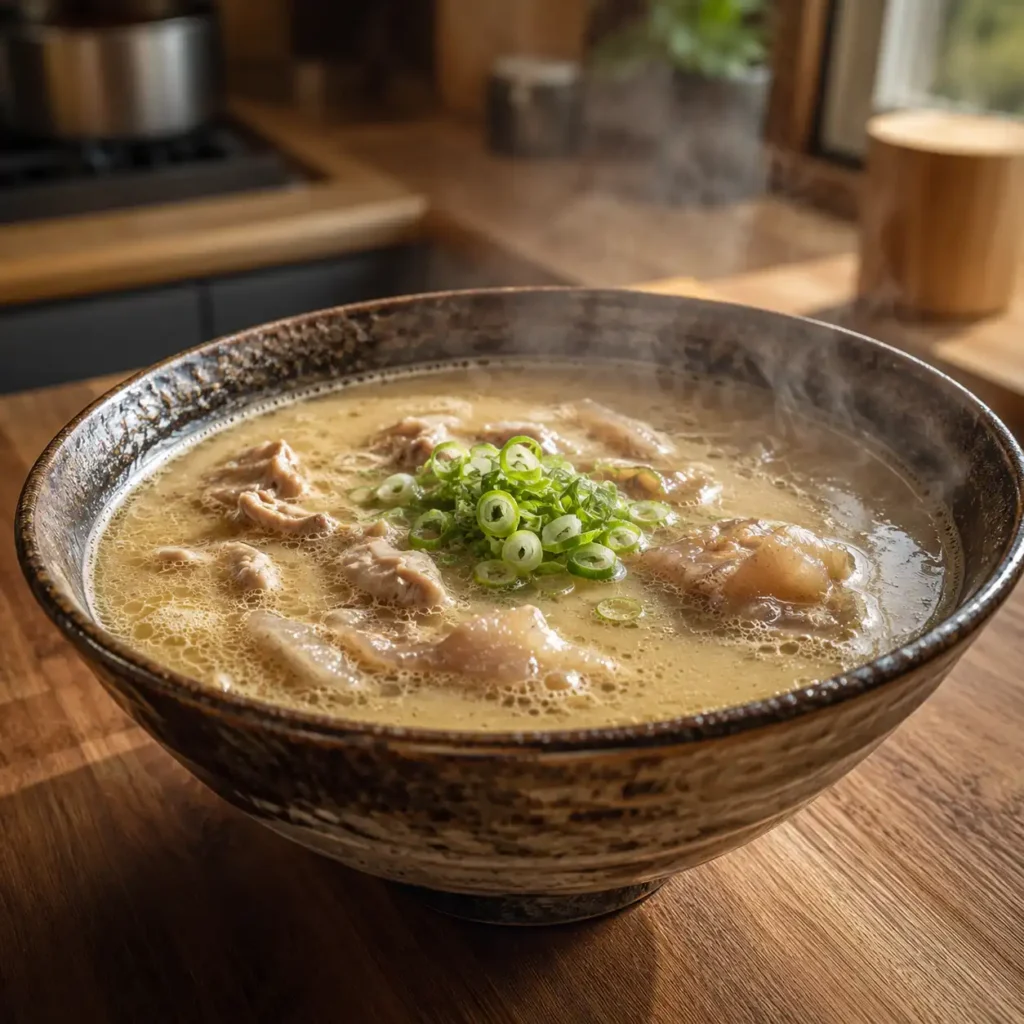
Creating a bowl of authentic-tasting ramen at home starts with the foundation: the liquid gold. Finding the best ramen broth recipe is a journey through layers of flavor, heat management, and ingredient selection. While many traditional versions rely on certain fats, it is entirely possible to create a rich, lip-smacking broth without using any pig-based products or alcohol. This guide focuses on a high-clearance, deeply flavorful chicken and beef-based method that provides the satisfying mouthfeel and complex profile expected from a world-class ramen shop.
Table of Contents
The Anatomy of a Perfect Ramen Broth
The Importance of the Base Liquid
The base of the best ramen broth recipe is more than just water and meat. It is an emulsion of proteins, minerals, and extracted collagen. When you aim for a creamy “Paitan” style without using restricted fats, you must look to chicken feet and beef marrow bones. These ingredients provide the gelatinous body that coats the tongue. Unlike a simple soup, this liquid must be boiled vigorously if you want a cloudy appearance, or simmered very gently for a “Chintan” or clear style. Both versions require patience to pull every ounce of nutrition and flavor from the ingredients.
Building Complexity with Aromatics
Aromatics are the secondary layer of the best ramen broth recipe. Onions, garlic, ginger, and scallions are standard, but roasting them first changes the dynamic. Charring the skin of an onion or a hand of ginger adds a smoky undertone that mimics the depth often found in charcoal-grilled dishes. This technique helps bridge the gap when you are avoiding certain traditional flavor additives. By focusing on the natural sugars in vegetables, you create a profile that is both savory and slightly sweet, providing a balanced experience that keeps you coming back for another spoonful.
Print
Mastering the Best Ramen Broth Recipe for Professional Results
A rich, gelatinous professional ramen broth using a chicken and beef base, designed to achieve a deep umami profile without the use of pork or alcohol.
- Total Time: 13 hours
- Yield: 12 servings 1x
Ingredients
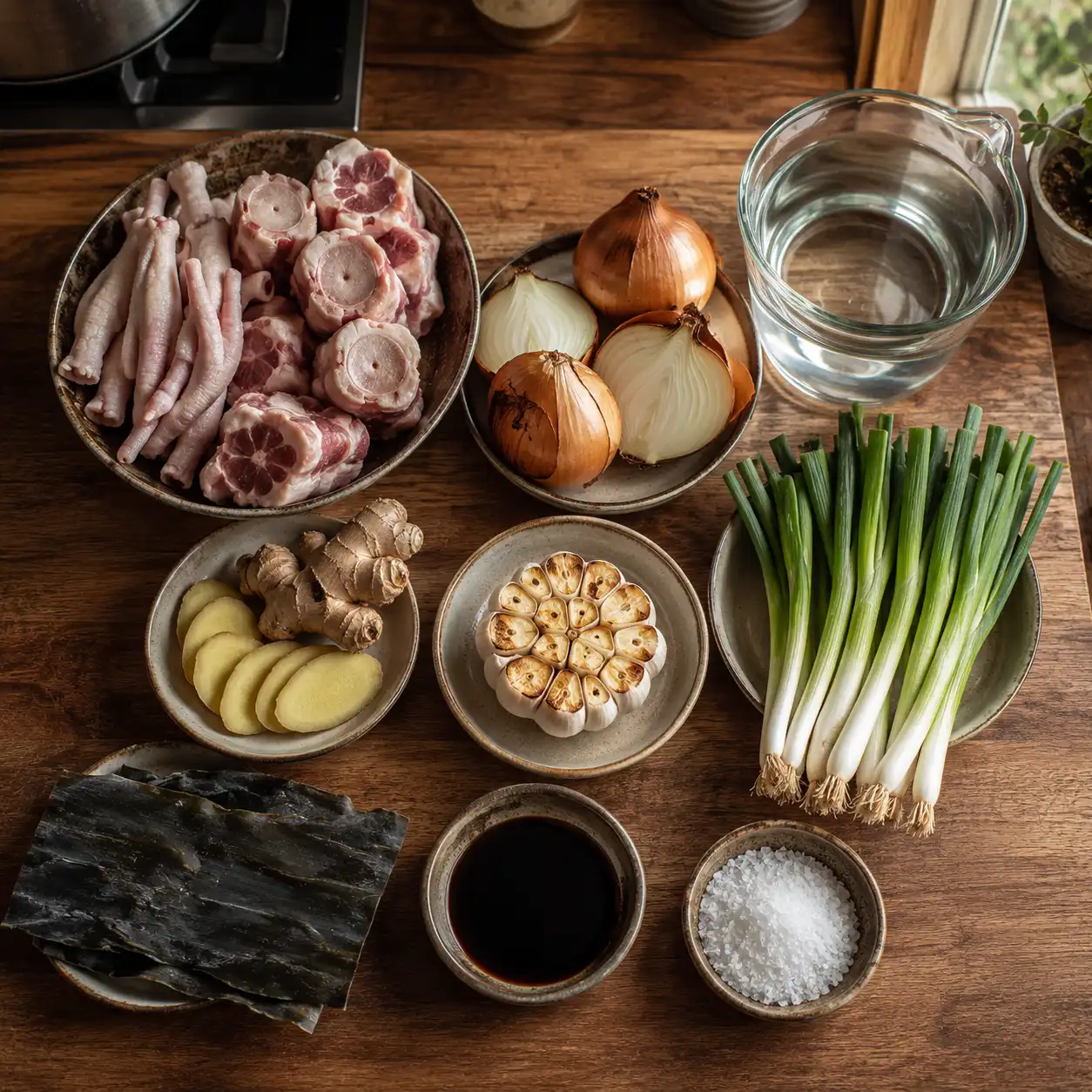
- 2 lbs Chicken feet (cleaned)
- 3 lbs Beef marrow bones
- 2 Large yellow onions (halved)
- 1 Large hand of ginger (sliced)
- 2 Garlic heads (halved crosswise)
- 1 bunch Scallions
- 8 liters Cold filtered water
- 2 tbsp Vegetable oil (for charring)
Instructions
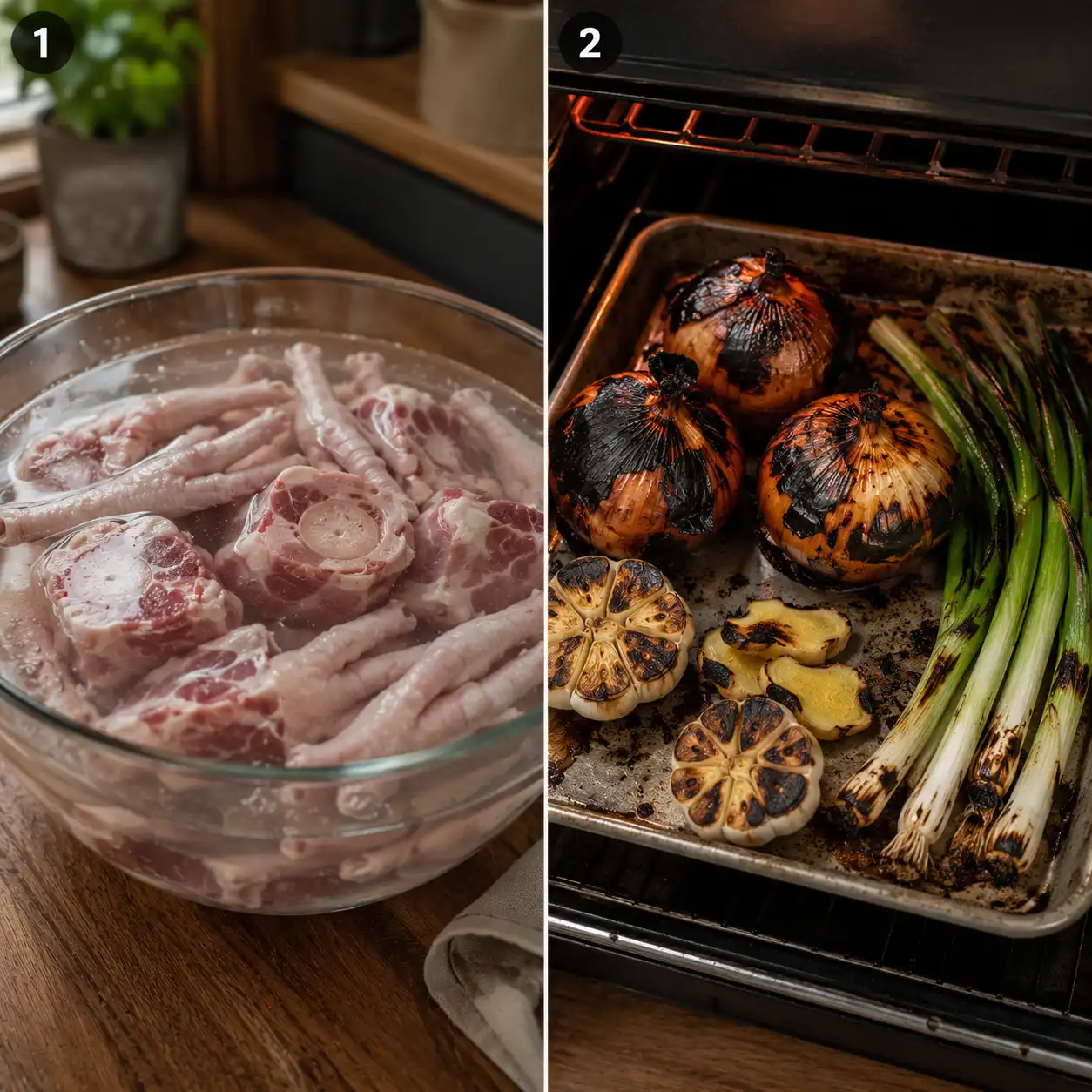
- Step 1: Prep Bones – Soak chicken feet and beef marrow bones in cold water for 1 hour to remove excess blood.
- Step 2: Blanch Proteins – Place bones in a stockpot, cover with water, boil for 10 minutes, then drain and rinse thoroughly.
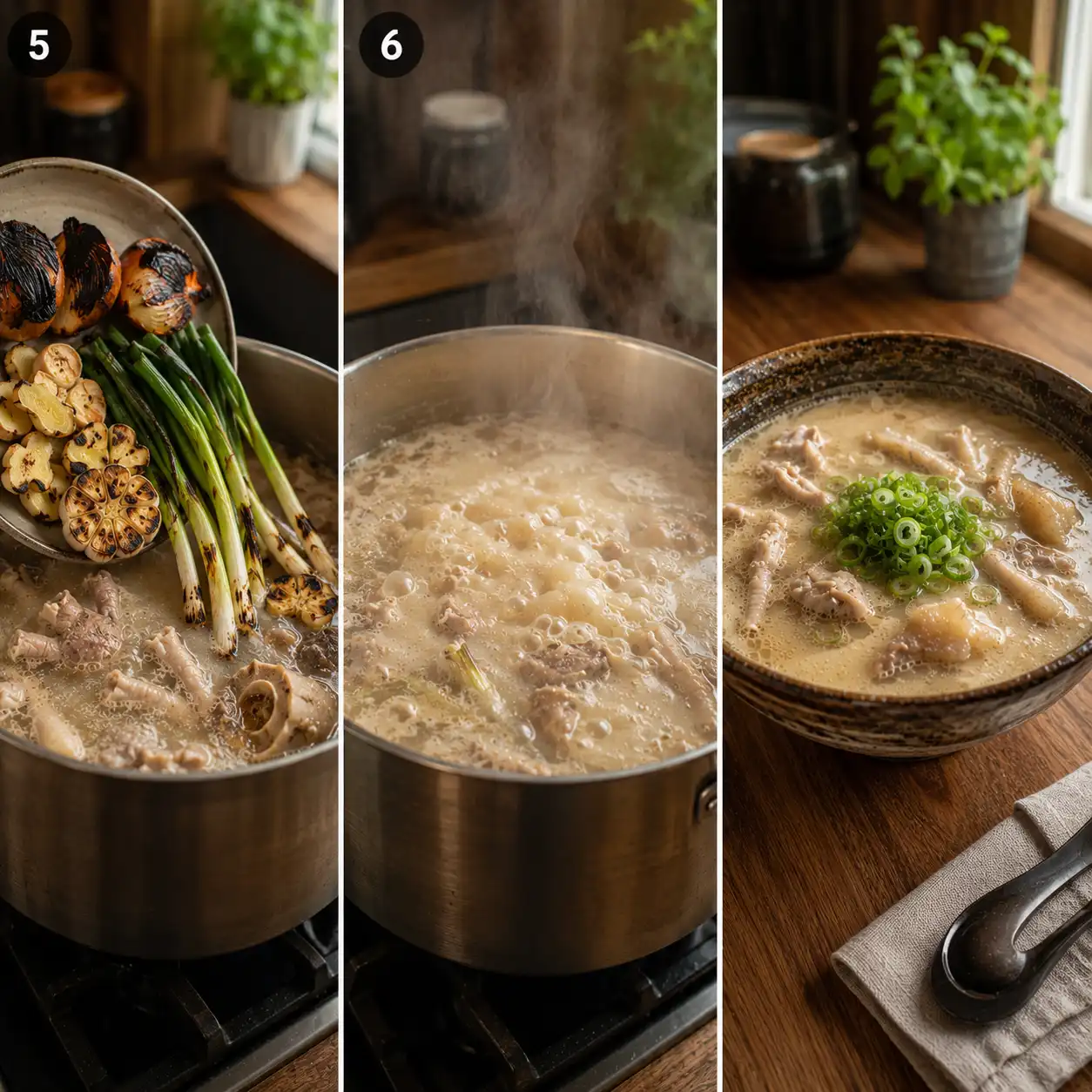
- Step 3: Char Aromatics – Sear halved onions and ginger in a hot pan or under a broiler until skins are blackened and smoky.
- Step 4: Combine Ingredients – Place the blanched bones and charred aromatics into a clean, large stockpot with 8 liters of water.
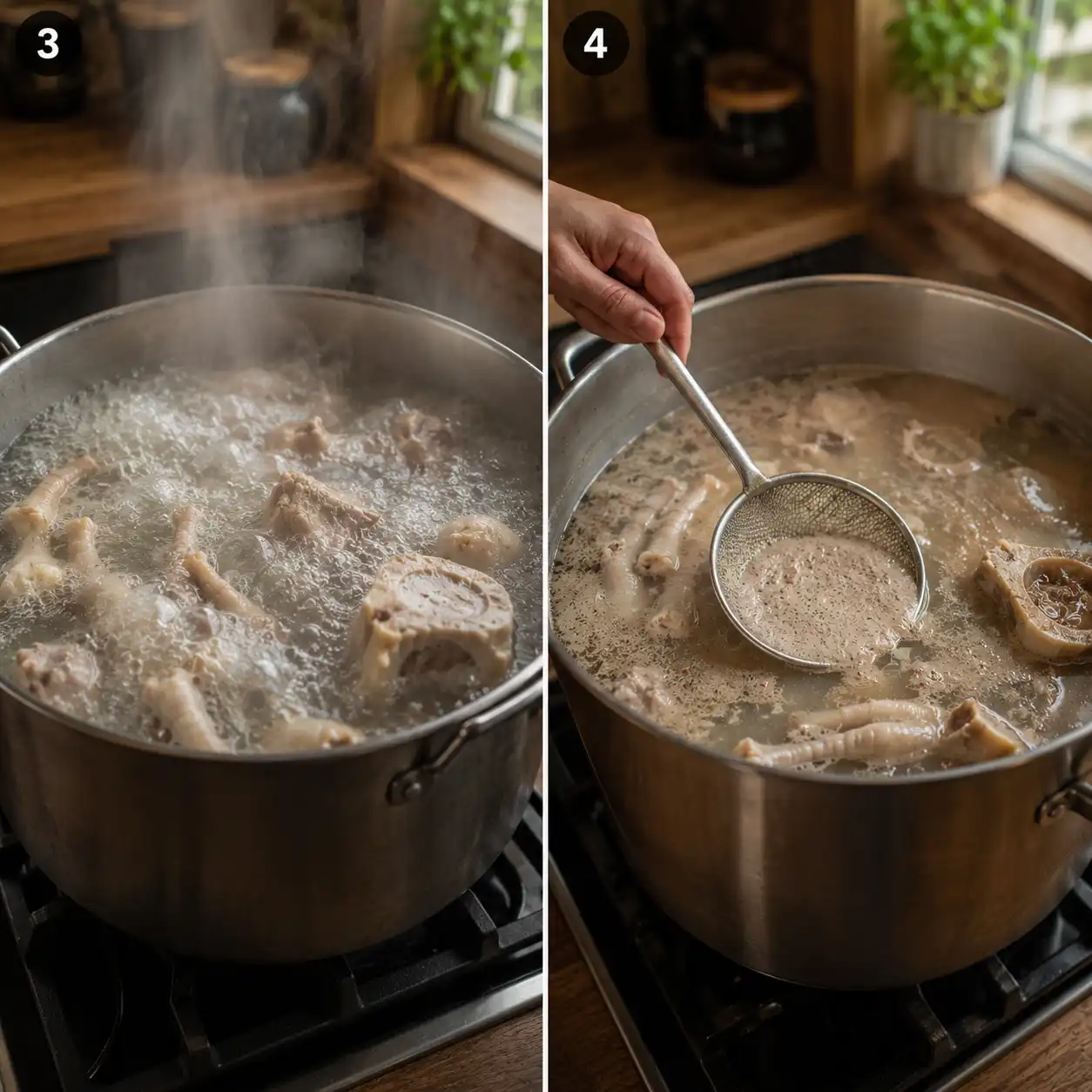
- Step 5: Initial Boil – Bring the pot to a rolling boil and skim any gray foam or impurities that rise to the surface.
- Step 6: Select Consistency – Maintain a vigorous boil for a creamy Paitan style or a very low simmer for a clear Chintan style.
- Step 7: Long Extraction – Cook the broth for a minimum of 8 to 12 hours, topping up water periodically to keep bones submerged.
- Step 8: Strain Broth – Pour the liquid through a fine-mesh sieve or cheesecloth into a clean container, discarding all solids.
- Step 9: Cool and Store – Chill the broth rapidly in an ice bath before refrigerating to preserve the delicate flavor profile.
Notes
For a deeper smoky flavor, use a kitchen torch to char the scallions before adding them to the pot in the final 2 hours of cooking.
- Prep Time: 1 hour
- Cook Time: 12 hours
- Category: Soup
- Method: Extraction
- Cuisine: Japanese
- Diet: Pork-Free
Nutrition
- Serving Size: 500 ml
- Calories: 280 kcal
- Sugar: 2 g
- Sodium: 150 mg
- Fat: 18 g
- Saturated Fat: 7 g
- Unsaturated Fat: 10 g
- Trans Fat: 0.5 g
- Carbohydrates: 4 g
- Fiber: 1 g
- Protein: 25 g
- Cholesterol: 55 mg
Essential Ingredients for the Best Ramen Broth Recipe
Choosing Quality Bones and Proteins
To succeed with the best ramen broth recipe, the quality of your bones is paramount. Use a mix of chicken carcasses and beef knuckles. Beef knuckles are packed with connective tissue which, when broken down over several hours, creates a rich texture. Always soak your bones in cold water for at least an hour before cooking. This helps remove impurities that can make the liquid cloudy or bitter. Starting with clean bones makes a significant difference in the final clarity and purity of the flavor, making the effort of preparation worth every minute of the long cook time.
Umami Boosters Without Pork or Alcohol
Umami is the secret to a world-class bowl. This “fifth taste” provides a savory depth that satisfies the palate. In the best ramen broth recipe, we achieve this through dried shiitake mushrooms and kombu (dried kelp). These ingredients are naturally high in glutamates. You can learn more about how these compounds affect our taste receptors by reading about Umami on Wikipedia. Since we are avoiding mirin or sake, we use a touch of honey and rice vinegar to provide the necessary acidity and sweetness that balances the heavy protein notes of the meat-based base.
Step-by-Step Instructions: The Best Ramen Broth Recipe
Following a precise process is what separates a home cook from a ramen master. This best ramen broth recipe requires roughly 8 to 12 hours of total time, though much of it is passive. The goal is to reach a state where the liquid has reduced enough to concentrate the flavors while maintaining a velvety texture.
- Step 1: Bone Cleaning – Place 2kg of chicken bones and 1kg of beef marrow bones in a large pot. Cover with cold water and bring to a boil for 10 minutes. Drain the water and scrub the bones under cold running water to remove all grey foam and blood.
- Step 2: Initial Simmer – Return the cleaned bones to a clean pot. Add 6 liters of filtered water. Bring to a gentle simmer. Do not let it boil vigorously if you want a clear broth; keep it at a low bubble.
- Step 3: Aromatic Prep – Char one halved onion, a 4-inch piece of ginger, and five cloves of garlic in a dry pan until blackened on the edges. Add these to the pot along with a handful of leek greens.
- Step 4: Long Extraction – Simmer the mixture for at least 6 hours. Periodically skim any foam that rises to the surface. If the water level drops too low, add a small amount of hot water to keep the bones submerged.
- Step 5: Adding Umami – Two hours before finishing, add 4 dried shiitake mushrooms and a piece of kombu. Remove the kombu after 30 minutes to prevent a bitter taste.
- Step 6: Straining – Carefully strain the liquid through a fine-mesh sieve lined with cheesecloth. Discard the solids. You should be left with a concentrated, aromatic liquid.
- Step 7: Final Seasoning – Taste the broth. This is when you will add your tare (seasoning base) to transform the liquid into a completed soup.
Mastering the Tare (The Flavor Soul)
Shoyu Tare (Soy Sauce Base)
The tare is the concentrated seasoning that defines the style of your ramen. For a Shoyu version in the best ramen broth recipe, blend high-quality soy sauce with sea salt and a dash of rice vinegar. Many chefs also incorporate a sweet element. While some use glazes, a similar flavor profile can be found in a well-made teriyaki sauce recipe, which uses sugar and soy to create a deep, caramelized notes. Adding a few tablespoons of this type of reduction to your tare can provide the gloss and richness that the broth needs to stand up to heavy noodles.
Miso Tare (Fermented Soybean Paste)
If you prefer a thicker, heartier bowl, a Miso tare is the way to go. Mix red and white miso pastes with grated garlic and a touch of chili oil. This creates a bold, creamy texture that pairs perfectly with the chicken and beef base. Because miso is high in salt and active cultures, it should never be boiled for long periods. Instead, whisk the miso mixture into the hot broth just before serving. This preserves the delicate aromatic qualities of the fermented beans and ensures the best ramen broth recipe maintains its nutritional integrity and vibrant flavor profile.
| Ingredient Type | Component | Purpose |
|---|---|---|
| Base Protein | Chicken & Beef Bones | Body and gelatinous texture |
| Aromatics | Ginger, Garlic, Onion | Smoky and sweet undertones |
| Umami Boosters | Shiitake & Kombu | Deep savory profile |
| Seasoning (Tare) | Soy or Miso | Saltiness and character |
Toppings and Pairings
The best ramen broth recipe deserves high-quality accompaniments. Traditional toppings include soft-boiled eggs marinated in soy, bamboo shoots, and scallions. If you are looking for a refreshing side dish to cut through the richness of the soup, a japanese cucumber salad recipe provides a crisp, vinegary contrast. The acidity of the cucumbers cleanses the palate between sips of the dense, savory broth. These small additions transform a simple bowl of noodles into a complete, restaurant-style meal that satisfies all the senses.
For those watching their carbohydrate intake, you might wonder about noodle alternatives. While traditional wheat noodles are the standard, some people experiment with grain-free options. If you are curious about the nutritional profile of different bases, you might ask is cauliflower rice good for you as a potential bowl filler. While it won’t replace the texture of ramen noodles, it can be a healthy way to enjoy the best ramen broth recipe without the heavy starch. However, for the most authentic experience, thin, alkaline noodles are recommended for their springy texture.
Comparing this process to other cultural classics can help you understand the art of the simmer. For instance, the thick, silky texture achieved in this best ramen broth recipe shares some similarities with the Mediterranean avgolemono soup, which uses eggs and lemon to create a creamy finish. While the flavor profiles are vastly different, the focus on a high-quality protein extraction is a universal culinary truth. Mastering one type of deep broth often makes you better at preparing others, as you learn to balance salt, fat, and acidity in a liquid medium.
Common Mistakes to Avoid
One frequent error when making the best ramen broth recipe is failing to properly clean the bones. If you skip the initial par-boil and scrub, your broth will likely have a “funky” or “muddy” taste that hides the clean notes of the aromatics. Another mistake is boiling the kombu for too long. Kelp contains tannins that turn bitter and slimy if exposed to high heat for extended periods. Always remove it once the water reaches a simmer. Lastly, do not over-salt the broth itself; keep the salt in the tare so each person can adjust the intensity to their own liking.
The Best Ramen Broth Recipe: A Culinary Milestone
Reaching the end of this long cooking process is incredibly rewarding. The best ramen broth recipe is not just about the final taste, but the care put into every stage. From charring the vegetables to the patient eight-hour simmer, each action adds a layer of complexity. By following these steps and respecting the ingredients, you can serve a bowl of ramen that rivals any professional kitchen. Enjoy the rich, savory results of your hard work and share the warmth of a perfectly crafted broth with those you love.
FAQs
Can I make the best ramen broth recipe in a slow cooker?
Yes, you can use a slow cooker, but the flavor profile will be slightly different. A slow cooker is excellent for a clear broth because it maintains a low, steady temperature. However, if you want a creamy, emulsified broth, you need the agitation of a stove-top boil to break down the fats and proteins into the liquid. If using a slow cooker, set it to “Low” for 10-12 hours for the best results.
How long does the broth last in the fridge?
Once you have completed the best ramen broth recipe, let it cool completely before transferring it to airtight containers. It will stay fresh in the refrigerator for up to 4 days. Because of the high gelatin content, it will likely turn into a thick jelly when cold; this is a sign of a high-quality broth. Simply reheat it on the stove to return it to a liquid state.
Can I freeze the broth for later use?
Absolutely. This broth freezes exceptionally well. Pour the strained, unseasoned broth into freezer-safe bags or containers, leaving a bit of room for expansion. It can be stored for up to 3 months. Having a stash of the best ramen broth recipe in your freezer makes it easy to have a gourmet meal on short notice. Just thaw, add your tare, and boil your noodles.
What can I use instead of mirin for sweetness?
Since we are avoiding alcohol, you can substitute mirin with a mixture of rice vinegar and sugar or honey. For every tablespoon of mirin required, use one tablespoon of rice vinegar mixed with half a teaspoon of sugar. This provides the necessary acidity and sweetness to balance the salty tare without using any restricted ingredients.