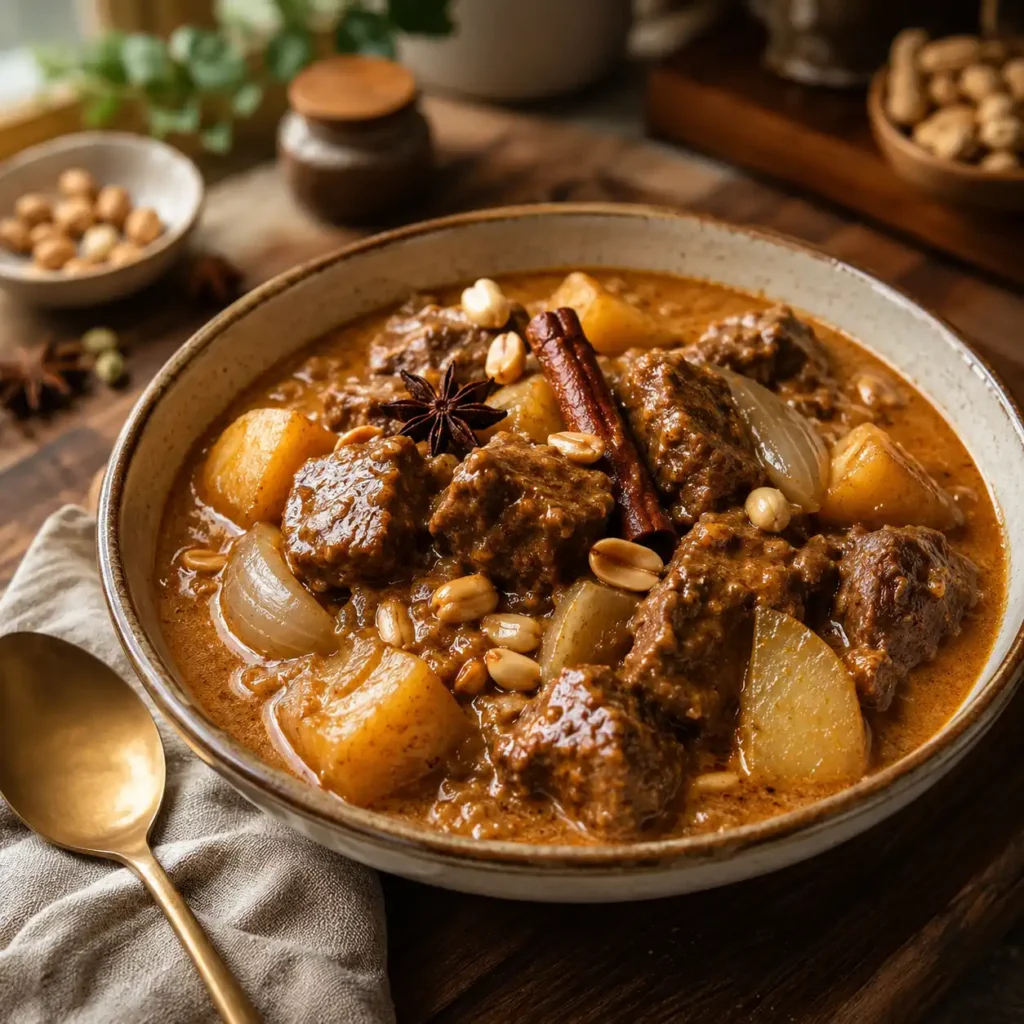
The massaman curry recipe stands as a testament to the rich cultural exchange that has defined Thai cuisine for centuries. Unlike the fiery heat of a green or red curry, this dish offers a mild, deeply aromatic experience that blends Persian, Indian, and Malay influences. It consistently ranks at the top of world food lists because of its complex layering of warm spices, creamy coconut milk, and tender protein. Making a massaman curry recipe at home allows you to control the balance of sweet, salty, and sour notes to suit your personal palate perfectly.
Table of Contents
The Historical Roots of Massaman Curry
A Fusion of Flavors
The origins of the massaman curry recipe date back to the 17th century when trade routes brought spices like cardamom, cinnamon, and cloves to the Thai court. Most food historians believe the name “Massaman” is a corruption of the word “Musulman,” reflecting its Muslim heritage. Because of these roots, the dish never contains pig products, focusing instead on beef, chicken, or lamb. The unique profile of this curry comes from the use of dry spices that are not typical in other Thai dishes, making the massaman curry recipe a bridge between Southeast Asian and Middle Eastern culinary traditions.
The Royal Recognition
In the late 18th century, King Rama II of Thailand wrote a famous poem dedicated to his wife, praising her skill in preparing this specific dish. This royal endorsement solidified the massaman curry recipe as a pillar of national pride. To understand why it remains so beloved, one must look at how it balances ingredients that might seem at odds the acidity of tamarind against the richness of coconut cream, and the crunch of roasted peanuts against soft, buttery potatoes. You can read more about the cultural significance of this dish on CNN Travel’s culinary heritage reports, which often highlight its global popularity.
Print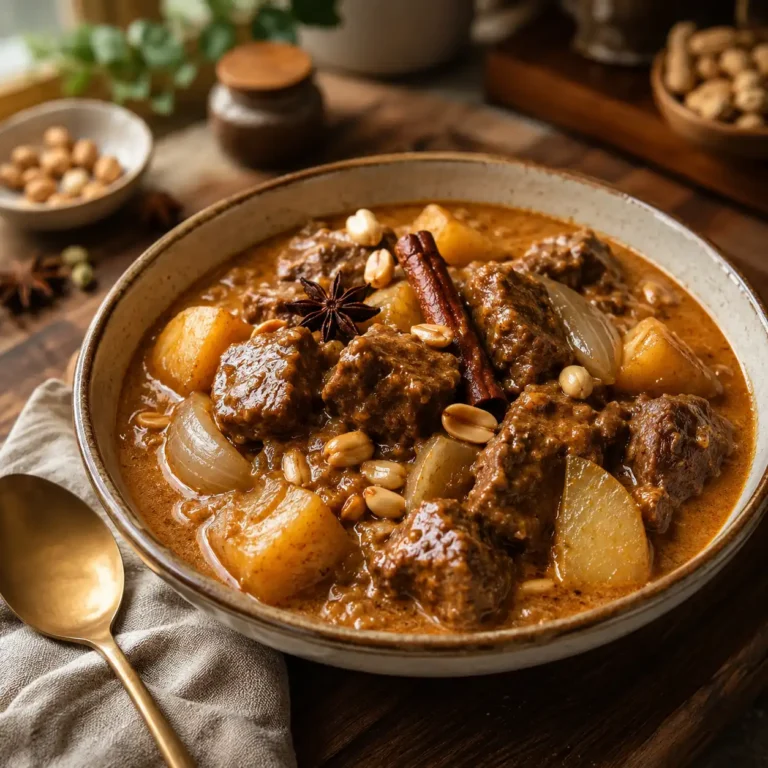
Mastering the Authentic Massaman Curry Recipe
A rich, mild, and deeply aromatic Thai curry featuring a complex layering of warm spices, creamy coconut milk, and tender protein, influenced by Persian and Indian flavors.
- Total Time: 70 minutes
- Yield: 4 servings 1x
Ingredients
- 1 lb beef, chicken, or lamb, cut into bite-sized chunks
- 2 cups thick coconut milk
- 4 tablespoons Massaman curry paste
- 2 large potatoes, peeled and cubed
- 1 large onion, sliced into thick wedges
- 1/2 cup roasted peanuts
- 2 tablespoons tamarind paste
- 1 tablespoon fish sauce
- 1 tablespoon palm sugar
- 1 cinnamon stick
- 4 cardamom pods
- 3 whole cloves
- 2 tablespoons vegetable oil
Instructions
- Step 1: Toast Spices – Heat a dry pan and lightly toast the cinnamon, cardamom, and cloves until fragrant.
- Step 2: Fry Paste – Heat oil in a large pot over medium heat and stir-fry the curry paste for 2 minutes.
- Step 3: Sear Meat – Add the chosen protein to the pot and sear until browned on all sides.
- Step 4: Reduce Coconut – Pour in 1 cup of coconut milk and simmer until the oil begins to separate from the cream.
- Step 5: Simmer Protein – Add the remaining coconut milk and a cup of water, then simmer on low heat until meat is tender.
- Step 6: Add Vegetables – Stir in the potatoes and onions, simmering for 15-20 minutes until the potatoes are soft.
- Step 7: Season Dish – Add tamarind paste, fish sauce, and palm sugar, stirring to balance the sweet, salty, and sour notes.
- Step 8: Final Garnish – Stir in the roasted peanuts and toasted whole spices before serving over jasmine rice.
Notes
For a more traditional flavor, use beef chuck and simmer it slowly for up to 90 minutes to ensure maximum tenderness.
- Prep Time: 20 minutes
- Cook Time: 50 minutes
- Category: Main Course
- Method: Simmering
- Cuisine: Thai
- Diet: Gluten-Free
Nutrition
- Serving Size: 1.5 cups
- Calories: 580 kcal
- Sugar: 10g
- Sodium: 850mg
- Fat: 42g
- Saturated Fat: 24g
- Unsaturated Fat: 18g
- Trans Fat: 0.1g
- Carbohydrates: 28g
- Fiber: 5g
- Protein: 26g
- Cholesterol: 65mg
Keywords: Massaman Curry, Thai Recipe, Mild Curry, Coconut Milk, Peanut Curry
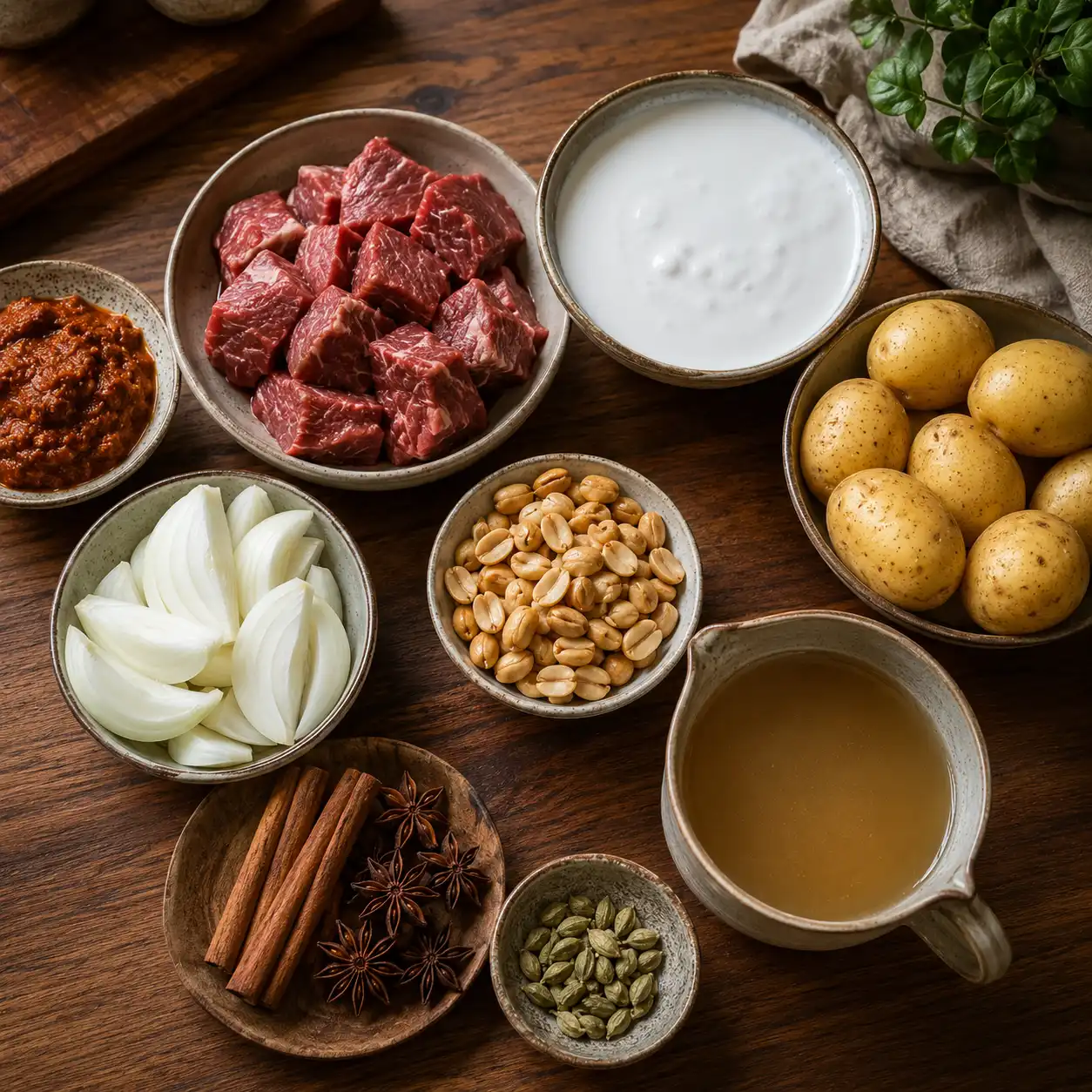
Essential Ingredients for Your Massaman Curry Recipe
Building the Paste Foundation
Every great massaman curry recipe starts with a high-quality paste. If you have the time, grinding your own paste with a mortar and pestle yields the most vibrant results. You will need dried chilies (soaked until soft), shallots, garlic, galangal, lemongrass, and shrimp paste. What sets the massaman curry recipe apart is the addition of toasted coriander seeds, cumin, cloves, and white pepper. If you use a store-bought paste, look for brands that do not use preservatives and check the label to make sure the spice levels align with your preferences.
The Role of Coconut Milk
In a traditional massaman curry recipe, coconut milk is not just a liquid base; it is an active cooking medium. High-fat coconut milk is preferred because it allows the “cracking” of the cream. This process involves boiling the thick cream until the oil separates, creating a medium to fry the curry paste. This step is vital for releasing the fat-soluble aromas of the dry spices. If you enjoy the creamy texture of coconut-based sauces, you might also find interest in a chickpea curry coconut milk preparation which uses similar techniques for a plant-based alternative.
Protein and Texture Additions
Beef is the most classic choice for a massaman curry recipe, particularly cuts that benefit from long, slow cooking like chuck or shank. Chicken thighs are also popular for a faster version of the dish. Regardless of the protein, potatoes and roasted peanuts are non-negotiable. They provide the starch and crunch that define the eating experience. For those looking to incorporate more health-conscious elements into their diet, many of these spices fit well within an anti-inflammatory diet recipe, as turmeric, ginger, and cinnamon are known for their beneficial properties.
Traditional Massaman Curry Preparation Table
To help you prepare, here is a breakdown of the key components found in a standard massaman curry recipe and their role in the flavor profile.
| Category | Key Ingredients | Flavor Contribution |
|---|---|---|
| Aromatics | Shallots, Garlic, Galangal | Savoury depth and base notes |
| Dry Spices | Cinnamon, Cardamom, Star Anise | Warmth, sweetness, and complexity |
| Acids | Tamarind Paste | Tangy, sour brightness |
| Sweeteners | Palm Sugar | Caramel-like sweetness |
| Thickeners | Roasted Peanuts, Potatoes | Body, richness, and texture |
Step-by-Step Massaman Curry Recipe
Preparing the Ingredients
Before starting the heat, make sure all your components are ready. Cut your meat into large, uniform cubes about 1.5 inches to keep them moist during the simmering process. Peel and chop your potatoes into similar sizes. If you are using raw peanuts, toast them in a dry pan until they become fragrant and slightly charred. This prep work makes the cooking process much more manageable and helps you focus on the timing of the spice release.
Executing the Cook
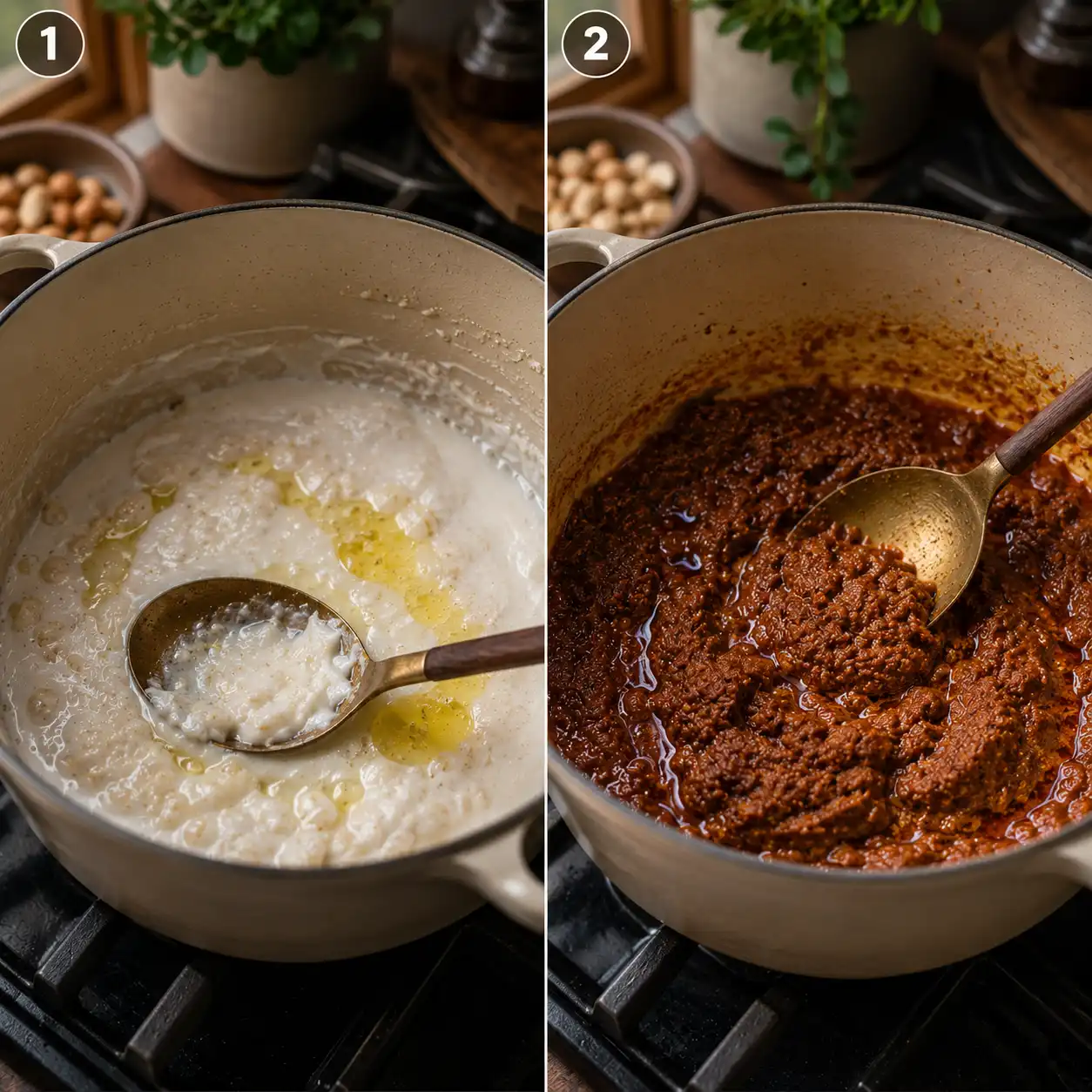
- Step 1: Crack the Coconut Cream – Take the thick cream from the top of a can of coconut milk and heat it in a large pot over medium heat. Stir constantly until it begins to bubble and the oil starts to separate from the solids.
- Step 2: Fry the Paste – Add about 4 tablespoons of massaman curry paste to the oil. Fry the paste for 3 to 5 minutes until it is fragrant and the color deepens. Do not let it burn; if it looks too dry, add a splash more coconut milk.
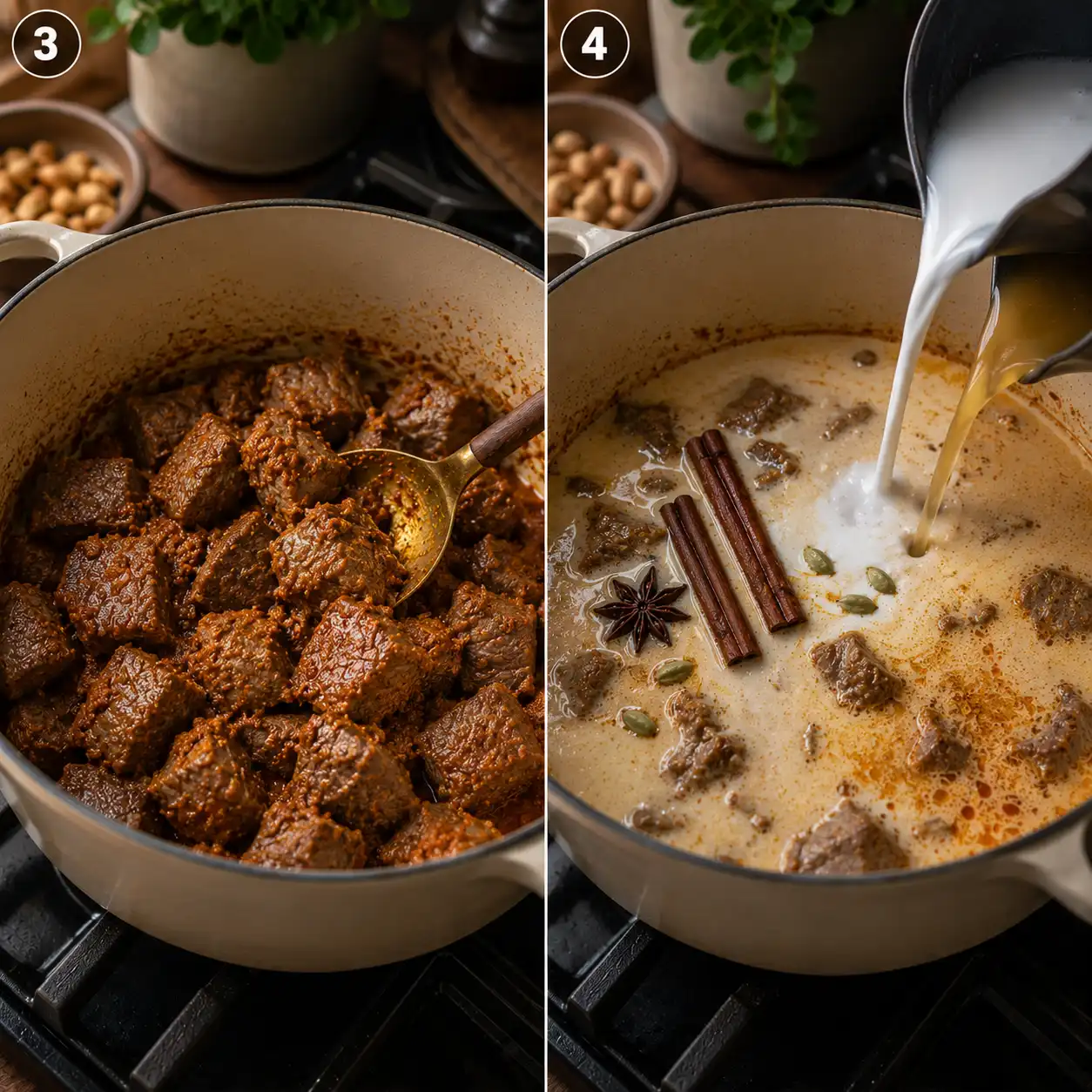
- Step 3: Sear the Meat – Add your beef or chicken to the pot. Coat the protein thoroughly in the fried paste and cook until the outside is no longer raw. This helps lock in the juices before the simmering begins.
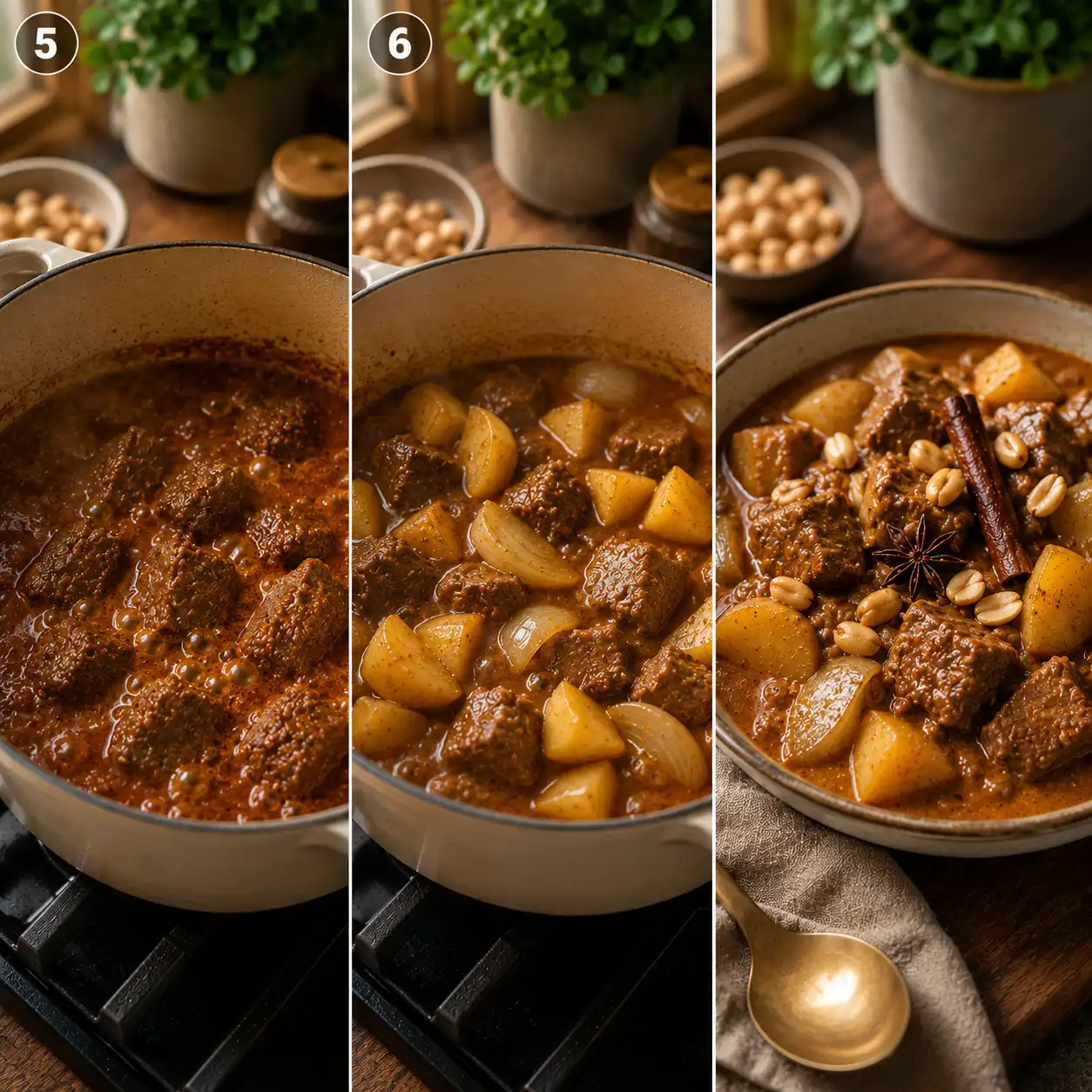
- Step 4: Simmer with Liquid – Pour in the remaining coconut milk and enough water or beef stock to cover the meat. Add your cinnamon sticks, star anise, and cardamom pods. Lower the heat and let it simmer. For beef, this may take 1 to 2 hours; for chicken, about 20 minutes.
- Step 5: Add Vegetables – Once the meat is nearly tender, add the potato chunks and onions. Continue simmering until the potatoes are soft enough to be pierced with a fork but not falling apart.
- Step 6: Season the Sauce – Stir in 2 tablespoons of palm sugar, 2 tablespoons of fish sauce, and 3 tablespoons of tamarind paste. Taste the sauce. It should be a balance of sweet, salty, and sour. Adjust as needed.
- Step 7: Final Touch – Add the roasted peanuts and let them sit in the hot sauce for a few minutes to soften slightly before serving.
Serving Suggestions for Massaman Curry
Traditional Pairings
The best way to enjoy a massaman curry recipe is with a side of steamed jasmine rice. The long grains soak up the rich, peanut-infused gravy perfectly. Some people also serve it with Arjad, a refreshing Thai cucumber relish made with vinegar, sugar, shallots, and chilies. The acidity of the relish cuts through the heaviness of the coconut milk, refreshing the palate between bites. If you want to include fresh elements, you could also add ginger to your meal; for instance, a turmeric ginger shot recipe after your meal can aid in digestion.
Low-Carb Alternatives
If you are watching your carbohydrate intake, you do not have to skip the massaman curry recipe entirely. Instead of jasmine rice, you can swap it for a vegetable-based alternative. Learning how to make cauliflower rice is an excellent skill for this purpose. The light texture of cauliflower rice complements the thick curry sauce without adding the heavy calories of traditional starch. This makes the dish much lighter while still retaining all the bold, spicy flavors you love.
Pro Tips for a Perfect Massaman Curry Recipe
Balancing the Flavors
The “holy trinity” of Thai seasoning sugar, salt, and acid is crucial in a massaman curry recipe. If the curry tastes too heavy or flat, add a little more tamarind paste. If it is too sour, increase the palm sugar. Always add these seasonings gradually, tasting as you go. Remember that the saltiness often comes from the fish sauce, so be cautious if your curry paste already contains a high amount of shrimp paste or salt. You can find detailed information on the nutritional profile of peanuts, a key source of fat in this dish, at Healthline’s peanut nutrition guide, which explains their protein and healthy fat content.
Managing the Heat
Massaman is generally the mildest of the Thai curries. However, if you find your massaman curry recipe is still too spicy for your liking, you can mellow it out by adding more coconut milk or a bit of extra sugar. If you prefer more heat, don’t add more paste at the end, as the raw spices may taste bitter. Instead, add a few fresh bird’s eye chilies to the simmer or a dash of dried chili flakes. The goal is a warm, glowing heat rather than a sharp sting on the tongue.
Storage and Reheating
The Next-Day Benefit
Like many stews and braised dishes, a massaman curry recipe often tastes even better the next day. As the dish sits in the refrigerator, the spices continue to meld and the potatoes absorb more of the flavorful sauce. It is a perfect candidate for meal prepping. Store the curry in an airtight container for up to three days. When reheating, do so gently on the stovetop over low heat. If the sauce has thickened too much in the fridge, add a small splash of water or coconut milk to bring back the original consistency.
Freezing Tips
You can freeze massaman curry, but keep in mind that the texture of the potatoes may change slightly once thawed. They can become a bit grainy or soft. If you plan to freeze a large batch, you might consider cooking the curry without the potatoes and adding fresh ones when you reheat it. The meat and sauce freeze beautifully for up to three months. To thaw, leave it in the refrigerator overnight before warming it through on the stove.
FAQs
What is the difference between Massaman and Panang curry?
While both are creamy and contain peanuts, the massaman curry recipe uses dry spices like cinnamon and cardamom, giving it a Middle Eastern flavor profile. Panang curry is generally thicker, saltier, and uses lime leaves for a brighter, more citrus-forward taste. Panang also does not typically include potatoes.
Can I make a vegan massaman curry recipe?
Yes, you can easily adapt the recipe. Use a curry paste that does not contain shrimp paste and substitute fish sauce with soy sauce or a vegan “no-fish” sauce. Replace the meat with firm tofu, extra potatoes, or a variety of vegetables like carrots and pearl onions. The coconut milk and spices will still provide a rich, satisfying flavor.
What kind of potatoes work best?
Waxy potatoes like Yukon Gold or red potatoes are ideal for a massaman curry recipe because they hold their shape during the long simmering process. Starchy potatoes like Russets can be used if you want them to break down slightly and thicken the sauce, but they may fall apart if the curry is overcooked.
Why is my curry sauce separating?
If the oil separates from the sauce, do not worry; this is actually a sign of an authentic Thai cooking technique. However, if the sauce looks broken rather than just having a layer of oil on top, it might be due to boiling the coconut milk too vigorously. Simmering gently is the key to a smooth, emulsified sauce.
Conclusion
Mastering the massaman curry recipe is a rewarding journey into the heart of Thai comfort food. By balancing the warm spices with the richness of coconut and the tang of tamarind, you create a dish that is both sophisticated and deeply satisfying. Whether you choose the traditional beef path or a lighter chicken version, the key lies in the slow development of flavors. Once you have the basics down, this massaman curry recipe will surely become a recurring favorite in your kitchen rotation, offering a taste of Thailand’s royal culinary history.