Making your own massaman curry paste at home is a rewarding experience that brings the true heart of Thai cooking into your kitchen. While store-bought jars are convenient, they often lack the bright, punchy notes of fresh aromatics and the deep warmth of freshly toasted spices. By taking the time to grind your own ingredients, you create a base that is much more flavorful and aromatic. This guide will show you exactly how to balance the sweet, sour, and salty elements that make this specific curry so beloved by food fans around the world.
Table of Contents
The History and Flavor Profile of Massaman Curry
Massaman curry is unique among Thai dishes because it reflects a beautiful blend of cultures. Unlike many other Thai curries that focus heavily on fresh green or red chilies, this variety uses a lot of “dry” spices that were traditionally brought to Thailand by Middle Eastern and Indian traders. This historical exchange created a dish that feels incredibly cozy and rich, often described as a Persian-influenced Thai masterpiece. Because of its roots, it is a dish that traditionally avoids certain meats, making it very accessible for those following specific dietary paths.
Massaman curry has a fascinating background, blending Thai ingredients with spices brought by traders from the Middle East and India. According to Wikipedia’s entry on Massaman curry, the dish is characterized by its use of spices that are not frequently found in other Thai curries, like cardamom, cloves, and star anise. These ingredients give the massaman curry paste its signature scent and a depth of flavor that is hard to find in any other sauce. It is less about heat and more about a complex, layered warmth that fills the room as it cooks.
What Sets Massaman Curry Paste Apart?
The primary difference between this paste and others is the heavy presence of toasted spices. While a red curry might focus on the intensity of the chilies, the massaman curry paste relies on cumin, coriander, and cinnamon to provide a foundation. It also includes roasted peanuts or cashews right in the paste or the final dish, adding a nutty richness that thickens the sauce. This results in a mild but incredibly fragrant result that pairs perfectly with hearty vegetables and proteins.
Print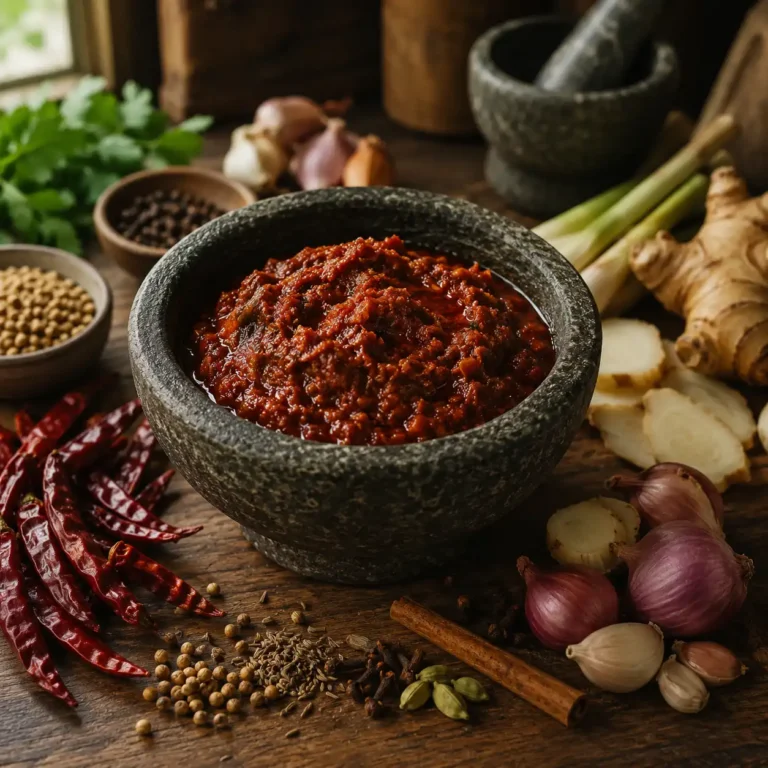
How to Make Massaman Curry Paste from Scratch
A fragrant, homemade Thai curry paste featuring a unique blend of toasted dry spices like cardamom and cinnamon mixed with fresh aromatics for a rich, Persian-influenced flavor profile.
- Total Time: 30 minutes
- Yield: 4 servings 1x
Ingredients
- 10 dried red chilies, deseeded and soaked in warm water
- 2 tablespoons coriander seeds
- 1 teaspoon cumin seeds
- 5 green cardamom pods
- 1/2 teaspoon cloves
- 1 small cinnamon stick
- 1 star anise
- 1/4 cup roasted unsalted peanuts
- 3 tablespoons chopped lemongrass (white part only)
- 2 tablespoons chopped galangal
- 1/4 cup sliced shallots
- 2 tablespoons minced garlic
- 1 teaspoon shrimp paste
- 1 teaspoon sea salt
Instructions
- Step 1: Toast Spices – Place coriander seeds, cumin, cloves, cardamom, cinnamon, and star anise in a dry pan over medium heat until fragrant.
- Step 2: Grind Dry Spices – Transfer the toasted spices to a mortar and pestle or spice grinder and process until they become a fine powder.
- Step 3: Prepare Chilies – Drain the soaked dried chilies and squeeze out excess water, then chop them into small pieces.
- Step 4: Create Chili Base – Add the chopped chilies and sea salt to the mortar, pounding until a smooth, thick red paste forms.
- Step 5: Add Fibrous Aromatics – Incorporate the chopped lemongrass and galangal, pounding vigorously until the fibers are completely broken down.
- Step 6: Add Alliums – Mix in the sliced shallots and minced garlic, continuing to pound the mixture into a uniform consistency.
- Step 7: Incorporate Peanuts – Add the roasted peanuts to the mortar and grind until they are fully integrated and the oils begin to thicken the paste.
- Step 8: Final Seasoning – Stir in the shrimp paste and the reserved ground spice powder, mixing until the paste is deep red-brown and aromatic.
Notes
For the best flavor, toast your spices fresh and use a heavy granite mortar and pestle to release the essential oils from the aromatics.
- Prep Time: 20 minutes
- Cook Time: 10 minutes
- Category: Condiment
- Method: Grinding
- Cuisine: Thai
- Diet: Gluten-Free
Nutrition
- Serving Size: 2 tablespoons
- Calories: 95 kcal
- Sugar: 2 g
- Sodium: 480 mg
- Fat: 6 g
- Saturated Fat: 1 g
- Unsaturated Fat: 5 g
- Trans Fat: 0.01 g
- Carbohydrates: 11 g
- Fiber: 3 g
- Protein: 3 g
- Cholesterol: 2 mg
Keywords: massaman, curry paste, homemade thai, spices, authentic curry
Essential Ingredients for Homemade Massaman Curry Paste
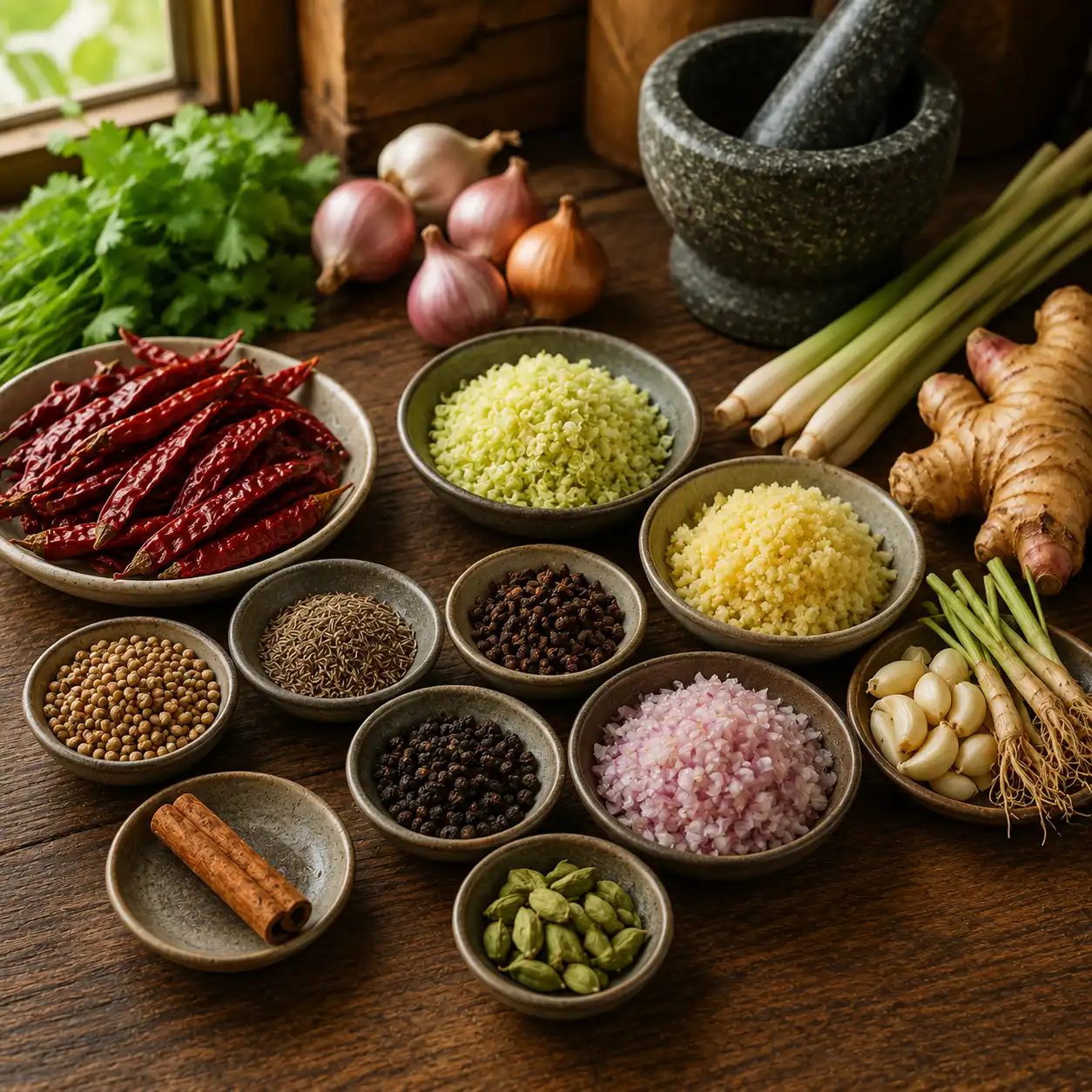
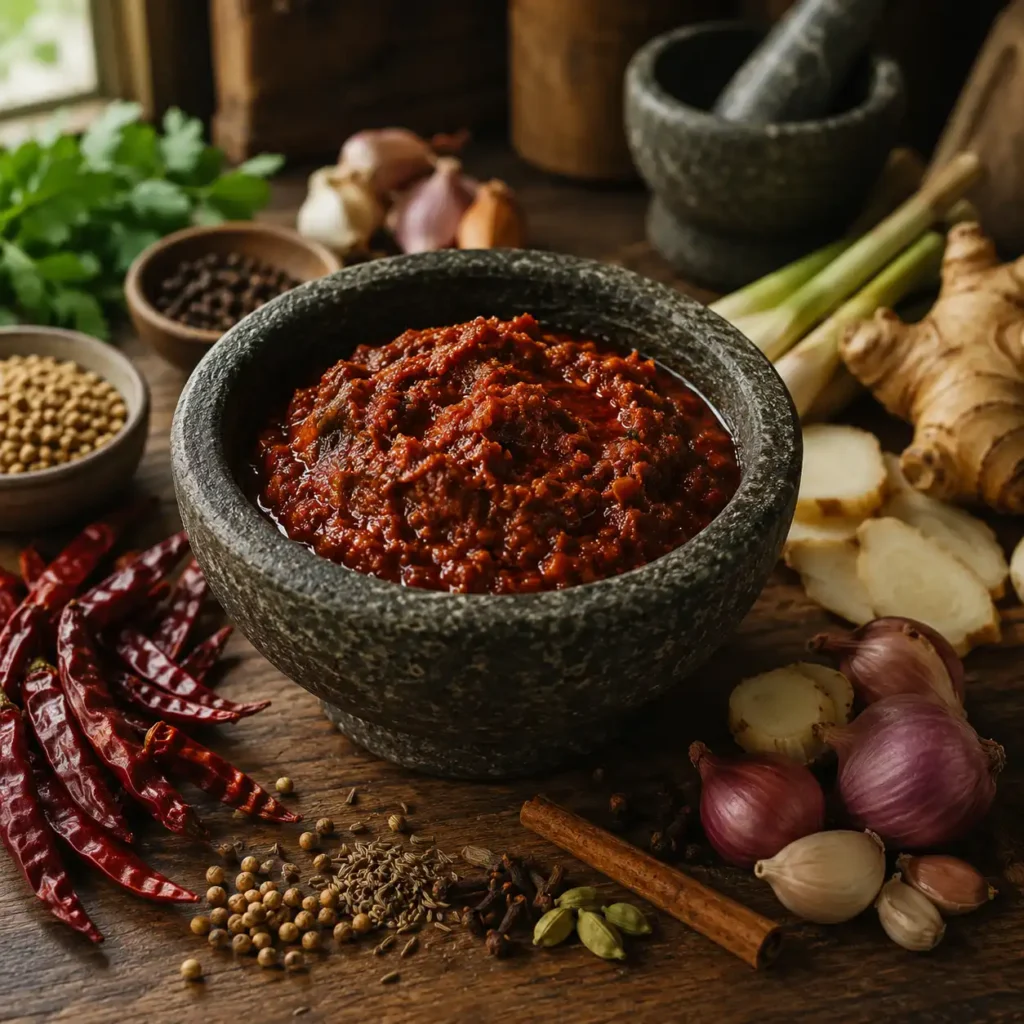
To get the best results, you need to find fresh ingredients. The backbone of the massaman curry paste consists of two groups: the dry spices and the wet aromatics. For the dry side, you will need coriander seeds, cumin seeds, cloves, peppercorns, and cinnamon. These must be whole seeds rather than pre-ground powders whenever possible. Toasting them whole releases oils that powders simply cannot match, leading to a much more vibrant and long-lasting flavor in your finished meal.
On the wet side, you will need lemongrass, galangal, shallots, garlic, and cilantro roots. If you cannot find cilantro roots, the bottom stems of the cilantro bunch will work in a pinch. Lemongrass adds a citrusy lift, while galangal provides a sharp, pine-like zing that is quite different from standard ginger. You will also need dried red chilies, which should be soaked in warm water to soften them before they are added to the mix. These provide the color and a gentle background heat without being overwhelming.
Choosing the Right Chilies
For a traditional massaman curry paste, use dried spur chilies (prik chee fa). These are larger and milder than the tiny bird’s eye chilies. If you want a very mild paste, you can remove the seeds after soaking. If you like a bit more kick, leave some seeds in. The goal is a deep red color rather than a burning spice level. Remember that the creaminess of the coconut milk in the final dish will also mellow out the heat significantly.
Preparing Your Spices and Aromatics
Before you start pounding or blending, you must prepare the ingredients to help them release their best qualities. This involves two main tasks: soaking the dried chilies and toasting the dry spices. Soaking the chilies for about 15 to 20 minutes makes them easier to grind into a smooth massaman curry paste. If they are too dry, they will remain as tough flakes in your sauce, which can be unpleasant to eat. Always squeeze out the excess water before adding them to your mortar or blender.
Toasting the dry spices is perhaps the most important part of the process. Place your cumin, coriander, cloves, and cardamom in a dry pan over medium-low heat. Shake the pan constantly until you start to smell a nutty, spicy aroma. This should only take a few minutes. As soon as they are fragrant, move them to a bowl to cool. If you leave them in the hot pan, they can burn quickly and become bitter. This simple act of toasting is what gives the massaman curry paste its professional, high-end taste.
Handling Lemongrass and Galangal
Lemongrass can be quite woody, so use only the bottom third of the stalk. Peel away the tough outer layers until you reach the softer, pale purple or white core. Slice this as thinly as possible. Similarly, galangal is much tougher than ginger. Always peel it and chop it into very small pieces before trying to grind it. This helps you achieve a smooth massaman curry paste without any large, fibrous chunks left behind.
Step-by-Step Instructions to Make Massaman Curry Paste
You can make this paste using a traditional granite mortar and pestle or a modern food processor. While the mortar and pestle method is said to produce a better flavor by bruising the cells and releasing more oils, a food processor is much faster and still produces a delicious result. If using a processor, you may need to add a tablespoon or two of water or oil to help the blades catch the ingredients and turn them into a smooth massaman curry paste.
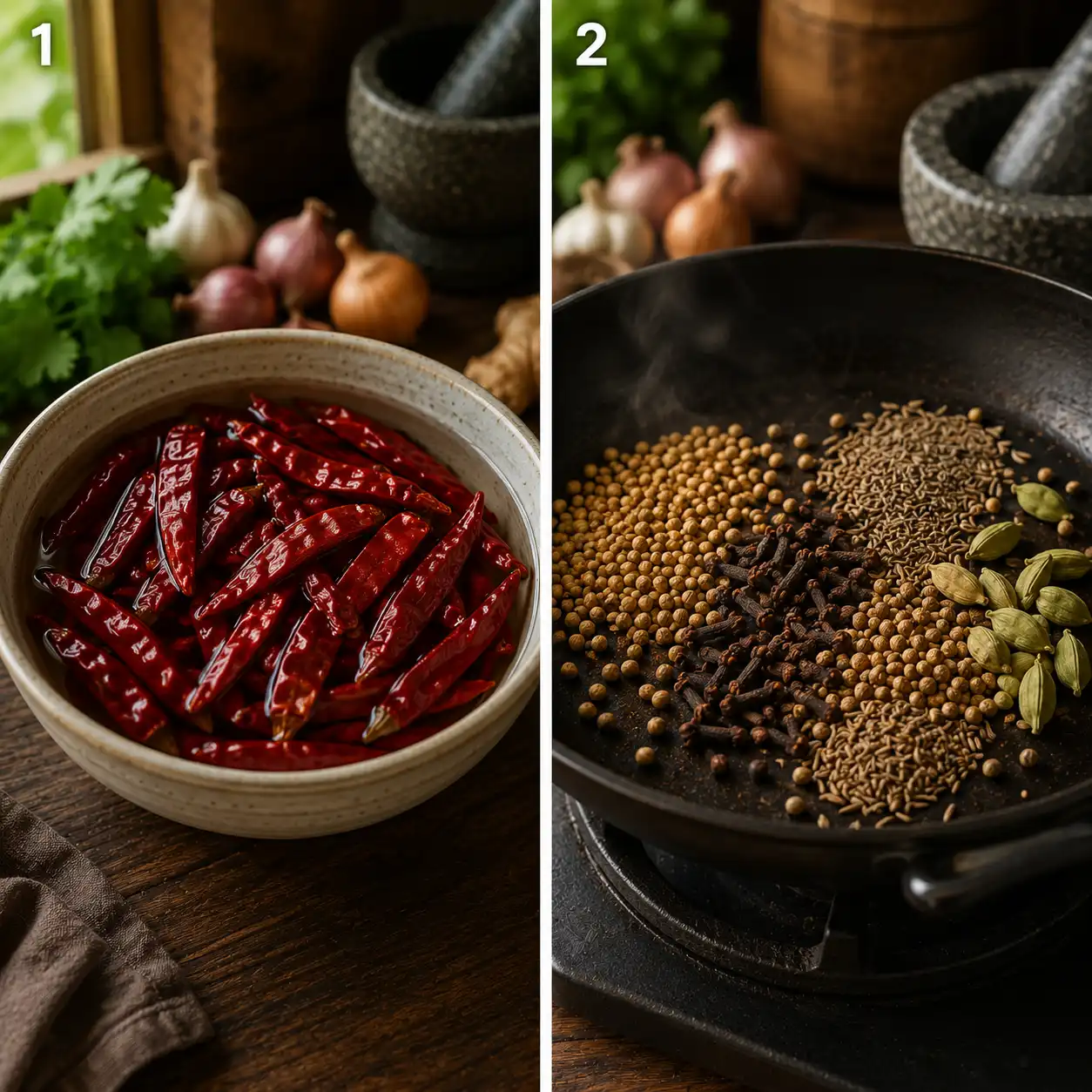
- Step 1: Soak the Chilies – Place the dried red chilies in a bowl of warm water for 20 minutes until they are soft and pliable.
- Step 2: Toast the Dry Spices – In a dry skillet, toast the coriander seeds, cumin seeds, cloves, and cardamom pods until fragrant, then grind them into a fine powder.
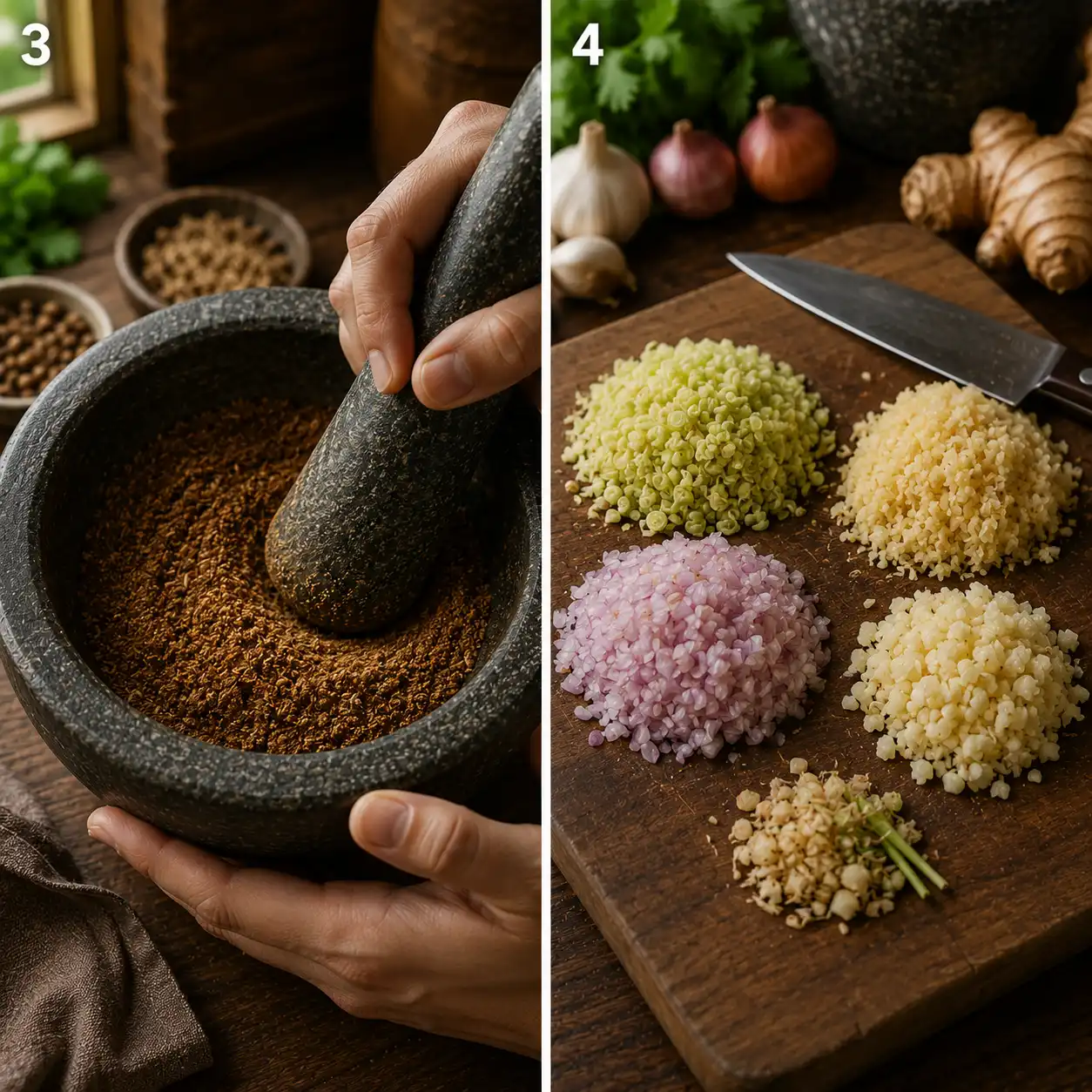
- Step 3: Prepare the Aromatics – Finely mince the lemongrass, galangal, shallots, garlic, and cilantro roots to make the grinding process easier.
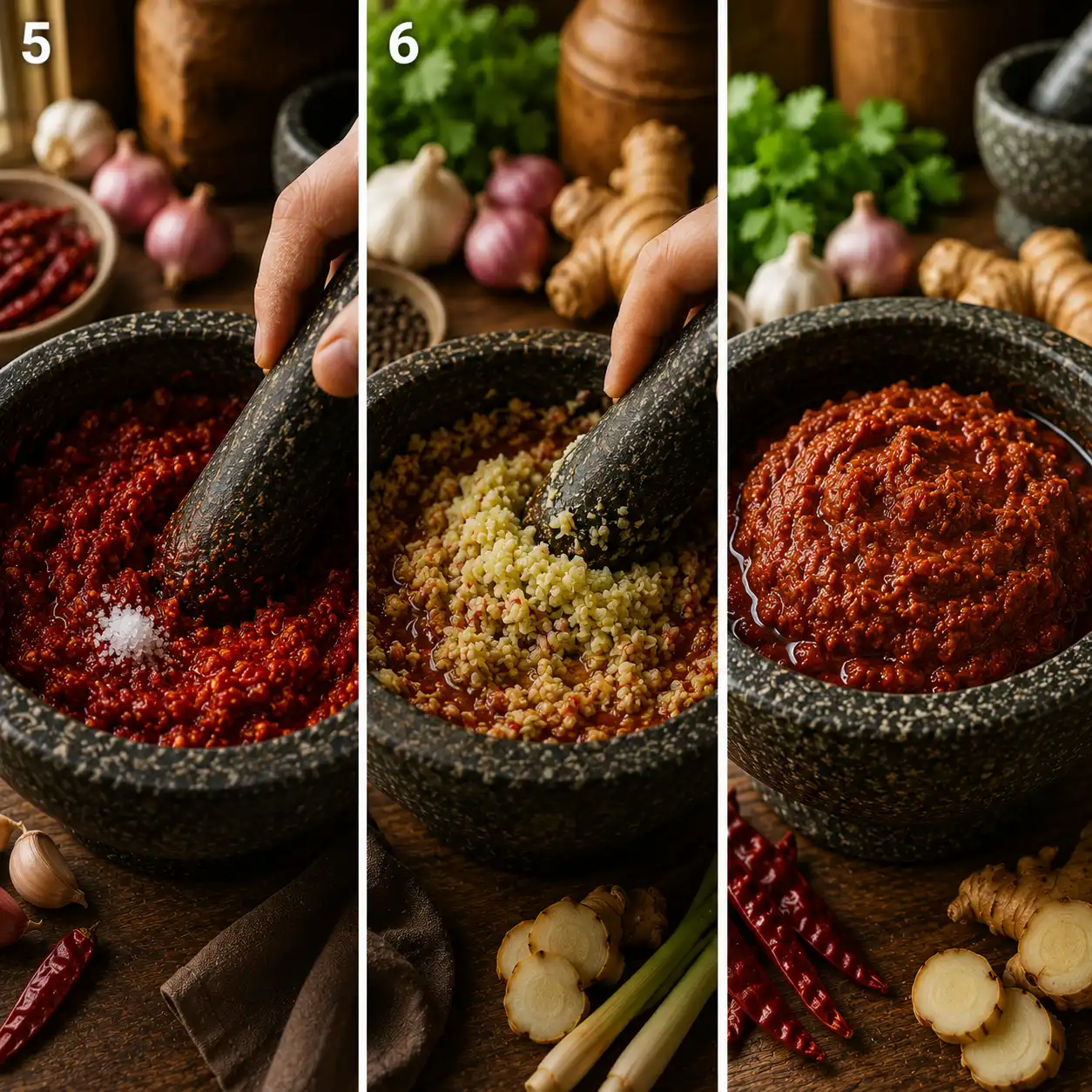
- Step 4: Grind the Hard Ingredients – If using a mortar, start by pounding the soaked chilies with a pinch of salt until they form a rough paste.
- Step 5: Add the Fibrous Aromatics – Add the lemongrass and galangal to the mortar and pound until they are fully integrated with the chilies.
- Step 6: Incorporate Shallots and Garlic – Add the softer shallots, garlic, and shrimp paste (or a vegan substitute) and continue pounding.
- Step 7: Mix in the Ground Spices – Stir in the toasted spice powder from Step 2 and work everything together until the massaman curry paste is uniform and smooth.
Comparing Massaman to Other Thai Curries
While the spice profile is unique, the base shares some similarities with a thai red curry recipe, particularly in the use of dried red chilies. However, red curry tends to stay on the fresher, sharper side with more focus on the chili and lime peel. Massaman moves away from that sharpness toward a more “brown” flavor profile, incorporating more earthy elements like roasted peanuts and warm cinnamon. It is the comfort food of the curry world.
Massaman is also often compared to other Thai favorites for its richness. If you prefer something a bit saltier and thicker with a more prominent lime leaf flavor, you might like panang curry, which also uses ground peanuts. While both are creamy and mild, Panang is usually served with less liquid, whereas Massaman is more of a stew-like consistency often containing large chunks of potato and onion.
The Importance of Tamarind
A key component to the final dish is the sour note provided by tamarind paste, which cuts through the heavy fat of the coconut cream. While you don’t always add the tamarind directly into the massaman curry paste itself, it is an essential part of the cooking process later. The balance of the deep spices in your paste with the sour tamarind and sweet palm sugar is what creates the legendary “three-flavor” balance of Thai cuisine.
How to Use and Store Your Homemade Paste
Once your paste is ready, you might wonder how to turn it into a full meal. You can follow this massaman curry recipe to see how to balance the richness with coconut milk and potatoes. Generally, you will want to fry about two to three tablespoons of the paste in a little bit of coconut fat until it becomes very fragrant. This “blooming” of the paste ensures that all those toasted spices and fresh aromatics are fully woken up before you add the rest of your liquid ingredients.
If you have made a large batch, you can store the leftover massaman curry paste in the refrigerator for up to two weeks. Make sure it is in an airtight container to keep it fresh. For longer storage, this paste freezes beautifully. You can portion it into ice cube trays, freeze them solid, and then transfer the cubes to a freezer bag. This way, you can grab exactly what you need for a quick weeknight dinner without having to go through the whole grinding process again.
Summary of Key Ingredients
| Ingredient Category | Key Items | Purpose |
|---|---|---|
| Dry Spices | Coriander, Cumin, Cinnamon, Cardamom | Provides earthy warmth and aroma |
| Fresh Aromatics | Lemongrass, Galangal, Cilantro Root | Adds citrusy, herbal, and bright notes |
| Base Flavors | Shallots, Garlic, Dried Chilies | Creates the body and color of the paste |
| Salty/Savory | Shrimp Paste or Salt | Adds depth and fermented umami flavor |
Tips for the Best Flavor
To really make your massaman curry paste stand out, don’t rush the shallots and garlic. If you have the time, you can actually roast the unpeeled shallots and garlic in a dry pan until they are soft and slightly charred. This adds a smoky sweetness that takes the paste to a whole new level. It removes the raw bite of the garlic and replaces it with a mellow, buttery flavor that blends perfectly with the cinnamon and cloves.
Another tip is to check the freshness of your whole spices. If your coriander or cumin seeds have been sitting in the pantry for years, they won’t have much oil left in them. Buy small quantities of whole spices from a high-turnover market to make sure your massaman curry paste is as potent as possible. Freshness is the secret weapon of any great Thai chef, and it starts with the raw ingredients you choose to put into your mortar.
Adjusting the Consistency
If you find that your paste is too thick or dry to blend, do not be afraid to add a tiny splash of the water used to soak the chilies. This water contains some of the chili flavor and color, making it a better choice than plain tap water. However, use it sparingly. You want a thick, concentrated massaman curry paste, not a watery sauce. The thickness helps the paste fry properly in the oil later on, which is vital for developing the right flavor.
FAQs
Can I substitute ginger for galangal?
While you can use ginger if you absolutely cannot find galangal, the flavor will be different. Ginger is spicy and warm, while galangal is sharp, citrusy, and almost pine-like. If you must use ginger, use a little less than the recipe calls for and perhaps add a extra bit of lemon zest to mimic the bright notes of galangal in your massaman curry paste.
Is massaman curry paste spicy?
Generally, massaman is one of the mildest Thai curries. Because it uses large dried chilies and is balanced with a lot of coconut milk and sugar, the heat level is quite low. It is an excellent choice for children or people who are sensitive to spicy foods. You can control the heat yourself by removing all the seeds from the dried chilies before soaking them.
Can I make this paste vegan?
Yes! Traditional massaman curry paste often contains shrimp paste for saltiness and depth. To make it vegan, simply swap the shrimp paste for an equal amount of fermented soybean paste (miso) or just use extra sea salt. The result will still be incredibly flavorful and rich thanks to the variety of dry spices used in the recipe.
How much paste do I need for one curry?
For a standard curry serving 3 to 4 people, you typically need about 3 tablespoons of massaman curry paste. This depends on how strong you like your flavors. Since homemade paste is often more concentrated than store-bought versions, start with a little less and add more as you taste the simmering sauce.
Conclusion
Creating your own massaman curry paste is a wonderful way to bring authentic Thai flavors into your home. The process of toasting spices and pounding fresh aromatics might take a bit of effort, but the resulting aroma and taste are worth every minute. By following these steps, you can create a versatile base that stores well and makes every meal feel special. Whether you are cooking for a crowd or preparing a quiet dinner, this homemade paste will provide the foundation for a truly memorable dish.